If oil has soaked into your driveway, learning how to remove oil from concrete in Graham, NC fast makes all the difference. Fresh spills lift in under an hour with the right method, but stains that have cured for months need a tougher approach. Here's exactly what works, from pantry staples to pro-grade treatments, and when it's time to call for help.
Fast First Steps for a Fresh Oil Spill
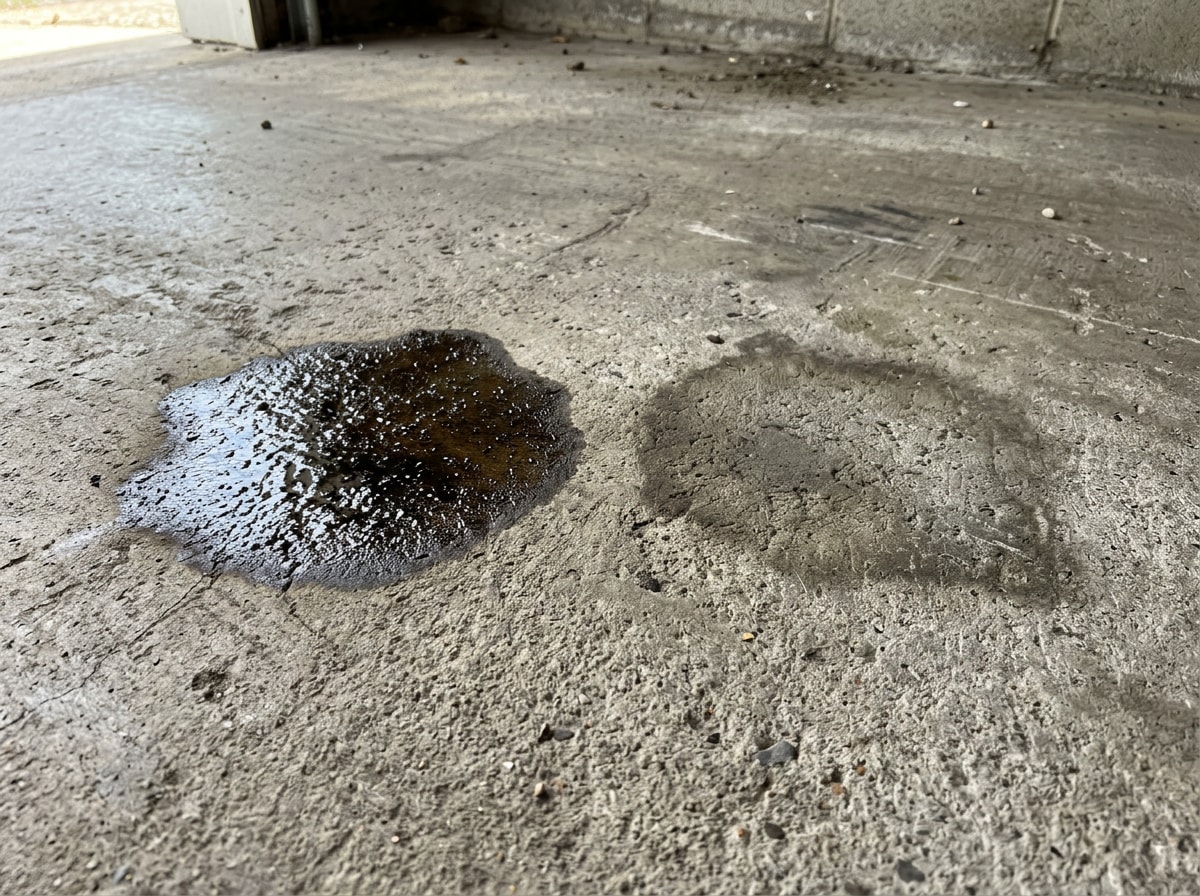
Speed matters more than product choice when oil is still wet on the surface. Concrete is porous, so every minute oil sits is another minute it sinks deeper into the slab.
- Blot the puddle with rags or paper towels. Don't wipe, since that spreads the stain.
- Cover the spot completely with cat litter, baking soda, or sawdust.
- Grind the absorbent in gently with your shoe so it contacts more surface area.
- Let it sit 30 minutes to overnight, depending on how much oil is present.
- Sweep up the absorbent and dispose of it. Oil-soaked material can be a fire hazard in a trash can, so let it air out first.
- Scrub any remaining shadow with dish soap and a stiff brush, then rinse.
Household Methods for Set-In Oil Stains
Once oil has dried into the slab, absorbents alone won't finish the job. These five methods handle most residential stains without specialty equipment.
Cat Litter
Clay-based litter pulls oil out through capillary action. Pour a generous layer over the stain, grind it in with your foot, and leave it for several hours before sweeping up and following with a detergent scrub.
Baking Soda
A gentler option for lighter stains. Make a paste with water, spread it over the mark, let it sit 30 minutes, then scrub with a stiff brush and rinse.
Dish Soap or Laundry Detergent
Pour it directly onto the stain, add hot water, and scrub with a stiff nylon brush, not a metal one, which can scratch the surface and trap future stains. Rinse thoroughly and repeat if a shadow remains.
Oven Cleaner
The degreasing agents formulated for baked-on grease work well on concrete too. Spray the stain, let it sit 15 to 20 minutes, scrub, and rinse with a hose before it dries on the surface.
Sawdust and Solvent Poultice
For stains that have soaked in deep, mix sawdust with a small amount of mineral spirits or paint thinner into a paste. Spread it over the stain, let it dry completely, then sweep it away. A land-grant university extension program outlines a similar Portland Cement Association method for removing oil stains from concrete surfaces using absorbent material layered over mineral spirits. Always work outdoors, since solvent fumes build up quickly in enclosed garages.
WD-40
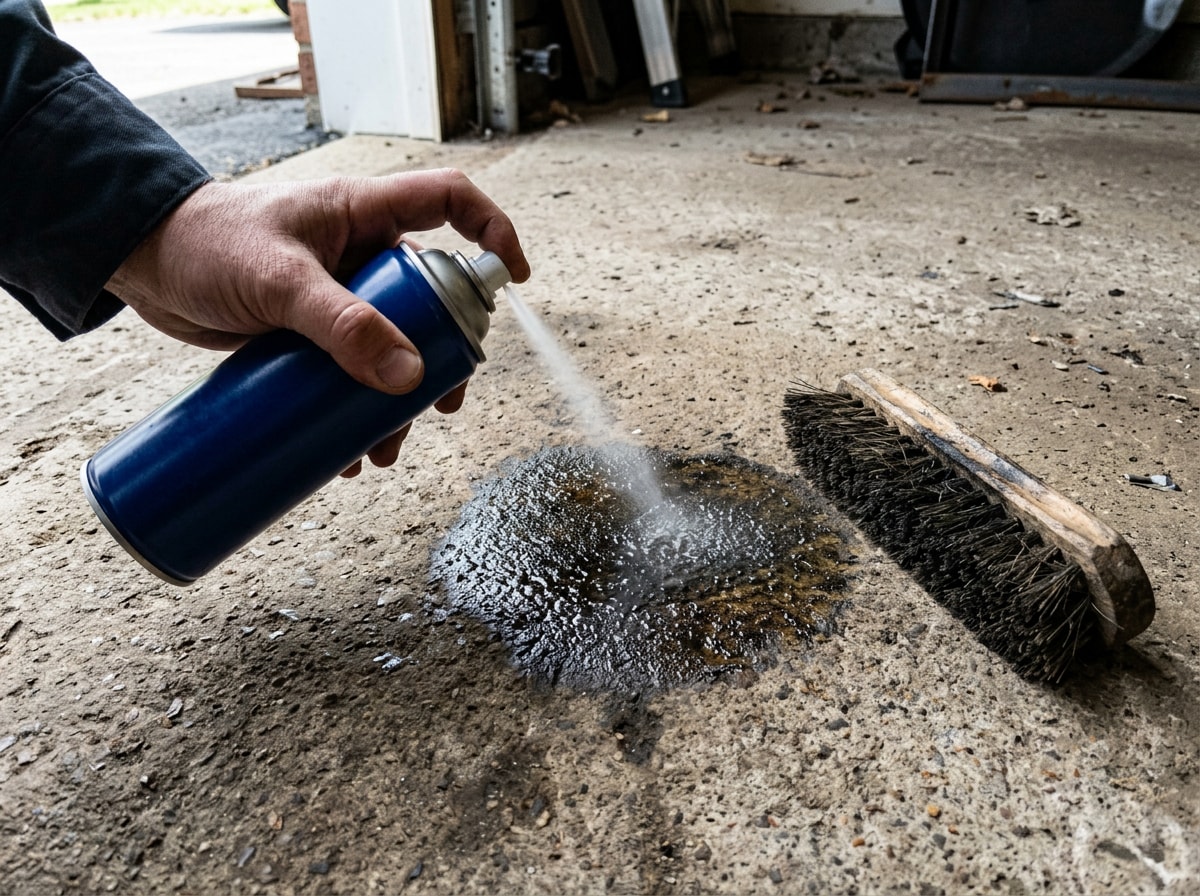
Spray a generous amount directly on the stain and let it sit 5 to 10 minutes so it can break the oil's bond with the concrete. Scrub in circular motions, focusing on the edges where oil concentrates, then rinse thoroughly. WD-40 works best on fresh-to-moderate stains rather than ones that have been sitting for months.
Pressure Washing Without Driving Oil Deeper
Water pressure alone is a common mistake. It can push oil deeper into the pores instead of lifting it out. The better sequence:
- Apply a degreaser and let it dwell for the time listed on the label, usually 10 to 20 minutes.
- Rinse with moderate pressure rather than the highest setting.
- Repeat if discoloration remains, rather than increasing pressure.
This two-step process is gentler on the slab over time and far more effective than pressure alone.
Why Oil Soaks Into Graham, NC Concrete So Fast
Concrete looks solid, but it's a network of interconnected pores that acts almost like a sponge. Oil takes advantage of that structure, seeping below the surface within minutes rather than sitting on top where a rag could easily lift it.
Local conditions make this worse. Alamance County goes through humid summers and freeze-thaw swings in winter, and each cycle causes the slab to expand and contract slightly, opening and closing those pores. In our experience resealing driveways across the Piedmont, a stain that sits through even one full Carolina summer is noticeably harder to lift completely than one treated within the first week.
Degreaser vs. Hot Water: What Works Best?
| Method | Best Use Case | Dwell Time | Pros | Cons |
|---|---|---|---|---|
| Hot water only | Very fresh, surface-level spills | Minimal | No chemicals, low cost | Weak on set-in stains |
| Degreaser only | Moderate to set stains | 10–20 minutes | Breaks oil bond effectively | Requires proper handling |
| Degreaser + hot water | Most residential stains | 10–15 minutes | Faster results, better penetration | Slightly more prep time |
Combining the two generally outperforms either alone, since hot water helps activate the degreaser and rinse residue more completely. The EPA's Safer Choice program lists degreasers among the product categories reviewed for safer chemical ingredients , which is worth checking before buying an industrial-strength product for home use. Always follow label guidance on water temperature, since exceeding it can reduce effectiveness or damage a sealer.
How Pros Remove Oil Without Etching the Surface
Professional treatment typically follows a controlled sequence: an industrial-grade degreaser, a measured dwell time based on stain age, then a rinse with soft-washing techniques rather than blasting at full pressure. This lifts oil from the pores without scratching or discoloring the surface.
Set realistic expectations here. Fresh stains often lift completely with professional treatment, but stains set for a year or more may only lighten rather than disappear. A technician familiar with your slab's finish, whether broom-finished, stamped, or sealed, will know which products are safe to use without etching it.
If a spot won't budge after two or three rounds of scrubbing, it's usually more cost-effective to get a free estimate than to keep buying chemicals that might damage the surface. Our concrete contractor team handles this regularly on driveways across Alamance County.
Sealing After Cleaning to Prevent Future Stains
Once a stain is gone, sealing closes up the surface pores that let oil soak in deeply in the first place, making future spills much easier to wipe away before they set.
Most professionals recommend sealing once the surface is completely dry, usually within a few days of treatment. For Graham, NC homeowners with driveways, garages, or carports exposed to vehicles year-round, sealing is one of the simplest ways to prevent oil stains from becoming a recurring headache. Our concrete driveways page covers sealing options for new and existing slabs. For a closer look at how driveway and patio flatwork holds up in this climate, see our flatwork concrete guide for Burlington, NC.
When To Schedule Service in Graham, NC
Acting within a day or two of a spill dramatically improves your odds of full removal. If a stain has been sitting for weeks or DIY scrubbing isn't making a dent, that's usually the sign to bring in help.
Seasonal humidity swings in the area also affect how deeply oil sets, so earlier treatment generally means an easier outcome. Check our Graham, NC service area page for availability, or get a free estimate directly.
This guide comes from the crew at Boswell Brothers of NC, a concrete and general contractor serving Graham and the greater Piedmont Triad, based on years of hands-on driveway, patio, and foundation work in Alamance County.
FAQ
What is the strongest degreaser for concrete?
Industrial or commercial concrete degreasers are formulated with solvents that break down petroleum bonds faster than household alternatives like dish soap or baking soda. These are generally reserved for professional use since they require careful handling and thorough rinsing to avoid residue buildup.
Will oil stains eventually disappear from concrete on their own?
Some fade gradually with sun exposure and traffic over months or years, but most don't disappear completely without active cleaning. If the oil has fully oxidized into the surface, active removal methods address it far more reliably than waiting it out.
Can I use muriatic acid to clean my driveway?
It's possible but risky. Muriatic acid can etch the concrete surface and cause skin and eye burns if not diluted and handled correctly. The CDC's NIOSH guidance notes hydrogen chloride causes eye and skin burns and respiratory irritation , so proper protective gear and ventilation are non-negotiable if you go this route. Many homeowners find it isn't worth the hazard for oil stains specifically.
Will hydrochloric acid remove oil from concrete?
It's effective for mineral deposits and some surface staining, but it's not particularly effective against petroleum-based oil. A degreaser is the better choice for oil, since acid can etch the surface without fully breaking the oil's bond within the pores.
What's the fastest way to treat a fresh oil spill?
Blot the excess immediately, cover with cat litter or baking soda, and let it absorb for a few hours before sweeping and scrubbing with dish soap. Acting within the first hour prevents most of the oil from soaking in.
Does pressure washing alone remove oil stains?
Not reliably. High water pressure without a degreaser pre-treatment can drive oil deeper into the pores instead of lifting it out. Always apply a degreaser first and let it dwell before rinsing.