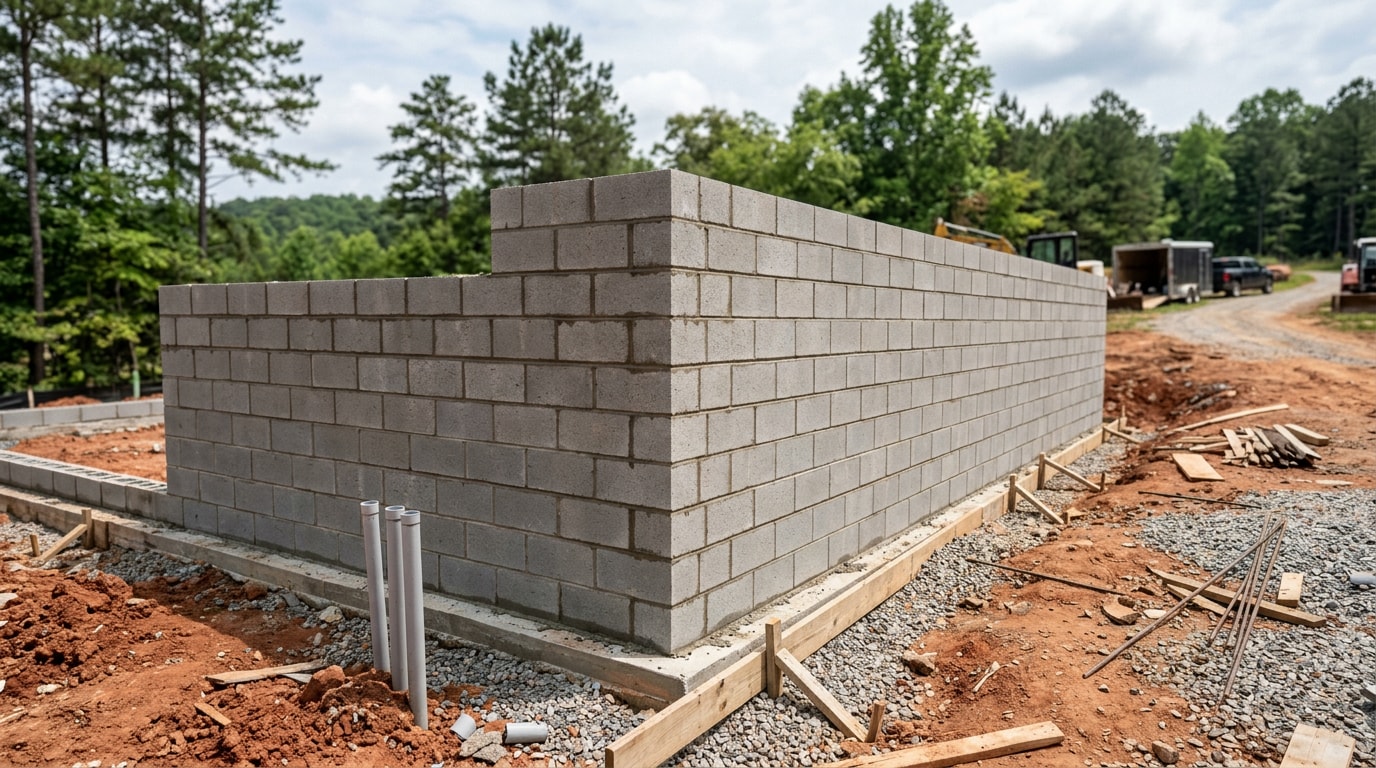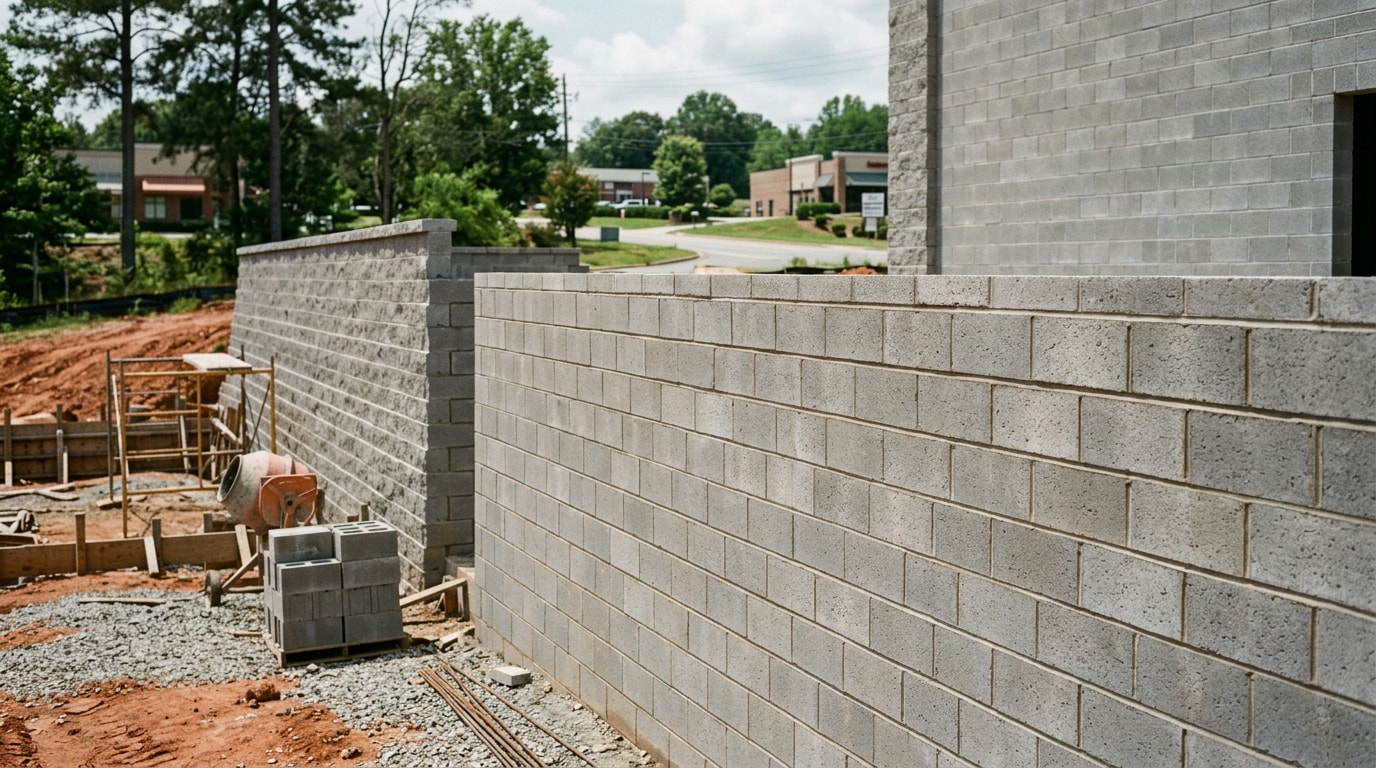
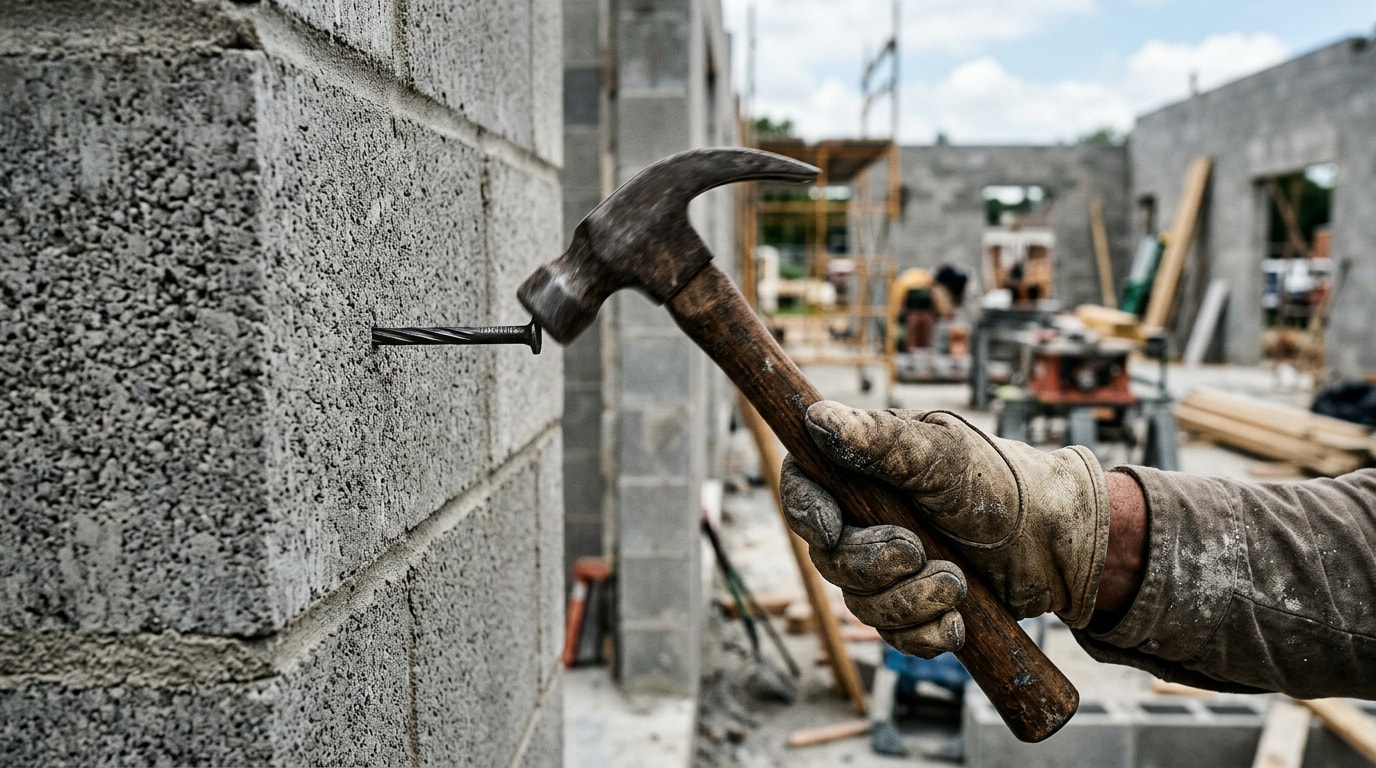
Masonry nails for concrete in Stokesdale, NC projects solve one specific problem: a standard nail bends or snaps the moment it hits block, brick, or a cured slab. This guide breaks down the specs, features, and embedment rules you need before you pick up a hammer, plus when a nail is the wrong tool for the job.
Secure Wood to Brick, Block, or Concrete
Masonry nails exist for one main reason: fastening wood directly to hard surfaces without drilling and installing separate anchors first.
Furring strips, trim, sill plates, and light framing all benefit from this direct-drive approach. On smaller punch-list items, our crews still reach for a box of cut masonry nails before we'd stage a hammer drill and anchors, simply because it is faster for light, non-structural attachment.
Unlike standard nails, cut masonry nails use a tapered, flat shape. Heat-treated steel lets them bite into mortar joints and block cores instead of sliding or shattering the surface. That shape is what allows brick and block fastening to hold under vibration and load over time.
If your project involves new footings or a poured slab before any fastening happens, our concrete contractor team can handle the prep work.
Masonry Nail Sizes and Specs
The most common cut masonry nail for concrete work is a 3-inch, 10D size, made from heat-treated carbon steel for added hardness. Nail gauge typically runs thicker than standard framing nails, which helps the fastener resist bending as it's driven into dense material.
Driven fasteners like these fall under a recognized industry standard. The driven fasteners are classified as type I: nails (NL); type II: cut nails (CN); type III: spikes (SP); and type IV: staples (ST) , which is why you'll sometimes see cut masonry nails labeled as Type II fasteners on a spec sheet. You can review the full ASTM F1667 standard for driven fasteners if you need exact dimensional tolerances for a spec submittal.
| Fastener Type | Typical Length | Best For |
|---|---|---|
| 10D cut masonry nails | 3 inches | Mortar joints, softer block, quick wood-to-masonry fastening |
| Concrete screws | 1.25–4 inches | Poured concrete, repeated removal, higher load requirements |
| Mechanical/expansion anchors | 2–6 inches | Structural ledgers, railings, code-reviewed connections |
Masonry nails suit fast, non-structural fastening jobs. Concrete screws work better when a connection may need future removal. Mechanical anchors are the right call when a building inspector or structural engineer needs to sign off on the connection, such as a ledger board bolted to a foundation wall.
How Deep Should Masonry Nails Go?
Embedment depth matters more than most DIYers expect. A nail driven too shallow pulls loose under load; one driven too close to the edge of a block or brick can crack the masonry unit instead of gripping it.
As a general field rule:
- Aim for solid embedment into masonry, not just the mortar joint, whenever the fastener carries any real load.
- Keep nails well back from the edge of a block, brick, or slab to avoid spalling or cracking the unit.
- Use a shorter nail in soft or uncured concrete and a longer, heavier-gauge nail in cured, aggregate-heavy concrete.
If you're attaching anything structural, like a ledger, railing post, or deck attachment to a foundation wall, that's a job for anchors and a code check, not nails. Our concrete footings installation and foundation repair crews handle those connections when the load matters.
Masonry Nail Features
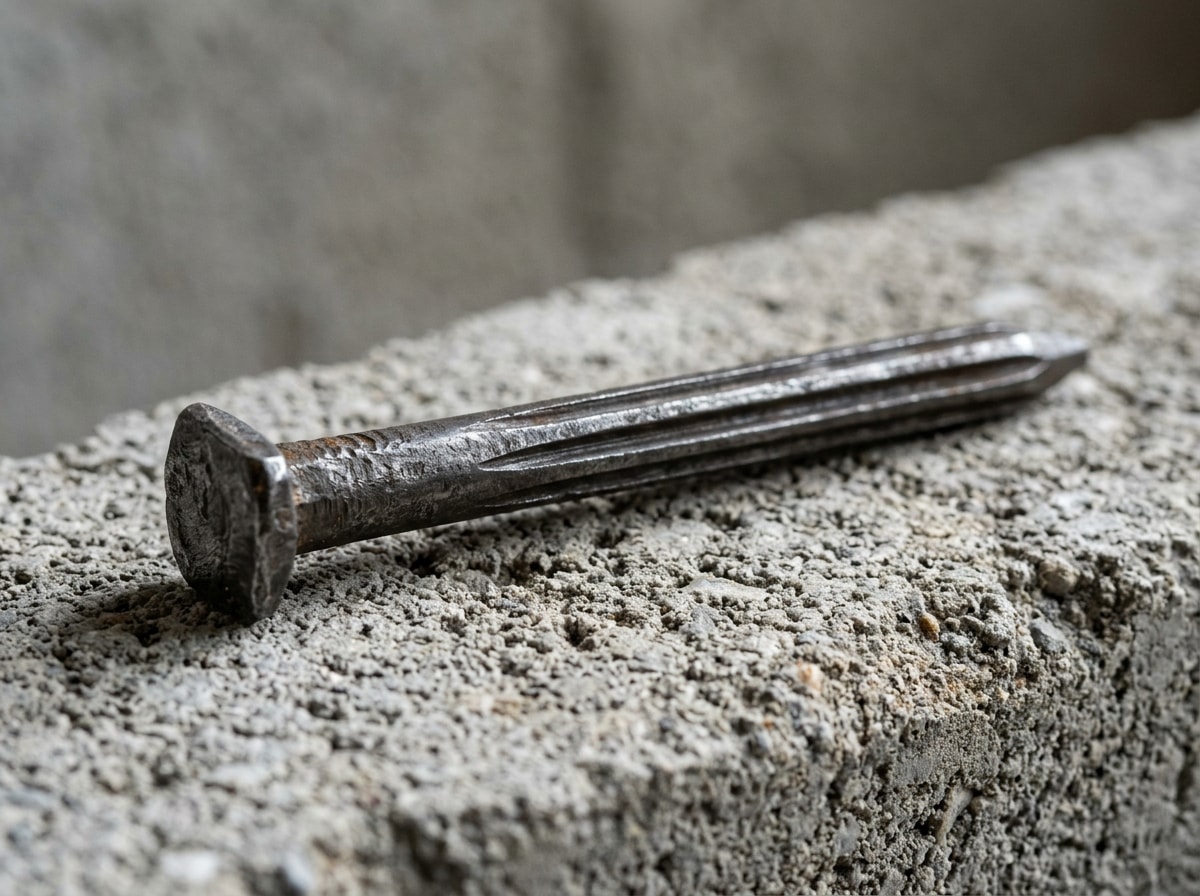
Cut masonry nails use a fluted or tapered shank that grips surrounding material as it's driven. This is different from a smooth nail, which relies on friction alone.
Key features to look for:
- Hardened steel construction — keeps the nail from bowing when it meets aggregate or hard mortar.
- Fluted or grooved shank —
these nails, in their varying sizes, are stronger than most nails, and their hardened steel base means they won't break or bend when they encounter masonry objects like stone, concrete, and cement .
- Corrosion-resistant coating — galvanized or zinc finishes matter for anything exposed to Stokesdale's humidity and freeze-thaw swings.
- Wide, flat head — gives a bigger hammer-strike target and reduces glancing blows that chip masonry.
For manufacturer-level detail on shank styles and coatings, Grip-Rite's masonry nail specifications are a solid technical reference.
Always wear eye protection when driving hardened nails. Always use eye or face protection, and appropriate personal protective equipment such as safety goggles and gloves must be worn to protect against hazards that may be encountered while using hand tools , per OSHA's hand tool safety guidance. Chipped masonry fragments are a real risk with cut nails, not a theoretical one.
For a deeper dive into which fastener category fits a given wall assembly, see our guide on concrete masonry anchors.
FAQ
Are masonry nails the same as concrete nails?
The terms are used interchangeably in most hardware stores. Both describe hardened, tapered or fluted nails built to drive into brick, block, mortar, or concrete without bending.
What are masonry nails used for?
Mostly light, non-structural attachment: furring strips, sill plates, trim, housewrap fastening, and securing wood framing members directly to cured or uncured concrete and block.
Do you need to pre-drill before using masonry nails?
Not usually in mortar joints or softer block. In dense, fully cured concrete, a pilot hole with a hammer drill makes driving easier and reduces the chance of bending the nail or cracking the surface.
Can you hammer masonry nails into concrete by hand?
Yes. Hand-driving is standard practice for cut masonry nails. Use a solid hammer, steady squared strikes, and impact-rated eye protection to guard against chipping.
How deep should masonry nails go into concrete?
Enough to reach solid embedment past any mortar joint or surface layer, while staying well clear of the edge of the masonry unit. Shallow or edge-close placement is the most common cause of pull-out and cracking.
What kind of nails should you use for heavier concrete attachments?
Hardened steel cut masonry nails for quick wood fastening; concrete screws or mechanical anchors for anything carrying real structural load or requiring future removal.
How do you remove masonry nails from concrete?
Use a pry bar or nail puller positioned carefully against the surrounding surface. Steady, gentle leverage works better than force, which is what chips the masonry around the nail.
Need help choosing between nails, screws, or anchors for a specific wall, patio, or foundation detail? Get a free estimate from the Boswell Brothers of NC team, or visit our homepage to see the full range of concrete and masonry services we handle across Stokesdale.