A mason block project in Graham, NC covers everything from a crawlspace wall to a full commercial foundation, and the right build depends on soil, load, and local code. This guide breaks down what block masons actually do, what drives pricing in Alamance County, and how to vet a contractor before you sign anything.
What a Block Mason Builds in Graham, NC
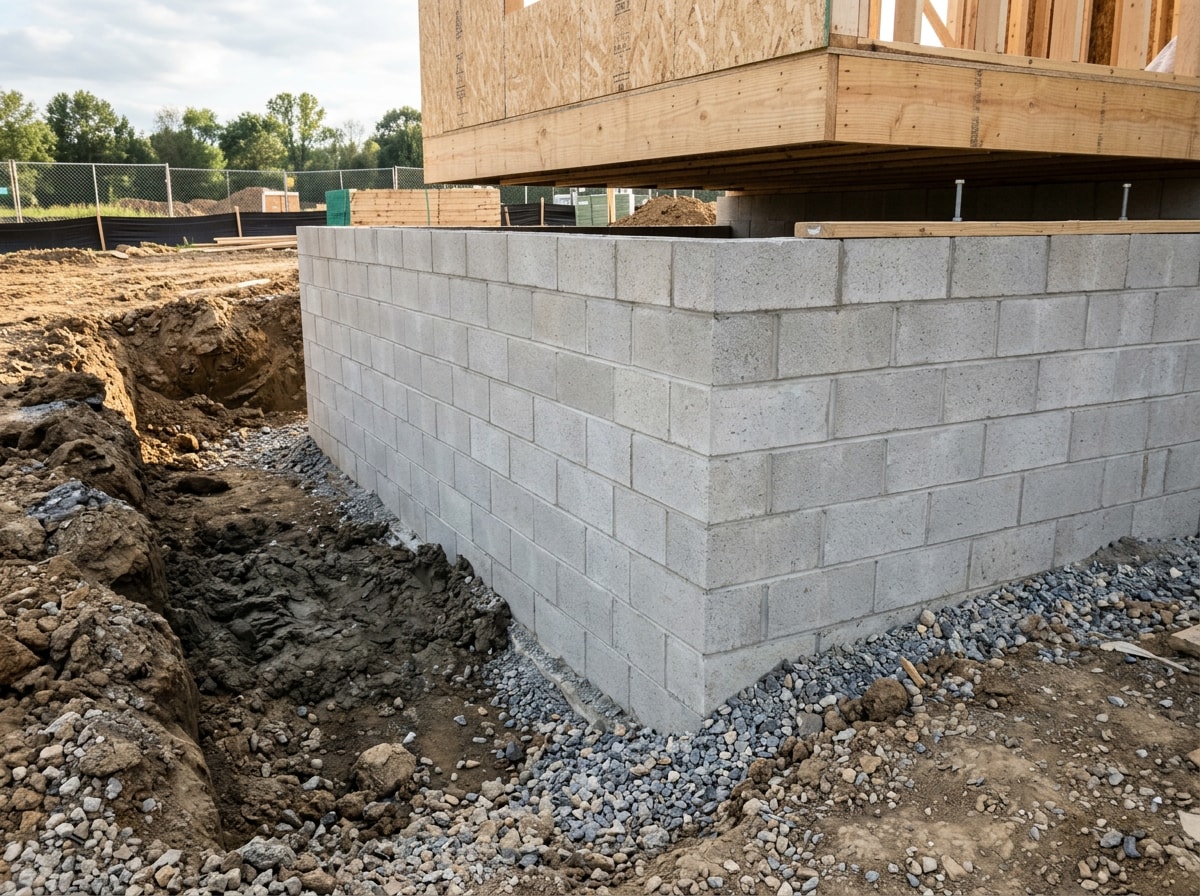
A block mason builds and repairs structures using concrete block, brick, or stone joined together with mortar to form durable walls and foundations. That scope of work usually covers foundations, crawlspace walls, retaining walls, chimneys, and structural block walls for homes and businesses across Alamance County.
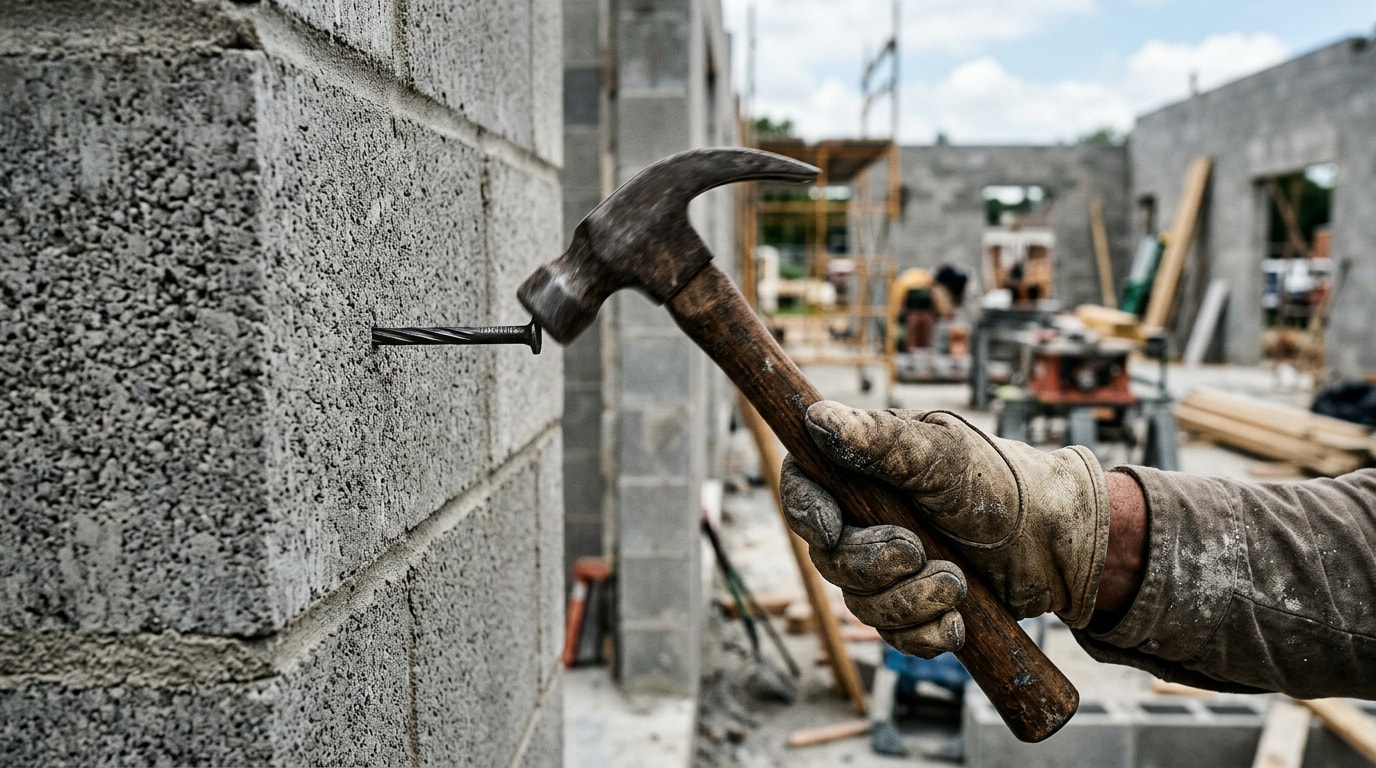
Day to day, a concrete block mason reads plans, lays block in level courses, mixes and places mortar, and adds reinforcement where it's required. Block masonry work also covers repairs. Cracked foundations and bowing crawlspace walls are common in older homes throughout the area, and a mason familiar with Piedmont clay soils knows which cracks are cosmetic and which signal a structural problem.
Block & Stone Masonry Services
Block work is only one part of what a local masonry contractor typically handles. Most masonry services fall into two categories, block and stone work, each suited to different structural and design needs.
Block & CMU Work
Concrete block construction forms the backbone of structural walls, foundations, and commercial builds, while brick installation and repair adds both strength and curb appeal to the same projects.
In Alamance County, block work generally falls into one of three types:
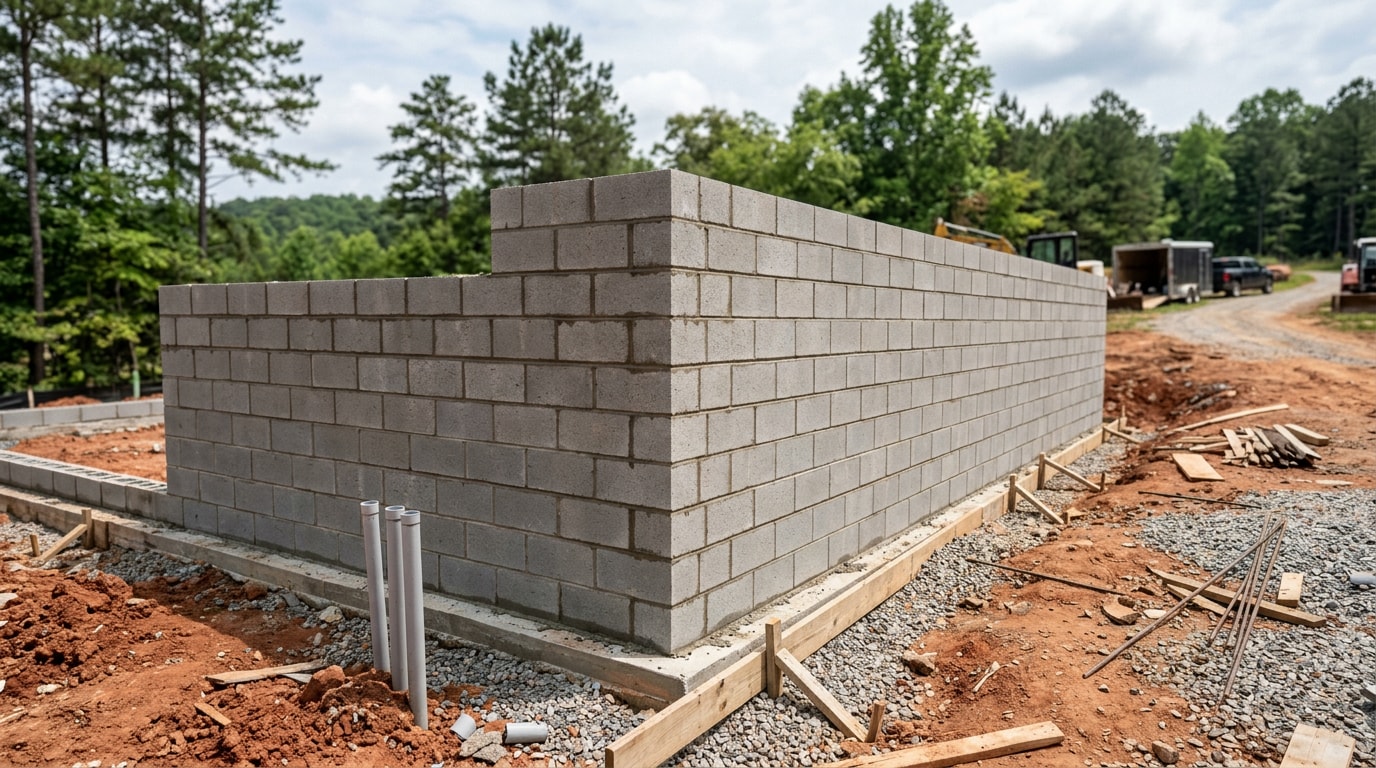
- Standard CMU block handles straightforward foundation walls and basic structural block wall needs.
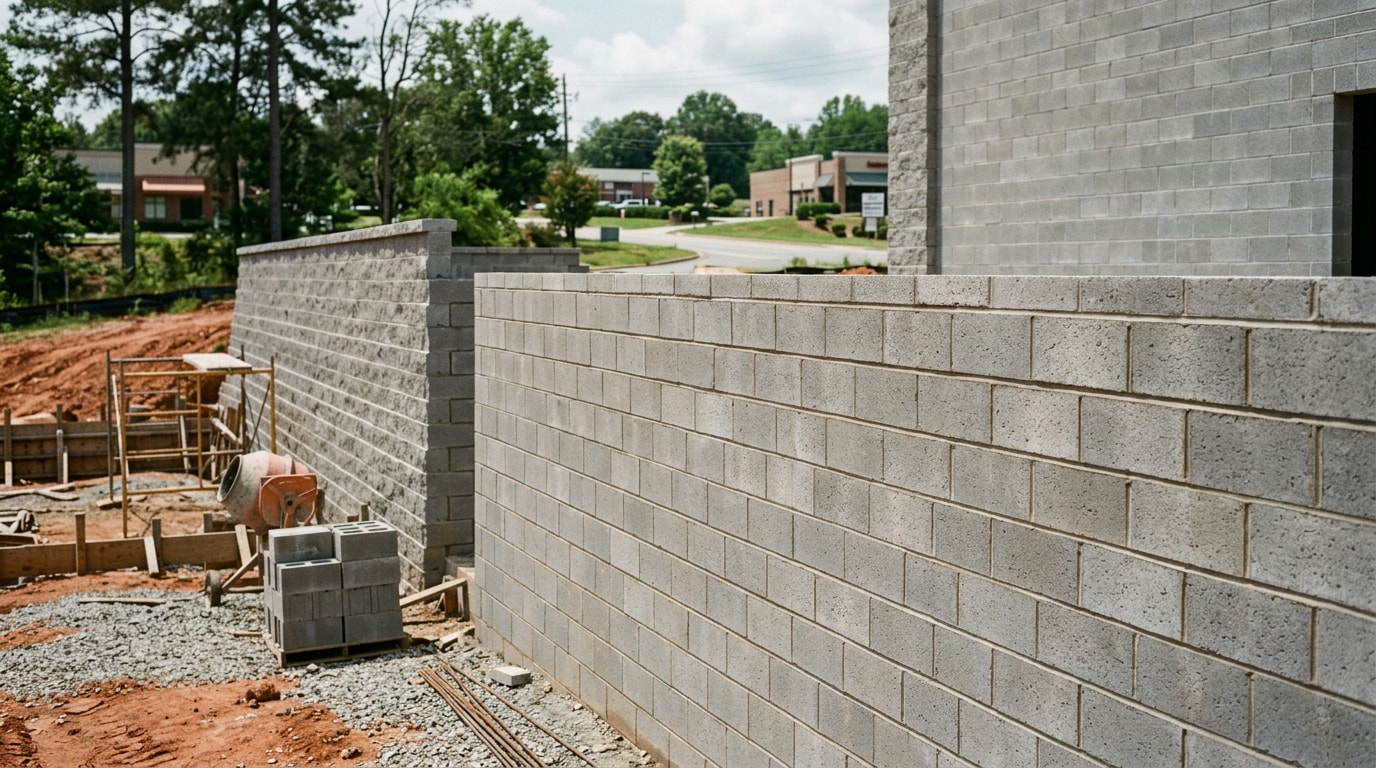
- Split-face block adds a textured, decorative face for exposed retaining walls or accent walls.
- Reinforced or grouted block, filled with steel and concrete, gets specified wherever a block foundation needs to carry heavier loads, such as commercial builds or taller retaining walls.
| Block Type | Typical Use | Face Finish |
|---|---|---|
| Standard CMU | Foundations, crawlspace walls | Smooth, utilitarian |
| Split-face | Retaining walls, accent walls | Textured, decorative |
| Reinforced/grouted | Commercial loads, tall walls | Smooth or split-face |
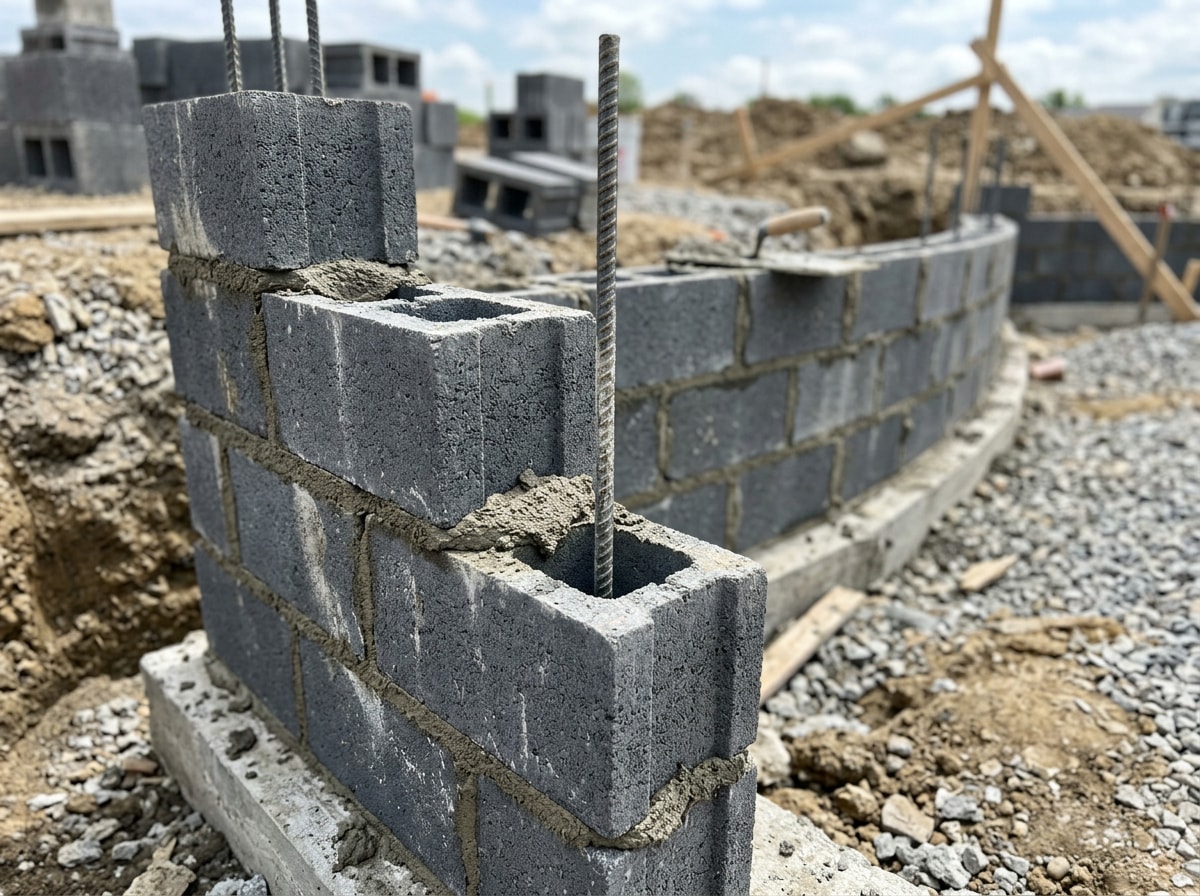
Concrete masonry units typically have nominal face dimensions of 8 in. high by 16 in. long, with other nominal face dimensions available to accommodate an 8-inch module. These standardized dimensions are maintained by the Concrete Masonry & Hardscapes Association, the trade group formed from the merger of the National Concrete Masonry Association and the Interlocking Concrete Pavement Institute, and most licensed contractors reference its specifications when planning a project.
For more detail on sizes and specs, see our CMU concrete masonry unit guide.
Stone Masonry
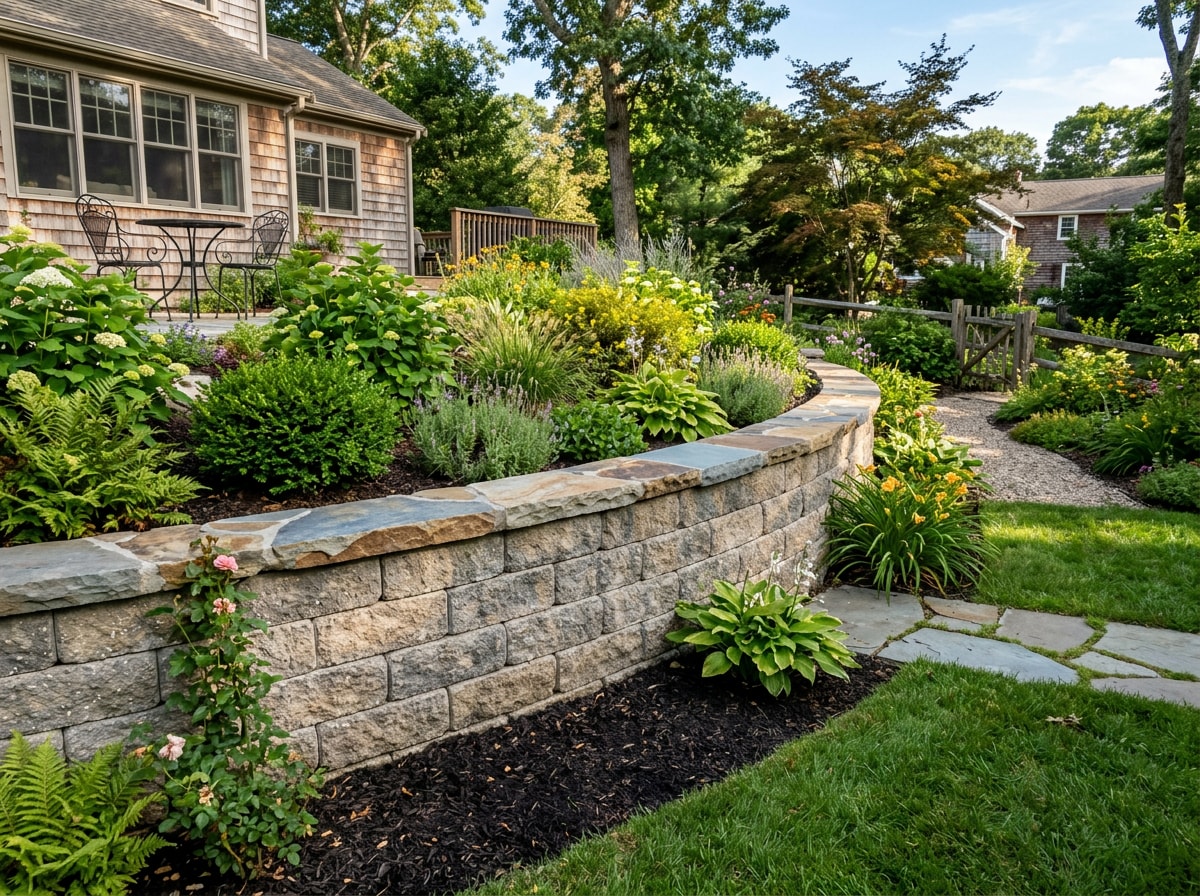
Stone masonry complements block work rather than replacing it. A stone veneer can dress up a plain concrete block wall, turning a purely structural surface into a finished patio, natural stone wall, or accent feature.
Many homeowners pair block for structure with stone for appearance, getting durability from the CMU core and curb appeal from the stone face. That combination works well for retaining walls, entryways, and outdoor living spaces.
Footing Depth and NC Code Requirements for Block Walls
Before any block foundation or retaining wall goes in, the footing has to meet state code. All exterior footings and foundation systems must extend below the frost line specified in the code's frost line table, and in no case less than 12 inches below the finished grade. That 12-inch minimum applies statewide, but site soil and drainage can push a footing deeper, which is one reason a site visit matters more than a phone estimate.
For a one-story CMU wall on typical soil, Table R403.1 of the 2018 NC Residential Code sets a minimum footing width of 12 inches and a minimum footing thickness of 6 inches , with wider and thicker footings required for two- and three-story loads. Skipping this step, or guessing at depth, is how DIY block walls end up cracking or heaving within a few winters.
What Affects Mason Block Costs in Alamance County
Masonry cost for block work depends on wall type, size, site access, and season. Exterior work in freezing temperatures often costs more because of curing and protection requirements. As a rough regional guide:
- A block foundation wall tends to run higher per square foot than a block retaining wall.
- A block crawlspace wall often costs less due to simpler access and shorter wall height.
- Split-face or reinforced block adds cost over standard CMU because of material and labor time.
Labor is usually the bigger cost driver, not materials. The median annual wage for masonry workers was $58,270 in May 2025, and masonry workers at masonry contractors earned a median of $61,110. Quality block and stone work takes years of training to do correctly, and that experience shows up in the final quote. These figures are regional estimates, not a quote for your project. Request a quote for numbers specific to your site and scope.
Benefits of Working with a Professional Masonry Contractor
Block masonry looks simple from the outside, but mortar mixing, curing time, and load calculations are easy to get wrong. A professional masonry contractor understands how much weight a structural masonry project needs to bear and reinforces accordingly.
Here's a concrete example: a block wall that cures too fast in hot weather, or too slow in cold weather, can develop hairline cracks that widen over the years and eventually fail. A properly cured, correctly reinforced wall built by an experienced mason resists that kind of failure for decades. That gap is one of the clearest benefits of hiring a mason instead of treating block work as a DIY project. Our crews have walked Alamance County job sites where a shallow, unreinforced footing was the real cause of a "settling" wall that homeowners assumed was just old age.
How to Choose the Right Masonry Contractor
Selecting the right contractor matters more than comparing a few prices, since masonry construction is only as good as the foundation under it. Before you hire a block mason, check for:
- A current, valid license for masonry or general contracting work
- Liability insurance, plus workers' compensation if the company has employees
- A detailed written estimate that separates materials, labor, and scope
- Direct experience with block and CMU work, not just brick or stone
- Local references you can actually call
Start on our homepage to review licensing and insurance information, then verify current status directly through the North Carolina Licensing Board for General Contractors before signing anything. Projects at or above the state's dollar threshold legally require a licensed general contractor, so this step isn't optional for larger foundation or retaining wall jobs.
If your project also involves poured footings or a new foundation, our concrete foundation pouring and concrete footings installation teams coordinate directly with the block crew so the schedule doesn't stall between trades.
Service Area
Block masonry crews serving Graham, NC typically cover the surrounding Alamance County area, including Burlington, Mebane, and nearby towns. If you're outside those areas, it's still worth asking. Masonry service area boundaries often flex for larger block foundation or retaining wall projects, and we also serve Greensboro, Chapel Hill, Kernersville, Stokesdale, and Liberty. Graham-area masonry and Alamance County masonry projects are generally quoted the same way, regardless of which side of the county line the job sits on.
See the full Graham, NC service area page for coverage details, or go straight to our contact page to request a free estimate.
FAQ
Here are direct answers to the questions people ask most before hiring a block mason.
How much does masonry block work cost?
Cost depends on wall type, size, site access, and season. A block foundation wall tends to run higher per square foot than a retaining wall, while a crawlspace wall often costs less due to simpler access. These are regional estimates; request a quote for project-specific numbers.
Why is masonry work so expensive?
Materials like natural stone and brick carry real cost, but labor is usually the bigger factor, often making up half or more of a project's final price. The median annual wage for masonry workers was $58,270 in May 2025 , and that skill level takes years to build.
How many blocks can a mason lay in one day?
Daily output varies. An experienced mason might lay somewhere around 100 to 300 standard CMU blocks in a day, but wall complexity, weather, block size, and crew size all change that number. A simple straight wall moves faster than one with corners, openings, or heavy reinforcement.
Is block and brick masonry a hard job?
Yes. Masonry work is physically demanding. Masons lift heavy block and brick repeatedly, often outdoors in heat or cold, and the job requires strength, stamina, and precision together.
Does a block retaining wall need a permit in North Carolina?
It depends on height and the local jurisdiction. Many counties require a permit once a retaining wall exceeds a certain height, often around 4 feet, measured from the bottom of the footing to the top of the wall. Check with the Alamance County or local permitting office before starting work, since requirements vary by town.
How deep does a block foundation footing need to be?
Footings must extend below the frost line, and in no case less than 12 inches below finished grade. Soil conditions on your specific lot can require a deeper footing than the code minimum, which is why a site visit matters more than a generic estimate.