Commercial masonry Mebane, NC contractors handle brick, CMU block, and stone construction for offices, retail centers, schools, and industrial buildings across Alamance County. Mebane's commercial corridor along I-40/I-85 keeps adding warehouse and retail space, and most of those projects need a mason who knows North Carolina's licensing threshold and current building code before the first block goes down. Here's what the work actually covers, what drives the price, and how to vet a contractor before you sign anything.
What a Commercial Masonry Contractor Handles in Mebane, NC
A commercial masonry contractor serving Mebane handles brick, block, and architectural stone for local businesses, institutions, and developers. Scope runs from ground-up construction to historic façade repair. Typical project types include:
- Office and retail build-outs
- Healthcare and institutional facilities
- Industrial and warehouse shells
- Schools and municipal buildings
- Historic storefront restoration
A brick and block contractor and a stone masonry contractor usually move between new builds and restoration under one crew rather than splitting the work across separate trades. For the full scope of commercial-side work, see our commercial construction services.
New Construction vs. Masonry Restoration
Commercial masonry splits into two buckets, and the trade-offs are different for each.
New Construction
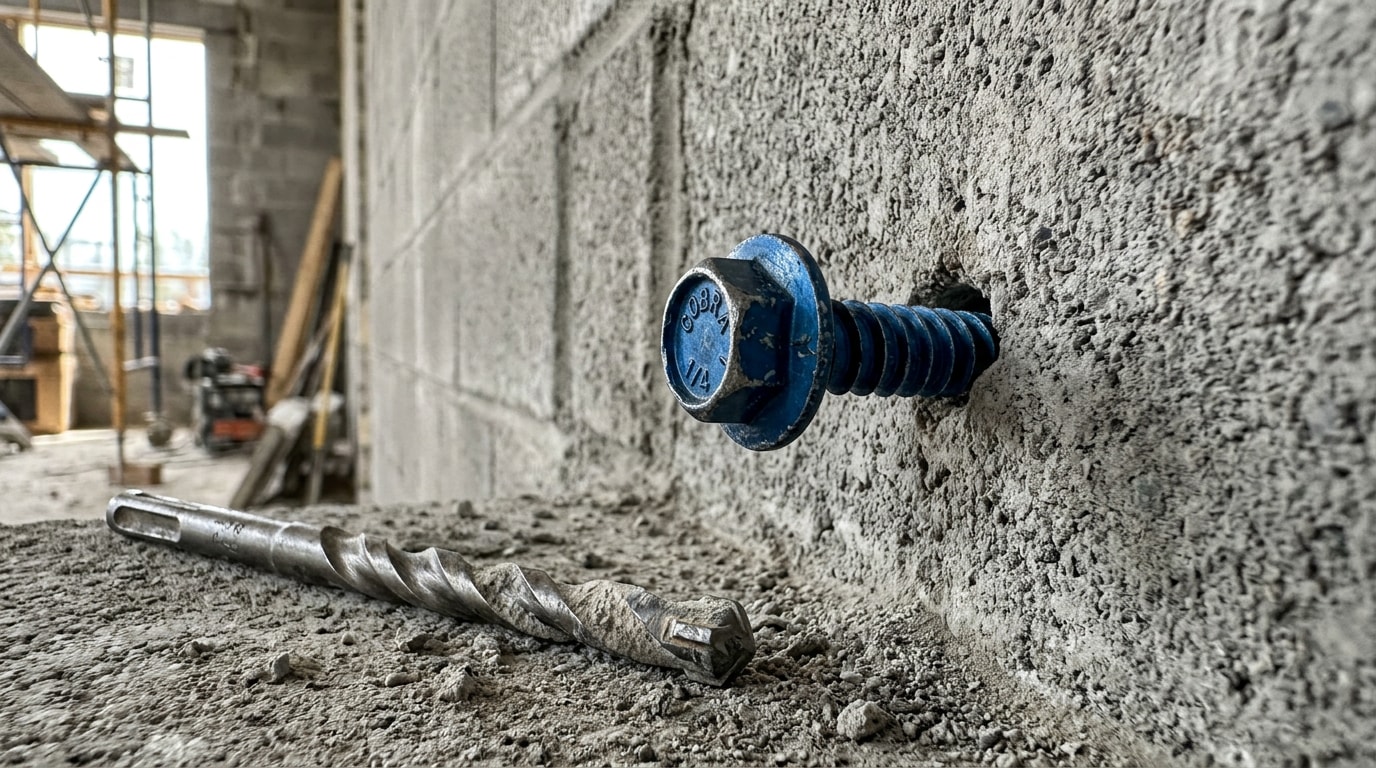
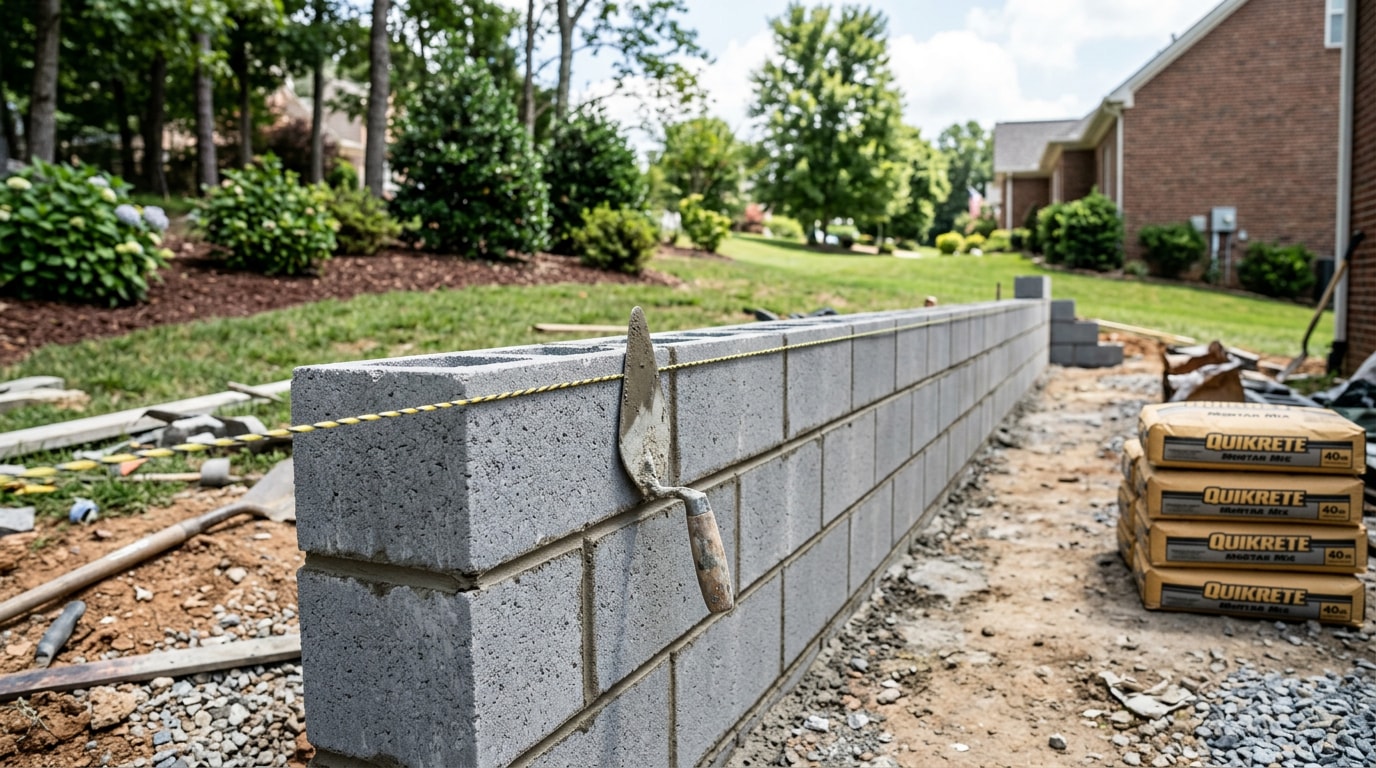
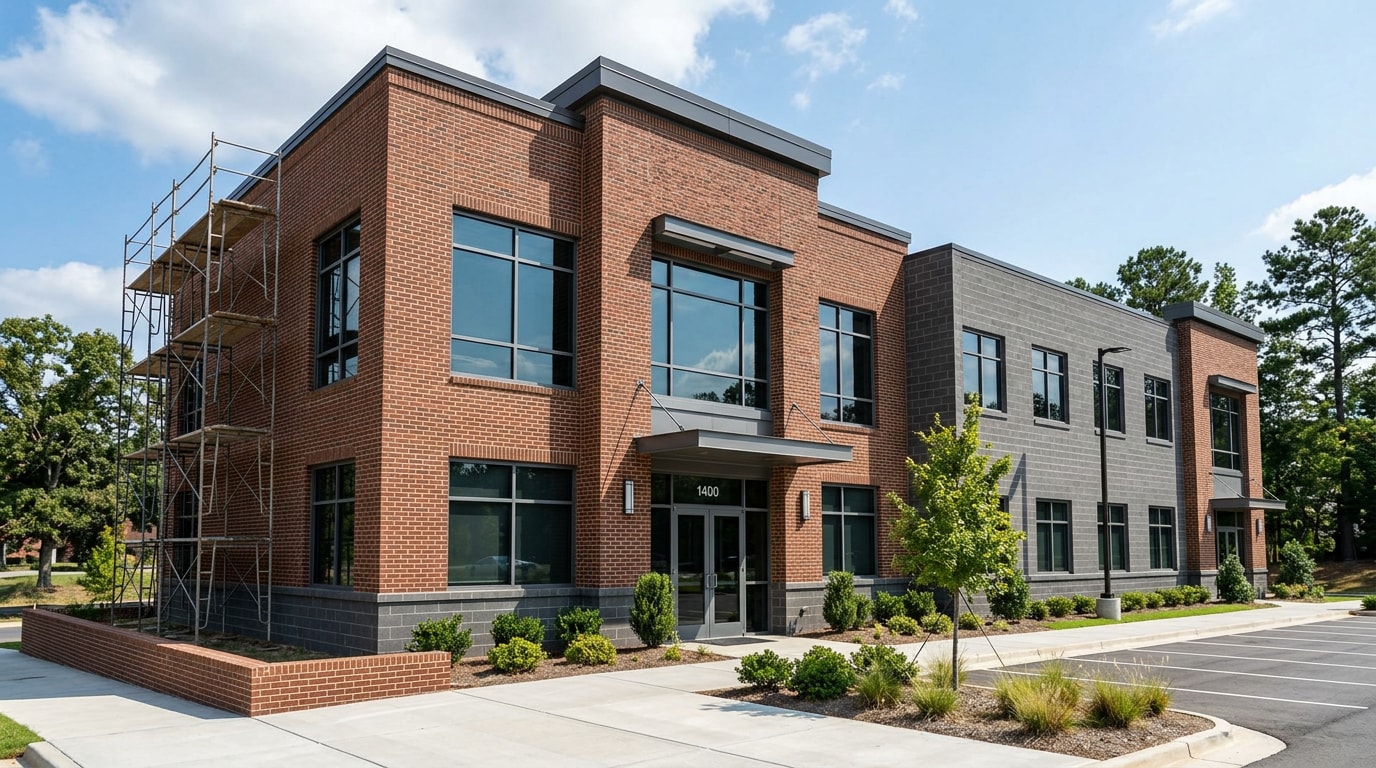
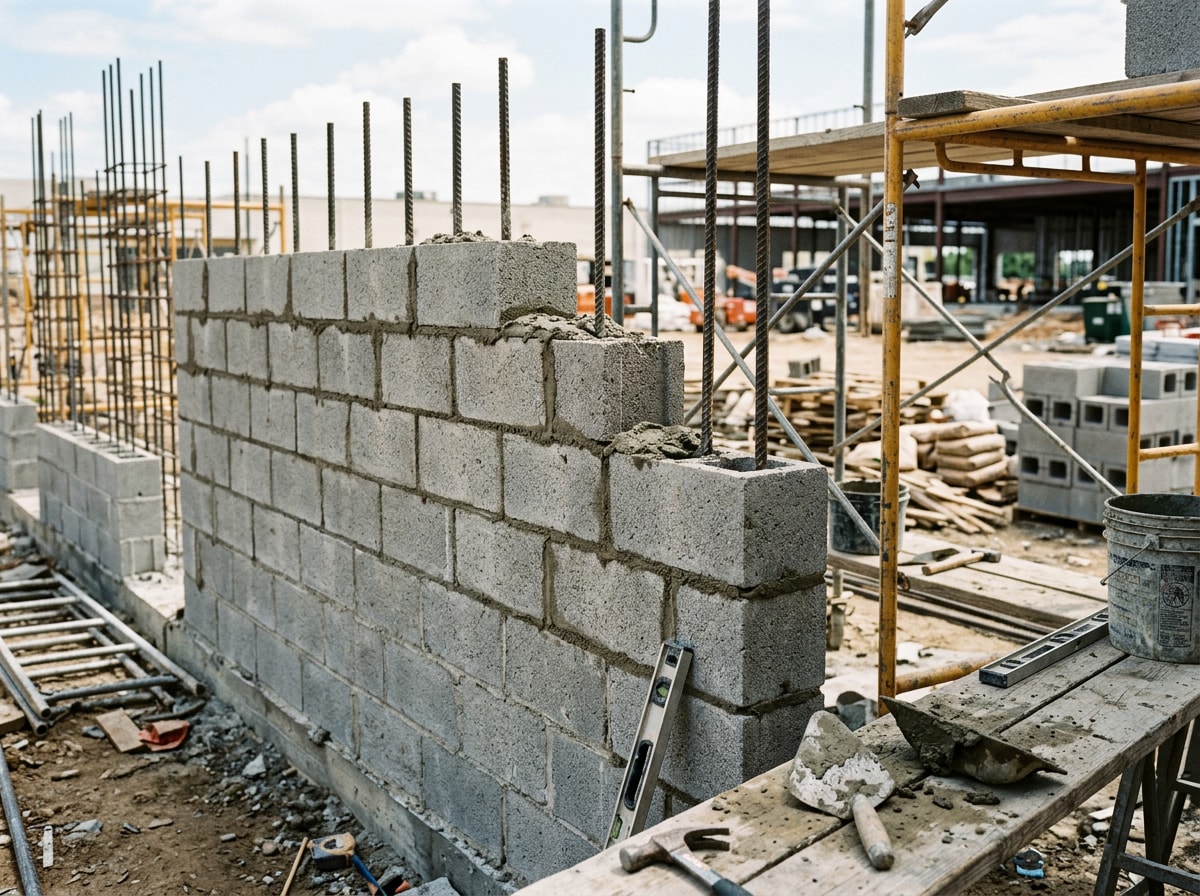
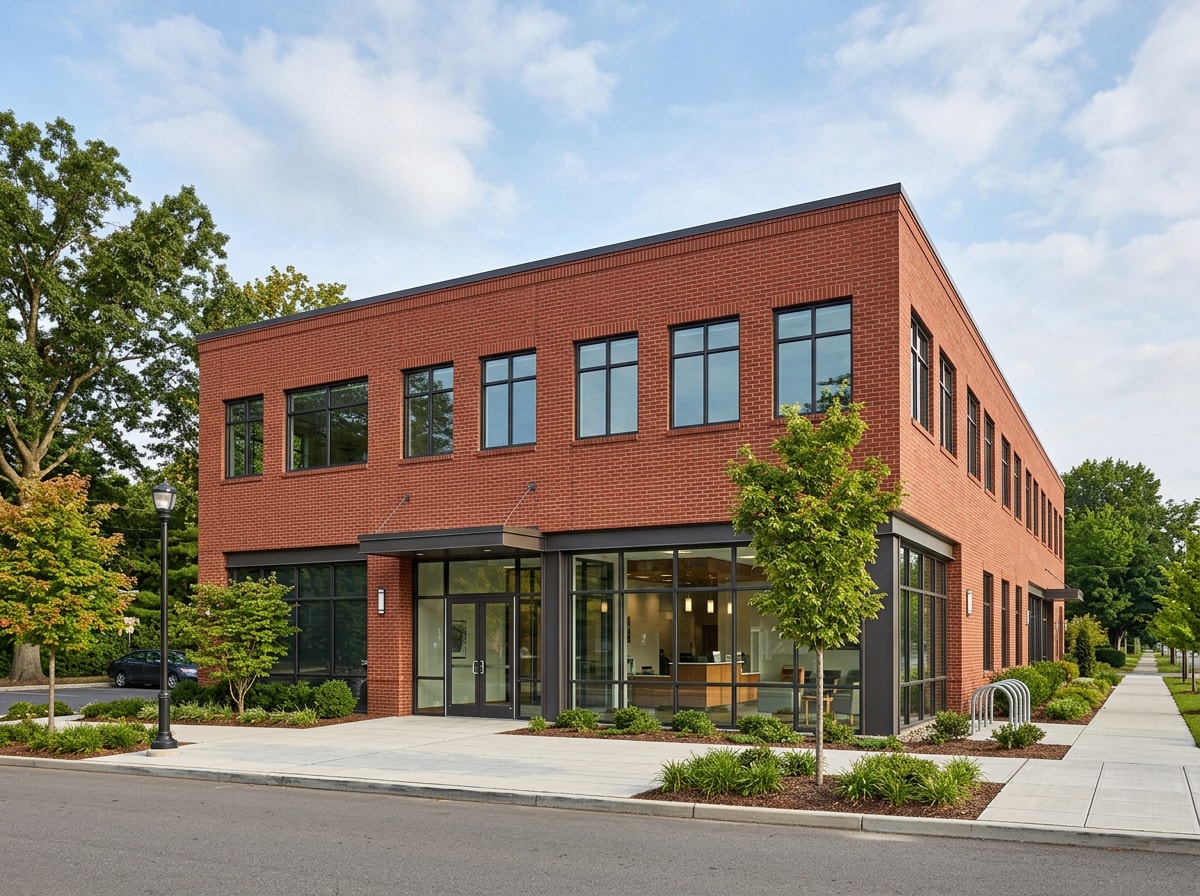
New-construction scope includes CMU block wall assembly, brick veneer installation, and coordination with the general contractor's schedule during the masonry shell phase. A warehouse shell needs reinforced block for structural load. A retail build-out calls for decorative veneer built around precise window and door openings.
The International Building Code's masonry chapter sets minimum requirements covering material specifications, wall construction types, and design criteria for masonry structures . That means a reinforced block wall on a Mebane warehouse and a brick veneer screen wall on a retail strip are governed by different sections of the same code, which is exactly why this isn't a DIY-adjacent trade on commercial jobs.
Renovation & Restoration
Renovation work covers masonry restoration, commercial brick repair, and tuckpointing on existing buildings, including older storefronts in small Alamance County towns. Matching mortar color and joint profile is what makes a patch disappear into an existing façade instead of standing out as a repair.
Commercial Masonry Pairs With Concrete and Site Work
Masonry rarely works alone on a commercial job. Most Mebane projects pair it with concrete and site work on the same schedule.
Masonry trade: Unit masonry, structural masonry, and wall reinforcement are the block and brick systems that carry a building's structural load, distinct from finish trades like concrete flatwork or steel framing happening on the same site.
Concrete trade: Footings, slabs, and foundation work often pair with masonry scope, since one contractor can sequence both trades back-to-back instead of handing the job off between two separate companies. See our concrete contractor services and concrete footings page for how that sequencing typically works.
What Drives the Cost of Commercial Masonry in Mebane
Pricing on commercial masonry depends on scope, access, and whether the job is new construction or restoration. The table below breaks down what typically moves the number.
| Project Type | Typical Scope | Main Cost Drivers |
|---|---|---|
| New CMU shell wall | Reinforced block for warehouses, industrial shells | Wall height, rebar/grout fill, crane or lift access |
| Brick veneer build-out | Retail, office exteriors | Brick selection, number of openings, scaffolding |
| Tuckpointing / restoration | Historic storefronts, older commercial buildings | Mortar matching, hand-tooling, existing damage extent |
| Masonry + concrete footings | Combined foundation and wall package | Soil conditions, site access, sequencing with other trades |
Get a firm number by requesting a free estimate with actual drawings in hand rather than a square-footage guess over the phone.
North Carolina Licensing: What to Confirm Before You Sign
North Carolina sets a hard dollar line for when a general contractor license is legally required. According to the NC Licensing Board for General Contractors, if a project is valued at $40,000 or more, the general contractor must have a license issued by the state. It's the law . Most commercial masonry packages clear that threshold easily once block, brick, mortar, and labor are totaled.
Before signing a contract, confirm the contractor's license status directly through the board, not just a logo on their website or truck. If a bid comes in suspiciously low on a project that should require licensing, that's a red flag worth asking about directly.
What to Look for in a Commercial Mason's Portfolio
Before hiring, ask to see completed commercial masonry projects across government, healthcare, industrial, and retail work. A strong portfolio with general contractor references says more than a sales pitch. Specifically, ask for:
- Photos of completed work in your building type (retail, office, industrial, institutional)
- At least two general contractor or owner references you can call
- Proof of active NC licensing and current liability insurance
- Confirmation they follow jobsite safety protocols
On that last point, OSHA requires that a limited access zone be established whenever a masonry wall is being constructed , and that zone has to stay in place until the wall can support itself. A crew that can't explain this rule off the top of their head probably isn't running commercial masonry jobs regularly. For a deeper look at how to screen bids and credentials, our guide to hiring commercial masonry companies walks through the full vetting process.
Service Area: Mebane and the Triad
We work commercial masonry jobs throughout Mebane and the surrounding Triad, including Burlington and Graham. Running the same crew across nearby job sites keeps scheduling tighter and material costs more predictable than bringing in a mason who only covers one town.
Work With Boswell Brothers of NC
This guide reflects how our masonry and concrete crews at Boswell Brothers of NC actually sequence commercial jobs across Mebane, Burlington, and Graham, not a generic overview pulled from a directory listing. We handle both the new-construction shell work and the restoration side, so you're not coordinating two separate contractors.
Ready to get a number on your project? Start with a site visit and a clear written estimate. Request a free estimate and we'll walk the site, review your drawings, and give you a scope breakdown before you commit to a contract.
FAQ
What does commercial masonry include?
Commercial masonry covers brick, concrete block (CMU), and stone construction on non-residential buildings, including new shell walls, veneer installation, and restoration or tuckpointing on existing structures.
Is commercial masonry the same as concrete work?
No. Masonry refers to unit-based construction like brick and block, while concrete work covers poured flatwork, footings, and slabs. The two trades frequently pair on the same job but are scoped and bid separately.
How much does commercial masonry cost in Mebane, NC?
Cost depends on wall type, access, and whether it's new construction or restoration. A reinforced CMU shell wall, a brick veneer build-out, and historic tuckpointing all price differently because labor, material, and equipment needs vary. Get a project-specific number with a free estimate.
Do I need a licensed contractor for commercial masonry in North Carolina?
Yes, if the total project value hits $40,000 or more, North Carolina law requires the general contractor to hold a state license through the NC Licensing Board for General Contractors. Most commercial masonry jobs exceed that threshold.
How long does commercial masonry construction take?
Timelines vary by wall length, height, and crew size. A straightforward CMU shell wall on a warehouse moves faster than a brick veneer build-out with multiple window and door openings, or a restoration job where mortar has to be color-matched and hand-tooled.
What's the difference between CMU block and brick veneer?
CMU block is typically structural, carrying load as part of the building's shell. Brick veneer is a non-load-bearing finish layer installed in front of a structural wall, chosen mainly for appearance and durability rather than load capacity.