Masonry screws for concrete in Kernersville, NC are the fastener most homeowners reach for when hanging shelves, securing a deck ledger, or mounting a fixture to a block wall. Getting a secure hold means matching screw diameter, drill bit, and embedment depth before you ever pick up a drill. This guide covers sizing, tools, install steps, and the point where a screw stops being the right tool for the job.
What Are Masonry Screws for Concrete?
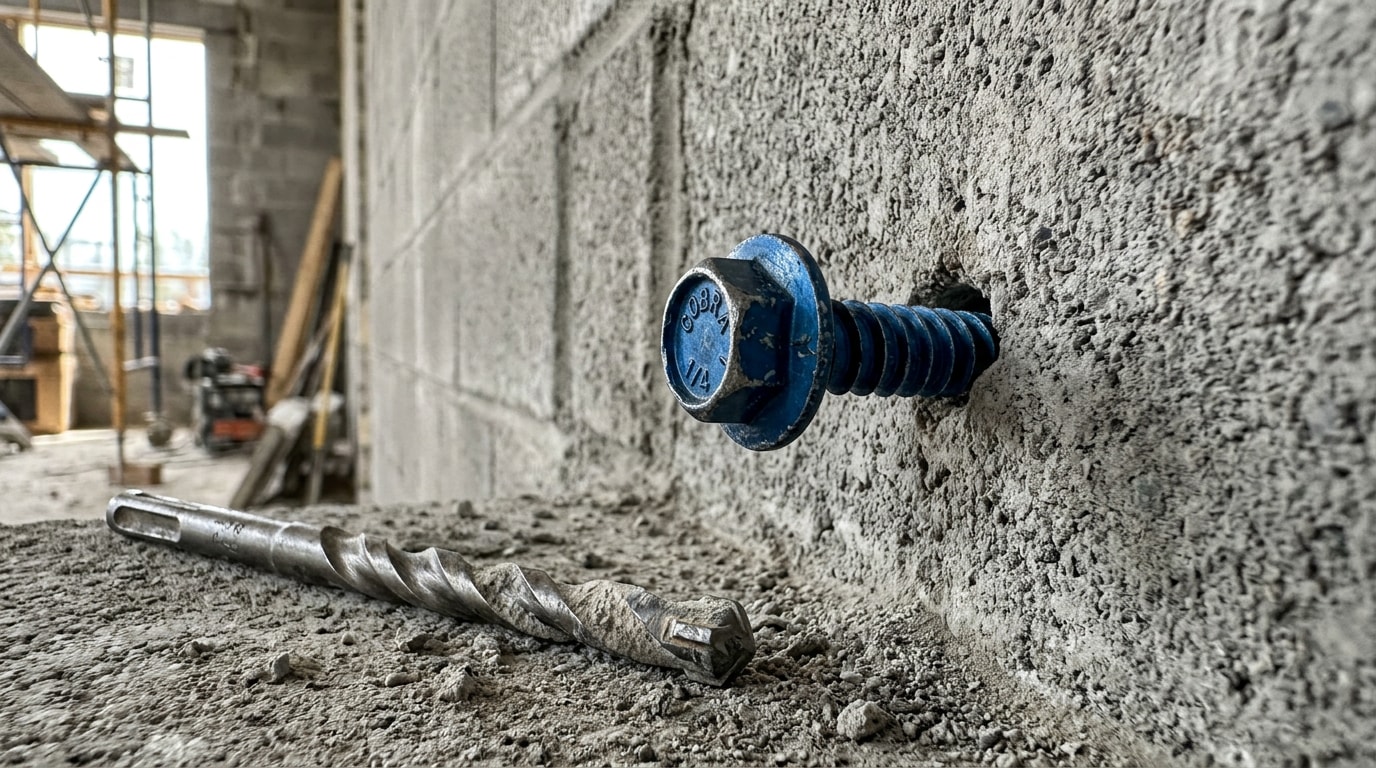
Masonry screws, often sold under the brand name Tapcon, are threaded fasteners designed to drive directly into pre-drilled holes in concrete, brick, or block. They cut their own threads into the pilot hole as they're driven, which creates the grip.
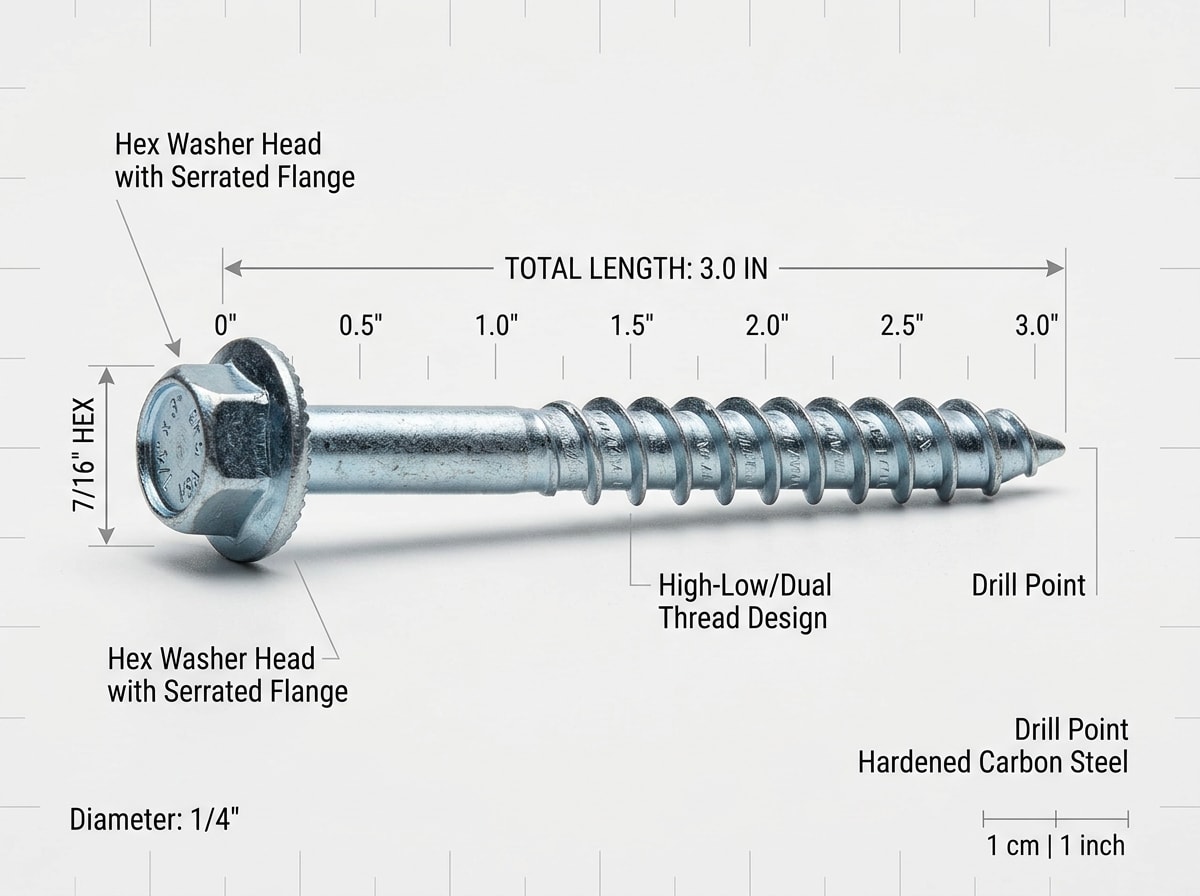
Local hardware suppliers typically stock two diameters, 3/16" and 1/4", in hex washer or Phillips flathead styles. That covers the vast majority of residential and light commercial attachment jobs.
Masonry Screw Sizes & Drill Bit Chart
Bit sizing is where most DIY installs go wrong. The hole has to be slightly smaller than the screw diameter so the threads have something to bite into, and the hole has to be deep enough to give the screw room to seat without bottoming out.
Per the manufacturer's published installation specs, both common diameters share the same minimum embedment, and the hole should be drilled a bit deeper than that embedment to leave room for drilling dust.
| Screw Diameter | Carbide Bit Size | Min. Embedment | Recommended Hole Depth |
|---|---|---|---|
| 3/16" | 5/32" | 1" | 1-1/4" to 1-1/2" |
| 1/4" | 3/16" | 1" | 1-1/4" to 1-1/2" |
Maximum embedment for both diameters is 1-3/4". Driving a screw deeper than that can shear the screw or jam it in the hole instead of improving the hold.
To find the right screw length for your project, add the thickness of the material you're fastening (a 2x4 ledger, a bracket, etc.) to the embedment depth you need. A board that's 1-1/2" thick needs at least a 2-1/2" screw to hit the 1" minimum embedment.
Want more detail on bit selection for your specific job? See our guide to masonry bits for concrete in Kernersville.
Tools, Materials & Safety Gear
Before drilling, gather:
- A hammer drill set to hammer-and-rotation mode
- A carbide-tipped masonry bit matched to your screw diameter
- Painter's tape or a depth stop
- The concrete screws and a matching driver bit (hex or Phillips)
- Safety glasses and a dust mask
Drilling into concrete or block produces fine silica dust. Follow OSHA's respirable crystalline silica guidance for construction and wear proper respiratory protection, especially if you're drilling more than a handful of holes.
How to Install Masonry Screws in Concrete
Installing masonry screws is a two-stage job: drill the hole correctly, then drive the screw with steady pressure.
Step 1: Drill the Hole
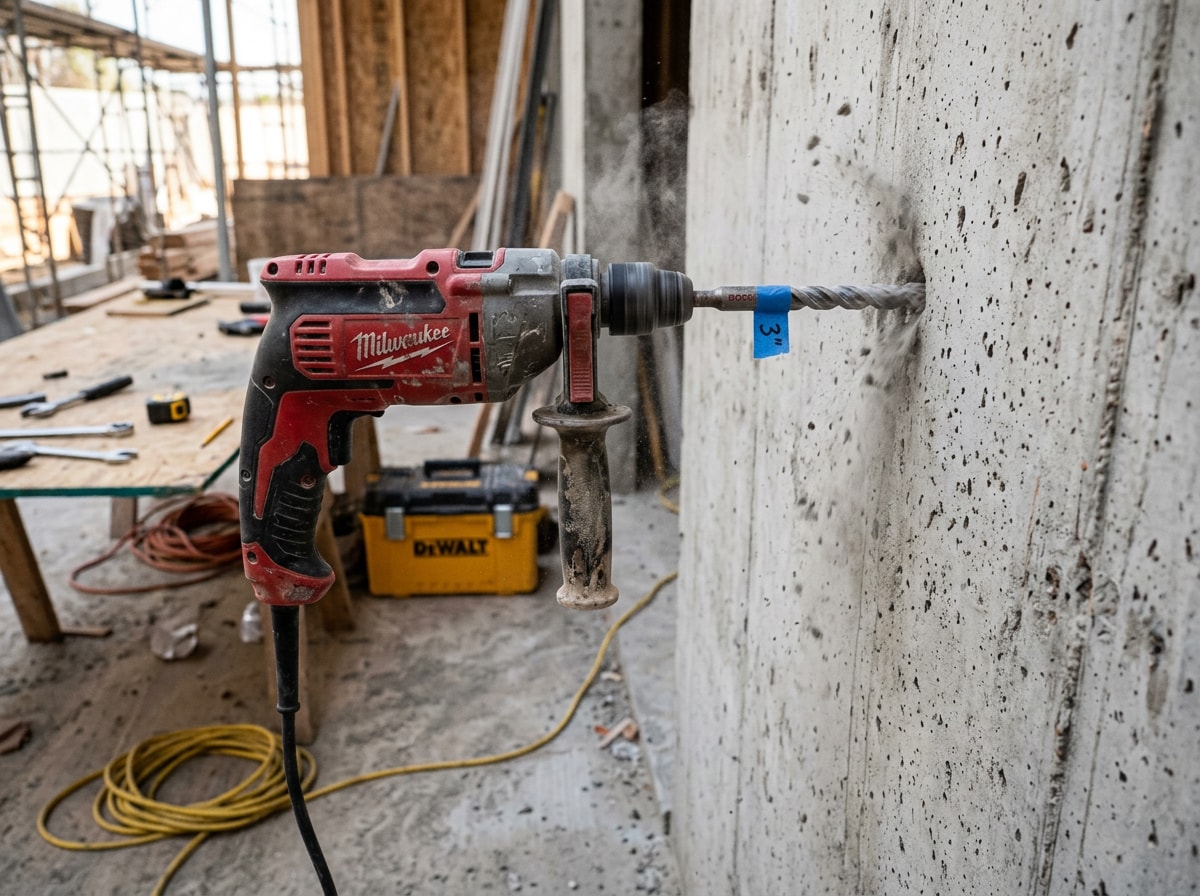
- Mark the bit at your required depth with painter's tape.
- Drill with the hammer drill in hammer-and-rotation mode, keeping the bit perpendicular to the surface.
- Clear dust from the hole with a wire brush, vacuum, or compressed air. A dusty hole is the single biggest cause of a weak hold.
Step 2: Insert and Drive the Screw
- Set the screw into the hole through the fixture.
- Drive it in with a hex driver or Phillips bit, applying steady, even pressure.
- Stop once the head seats snugly against the fixture.
Avoid over-torquing. Forcing the screw past snug can strip the threads it just cut into the concrete, which weakens the hold instead of improving it.
Head Styles: Flathead vs. Hex Washer Head
Concrete screws come in two common head styles, and the right one depends on how the fixture needs to sit.
| Head Style | Sits Flush? | Measured By | Best For |
|---|---|---|---|
| Phillips flathead | Yes, countersunk | Overall screw length | Fixtures that need a flush surface |
| Hex washer head | No, head stays exposed | Length under the head | Brackets, ledgers, general fastening |
Flathead screws are measured by overall length since the head countersinks into the fixture. Hex-head screws are measured from under the head because the head stays visible once installed.
When a Screw Isn't Enough: What We See Around Kernersville
Not every attachment job should end with a masonry screw, and that's worth saying plainly. Our crews regularly get called out to Kernersville homes, many built on older block foundations from the 1960s through 1980s, where a previous screw-in anchor pulled loose or cracked the surrounding block.
Two patterns show up often in this area:
- Older, softer CMU block. Block that's decades old and has absorbed moisture over the years doesn't hold threads as well as dense, newer concrete. Screws that spec out fine on paper can still strip.
- Loads beyond what a screw is rated for. Deck ledgers, handrail posts, and structural brackets usually need a mechanical or adhesive anchor rated for higher shear and tension loads, not a Tapcon-style screw.
For general technical background on how fasteners interact with concrete masonry units, the Concrete Masonry & Hardscapes Association's fastener technical note is a solid reference. For load figures specific to a given screw brand, check the product's ICC-ES evaluation report, which lists tested tension and shear values by concrete strength.
If you're staring at a cracked foundation wall, a failed anchor, or a structural connection you're not confident about, that's a job for a contractor, not a bigger screw. Contact Boswell Brothers of NC for a free estimate before you commit to a fastener that might not hold.
Related Services in Kernersville
Boswell Brothers of NC handles the concrete and masonry work that often comes before or after a fastener job, from repairing the block a screw stripped out of to pouring a new slab entirely. Learn more about our foundation repair services or browse our full concrete contractor services for the Kernersville area. You can also see our local service area details on the Kernersville, NC page, or visit our homepage for an overview of everything we do.
FAQ
What Does a Masonry Screw Look Like?
A masonry screw has visible high-low threads, a hardened steel shank, and typically a blue coating, with either a hex or Phillips head. That's different from a standard wood screw's uniform, finer threads.
Do You Need to Pre-Drill for Masonry Screws?
Yes. Pre-drilling is required for concrete masonry screws. The pilot hole lets the hardened threads cut into the concrete without snapping the screw or cracking the surface around it.
How Much Weight Can a Concrete Screw Anchor Hold?
Holding values depend on diameter, embedment depth, and the strength of the base concrete, not screw size alone. At equal embedment, a 1/4" screw generally outperforms a 3/16" screw in both pull-out and shear strength. Check the ICC-ES evaluation report for the specific product you're using before relying on it for a structural connection.
How Do I Screw Into Concrete?
Drill a pilot hole with a matching carbide bit, clear out the dust, insert the screw through the fixture, and drive it with steady pressure until the head seats. Full steps are above under Step 1 and Step 2.
What's the Difference Between a Tapcon and a Generic Concrete Screw?
Tapcon is a brand name, not a fastener type. Generic concrete screws from other manufacturers use the same high-low thread design and install the same way, but holding values can vary by brand, so check the specific product's load data rather than assuming all concrete screws perform identically.
What Size Masonry Screw Do I Need for a 2x4 Ledger?
Add the thickness of the 2x4 (1-1/2") to the minimum embedment depth (1") for a minimum screw length of 2-1/2". Most installers use a 3" or 3-1/4" screw for this application to leave a margin for dust and uneven drilling.