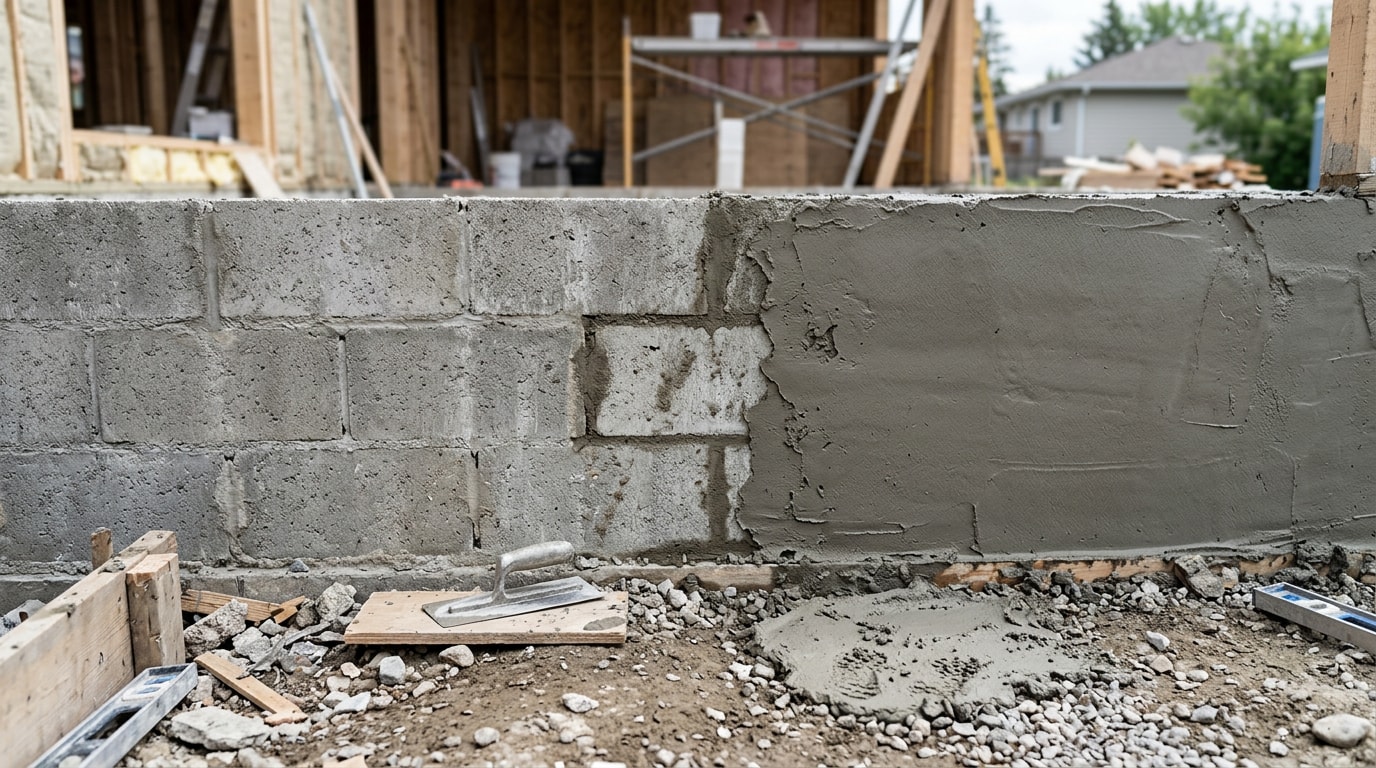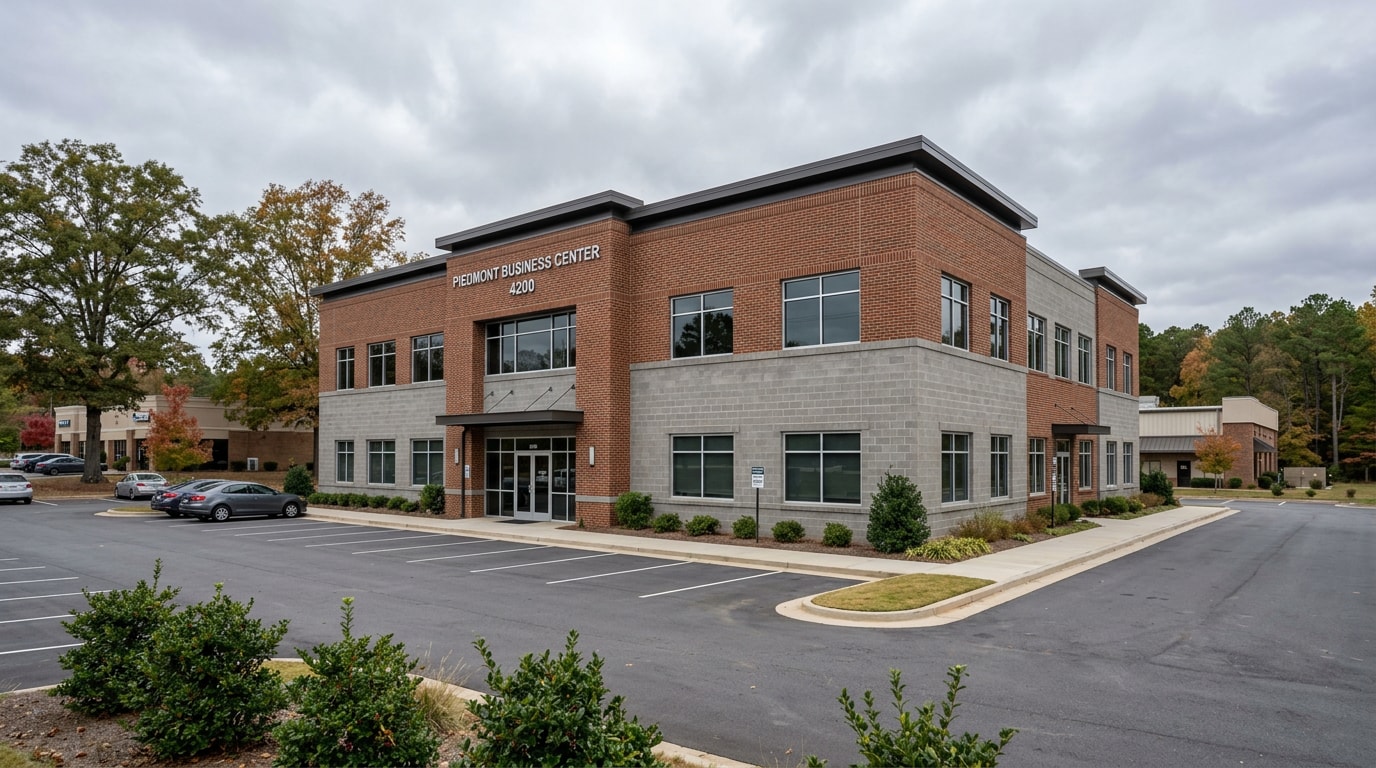
Concrete masonry units in Chapel Hill, NC show up in more places than most homeowners realize: garage foundations, retaining walls, storefront facades, and the block core behind half the brick veneer in town. Picking the right CMU type before you call a contractor keeps your bid, timeline, and permit process from turning into three separate headaches. Here's what each block type actually does, what it costs in 2026, and where local rules change the plan.
What Is a Concrete Masonry Unit?
A concrete masonry unit (CMU) is a precast, hollow or solid concrete block manufactured in standard shapes for structural and decorative masonry construction. That's different from poured concrete, which is mixed off-site or on a truck and cast into forms in place. CMU is a manufacturing standard, and the industry body behind that standard, the National Concrete Masonry Association, publishes the technical specifications masons and inspectors use to check compliance on nearly every commercial job in the Triangle.
CMU shows up in foundations, load-bearing walls, and commercial building envelopes across Chapel Hill, often on the same job site as poured slabs handled by a concrete contractor team.
CMU Types and What They Cost in Chapel Hill
Four block categories cover almost every project a Chapel Hill homeowner or business owner will run into. The table below breaks down where each one fits before we get into pricing.
| Type | Best For | Example Use |
|---|---|---|
| Standard CMU | Structural walls, foundations | Garage or utility building walls |
| Lightweight CMU | Easier handling, upper-floor work | Interior partition walls |
| Architectural CMU | Visible, finished surfaces | Retail storefronts, entryways |
| Segmental retaining wall units | Graded lots, hardscape walls | Sloped-yard retaining walls |
Pricing moves fast with cinder block and CMU markets. As of 2026, standard 8x8x16 gray CMU delivered typically runs in the $1.60–$2.25 per block range, averaging close to $1.98 a block. Architectural or split-face units cost noticeably more: expect $2 to $7 per block depending on finish and number of split faces. Installed wall pricing (materials and labor combined) lands around $18.87–$24.17 per square foot for a basic CMU wall as of mid-2026.
A local builder might spec standard CMU for a basement foundation, then switch to architectural block on the street-facing facade of that same building, since the block itself becomes the finished surface once it's up.
Architectural Concrete Masonry Units
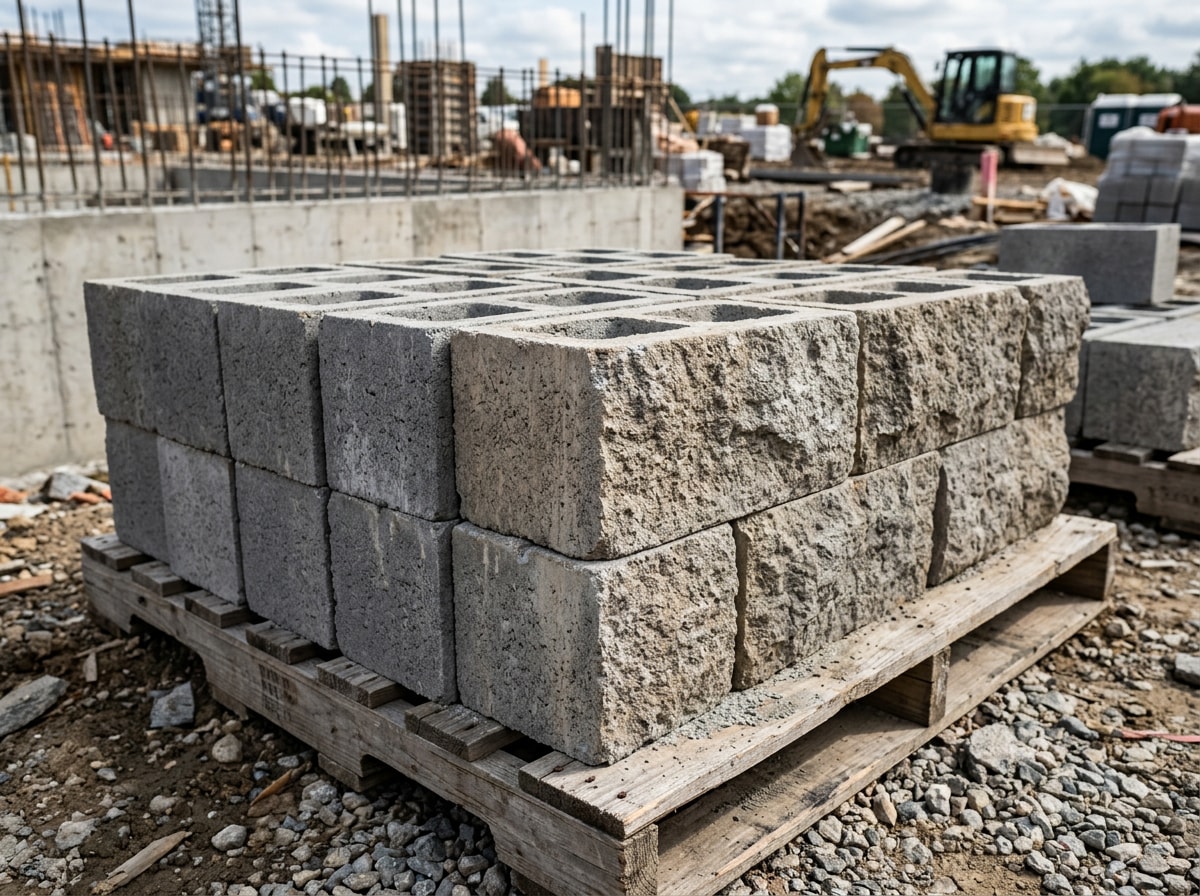
Architectural CMU comes in split-face, ground-face, and colored or textured finishes. Builders specify it where the block itself is the finished wall surface, think retail facades, schools, and institutional entries around Chapel Hill and the broader Triangle.
Lightweight Concrete Masonry Block
Lightweight CMU swaps standard sand and gravel aggregate for expanded shale or slag. The result handles easier on-site and cuts overall structural load, which matters on multi-story commercial builds where dead load adds up fast.
Segmental Retaining Wall Units
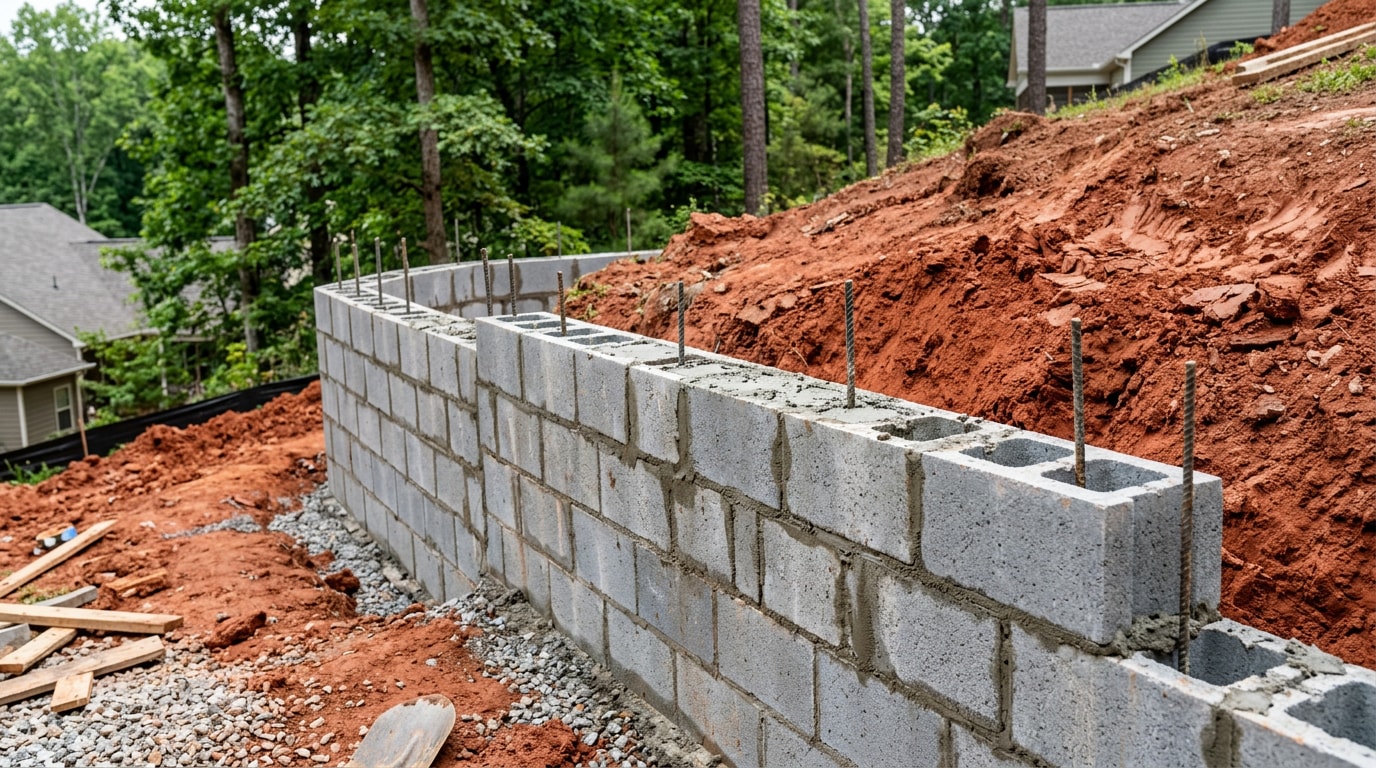
Segmental retaining wall units are interlocking CMU blocks built specifically for graded lots and hardscape walls, both residential and commercial. This is where local rules matter most, and it's the piece most directory listings and review sites skip entirely.
Permits, Soil, and Engineering: What Chapel Hill Projects Actually Require
This is the part that trips up more homeowners than block selection ever does. In Orange County, retaining wall permits require professional engineering for walls over 4 feet, for property-line installations, and for any wall carrying a surcharge load from a driveway, pool, or structure above it. That 4-foot line is tighter than what some neighboring counties enforce, so a wall that would be a simple weekend project in one jurisdiction needs a stamped design here.
Piedmont soil adds a second wrinkle. Chapel Hill's building department has to account for the red clay that dominates much of the town, and that clay is expansive when wet, which is exactly the condition a retaining wall's backfill sits in for most of the year. On our own Chapel Hill retaining wall projects, we've started adding footing depth beyond the code minimum once a wall approaches that 4-foot engineering threshold, even on jobs where the base code would technically allow a shallower footing. It costs a little more concrete up front and saves a callback two winters later.
Before you pour footings for anything taller than a low garden wall, check current requirements through the Town of Chapel Hill's Building Permits and Inspections office. The International Building Code, which North Carolina's state code is based on, also requires that concrete masonry units used in structural and fire-rated assemblies comply with recognized material standards, not just look right stacked on a pallet.
That permitting step connects directly to site preparation and grading services, since wall height and drainage plans usually get finalized together, not separately.
Residential CMU Projects Around Chapel Hill
Homeowners use CMU and related concrete products for garden walls, foundations, and small retaining structures on sloped lots, which are common in and around town. These residential applications scale down commercial CMU systems without sacrificing durability, which is why CMU stays a practical choice even on smaller-scale work handled through residential construction projects.
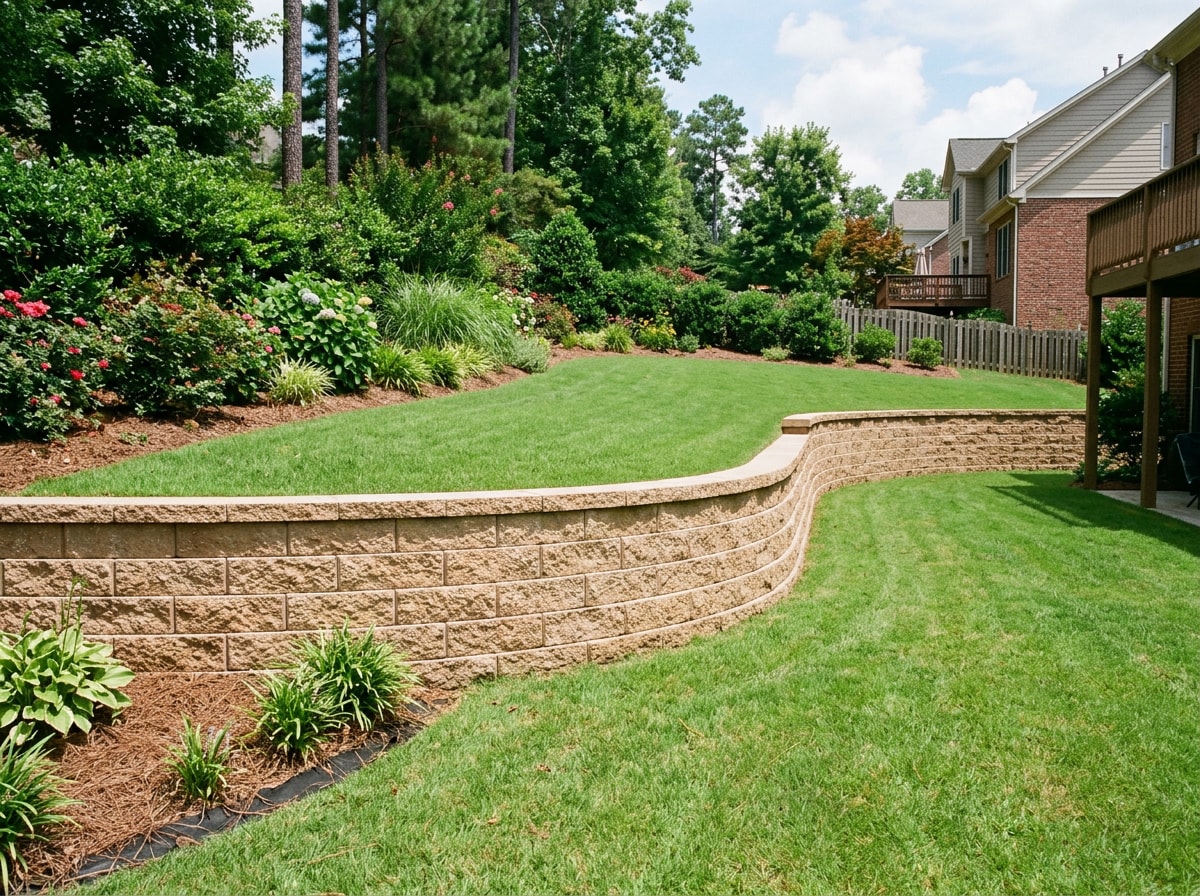
Concrete footings under these walls follow the same engineering logic as commercial work, just at a smaller scale. If your lot has more than a couple feet of grade change, get concrete footings sized correctly before block ever gets delivered.
Commercial and Institutional CMU Uses
Larger builds lean on CMU as the structural backbone behind brick veneer, glass storefronts, or architectural block facades. This pairing gives durability and curb appeal without full-brick costs, and it's why so much commercial construction around Chapel Hill uses block cores even when the finished look reads as brick or stone.
A CMU project of any real size rarely involves just one trade. Load-bearing or tall retaining walls need structural engineering review before construction starts, and larger jobs benefit from a dedicated project manager coordinating concrete, masonry, and grading crews so the block install doesn't sit waiting on another trade.
Local Services That Handle CMU Work in Chapel Hill
Local pros typically split CMU-related work into a few distinct scopes. Knowing which one you need before requesting quotes saves a round of confused callbacks.
- Concrete flatwork and pours, handled separately from block work but often bundled on the same job by a single concrete contractor crew
- Masonry, which typically bundles CMU, brick, and stone work under one quoted scope for materials and labor together
- Block-and-brick combination walls, where CMU forms the structural core and brick veneer covers it for appearance
- Driveway work, where concrete driveways sometimes include CMU or block edging as part of the same project
- Patios and hardscapes, where concrete patios pair with low CMU retaining walls on sloped backyards
If you're weighing paving, patios, and block work together for one property, our Paving and Concrete Chapel Hill, NC: 2026 Homeowner and Business Guide covers how those pieces usually get sequenced on a single project.
Choosing a CMU Contractor in Chapel Hill
Before signing anything, confirm a few basics:
- License and insurance current for North Carolina general contracting or masonry work
- Local permit experience, specifically with Orange County's engineering threshold for taller walls
- A written scope that separates block, mortar, footings, and any brick veneer as line items
- References from jobs at similar wall height, not just any concrete job
- A clear position on soil conditions, since Piedmont clay affects footing depth on almost every retaining wall in town
Ready to scope your project? Get a free estimate and we'll walk the site, check what Orange County's permit rules mean for your specific wall height, and quote block, footings, and labor as one clear number.
FAQ
How much is a concrete masonry unit?
Standard 8x8x16 CMU typically runs about $1.60 to $2.25 per block delivered in 2026, averaging close to $1.98 a block. Architectural or split-face units cost more, generally $2 to $7 per block depending on finish and how many faces are split.
What is the difference between concrete and concrete masonry units?
Poured concrete is a wet mix cast on-site into forms. A concrete masonry unit is a manufactured, precast block delivered ready to stack. Both are concrete-based, but they're built and installed completely differently, which is why a single project often uses both: poured footings under a CMU wall, for example.
What is the average price per yard for concrete right now?
National ready-mix concrete pricing in 2026 generally falls between $120 and $195 per cubic yard, with the Southeast typically running toward the lower end of that range compared to Western and Northeast markets. Get a current quote from a local ready-mix supplier since prices shift with fuel and cement costs throughout the year, and check the National Ready Mixed Concrete Association for broader industry pricing context.
What are the typical sizes of concrete masonry units?
Standard CMU is commonly sized 8x8x16 inches nominally. Actual dimensions run about 3/8 inch smaller on each side to account for mortar joints between blocks once they're laid.
Do I need a permit for a CMU retaining wall in Chapel Hill?
It depends on height and location. In Orange County, walls over 4 feet, walls on a property line, or walls carrying a surcharge load from a driveway or structure above them require a permit and a stamped engineering design. Shorter garden walls generally don't, but confirm with the Town of Chapel Hill's permit office before you dig footings.
Can I stack CMU myself, or do I need a mason?
Low garden walls under a couple feet are within reach for a careful DIYer. Anything approaching the 4-foot engineering threshold, anything on a slope, or anything near a property line should go to a licensed mason, both for code compliance and because a failed retaining wall is expensive to fix twice.
Questions about a specific lot or wall height? Contact us and we'll help you figure out what Chapel Hill's rules mean for your project before you commit to a block order.