The difference between concrete and masonry drill bits comes down to three things: tip hardness, flute design, and how much hammering force the bit is built to survive. Both bits look similar on a store shelf, and the labels get used loosely, but using the wrong one on a Piedmont slab or a brick veneer wall means a slower job and a ruined bit. Here's what actually separates them, and which one belongs in your drill for the job in front of you.
Masonry Bit vs. Concrete Bit: The Core Difference
Manufacturers don't always agree on the line between these categories, which is exactly why the aisle is confusing. Concrete drill bits are used on hard materials such as concrete or granite in combination with a hammer drill bit, while masonry drill bits are used on soft and medium-hard materials such as solid brick or lime sand brick in combination with an impact drill, though both drill bits have carbide heads.
Put another way: a masonry drill bit is a general-purpose bit for drilling into brick, block, mortar, tiles, and some stone, usually with a hammer or impact action, while a concrete drill bit is a type of masonry bit optimized for harder, denser materials like poured concrete and reinforced concrete, often with a heavier carbide tip and stronger body.
In practice, that means:
- Masonry bits chip and grind through brick, block, and mortar joints without much resistance.
- Concrete bits are built tougher so they can keep cutting through dense, aggregate-filled, poured concrete without the tip rounding off.
- Diamond bits step in when the job calls for coring through reinforced concrete, stone, or tile without chipping the surface.
Our crews around Mebane go through several sets of bits a month anchoring ledger boards, setting posts, and coring footings, and the wear pattern is consistent: a standard masonry bit that breezes through a cinder block wall will smoke and dull in under a minute against a cured garage slab. That's the practical version of the spec-sheet difference.
What a Masonry Drill Bit Is Built For
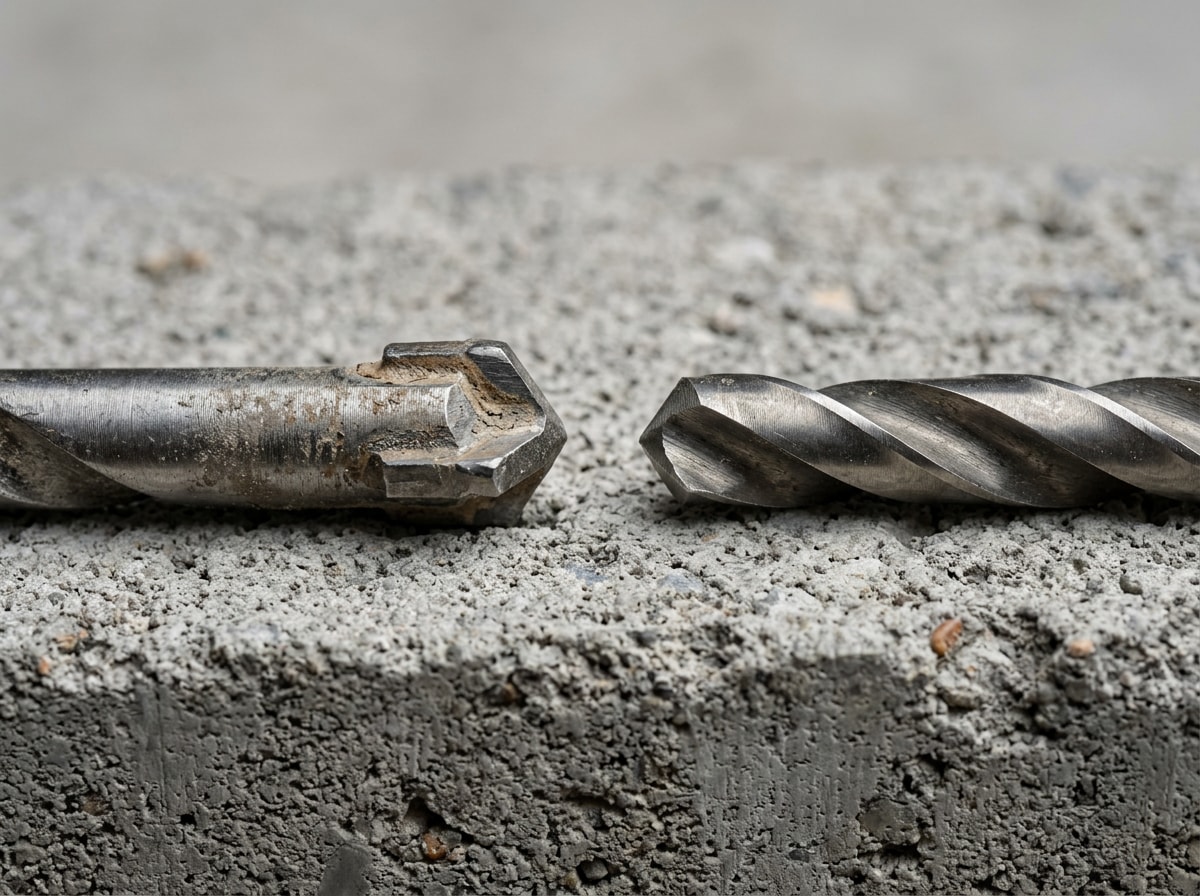
A masonry drill bit has a flat tungsten-carbide tip brazed onto a steel body, designed to pulverise concrete, brick, and stone rather than shave it like a wood bit would. Most standard masonry bits typically use a two-cutter brazed carbide tip , which is plenty for brick veneer, mortar joints, and concrete block.
Most standard masonry bits feature a smooth cylindrical shank or a 1/4-inch hex shank , so they fit a standard drill chuck without any special adapter. That's part of why masonry bits are the go-to for small jobs like hanging a house number or mounting a curtain rod bracket into brick.
What a Concrete Drill Bit Is Built For
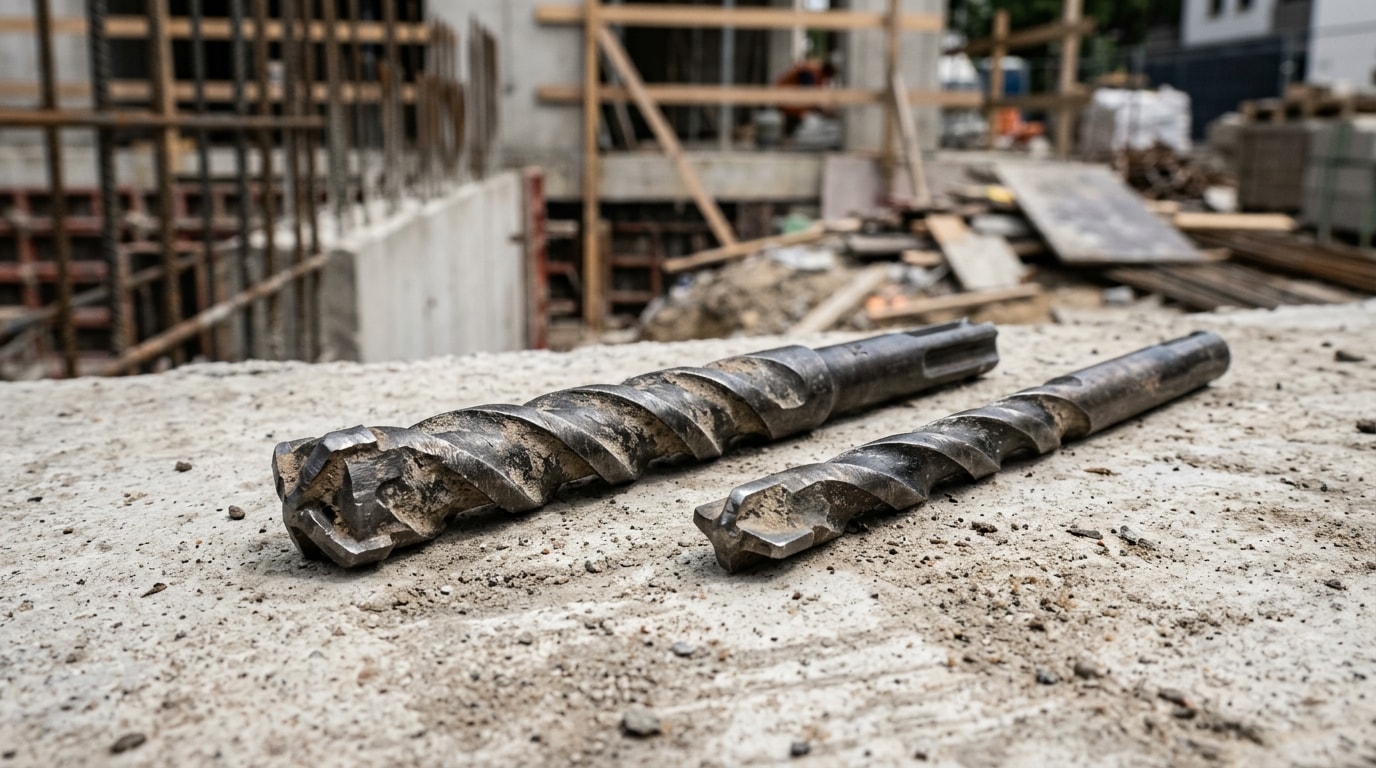
Concrete drill bits, often referred to as rotary hammer bits or SDS bits, are heavy-duty cutting tools built specifically for high-density poured concrete, precast concrete, and concrete embedded with rebar.
Premium concrete bits use a four-cutter solid carbide head engineered to survive rebar strikes , which is overkill for a brick wall but necessary for a structural slab.
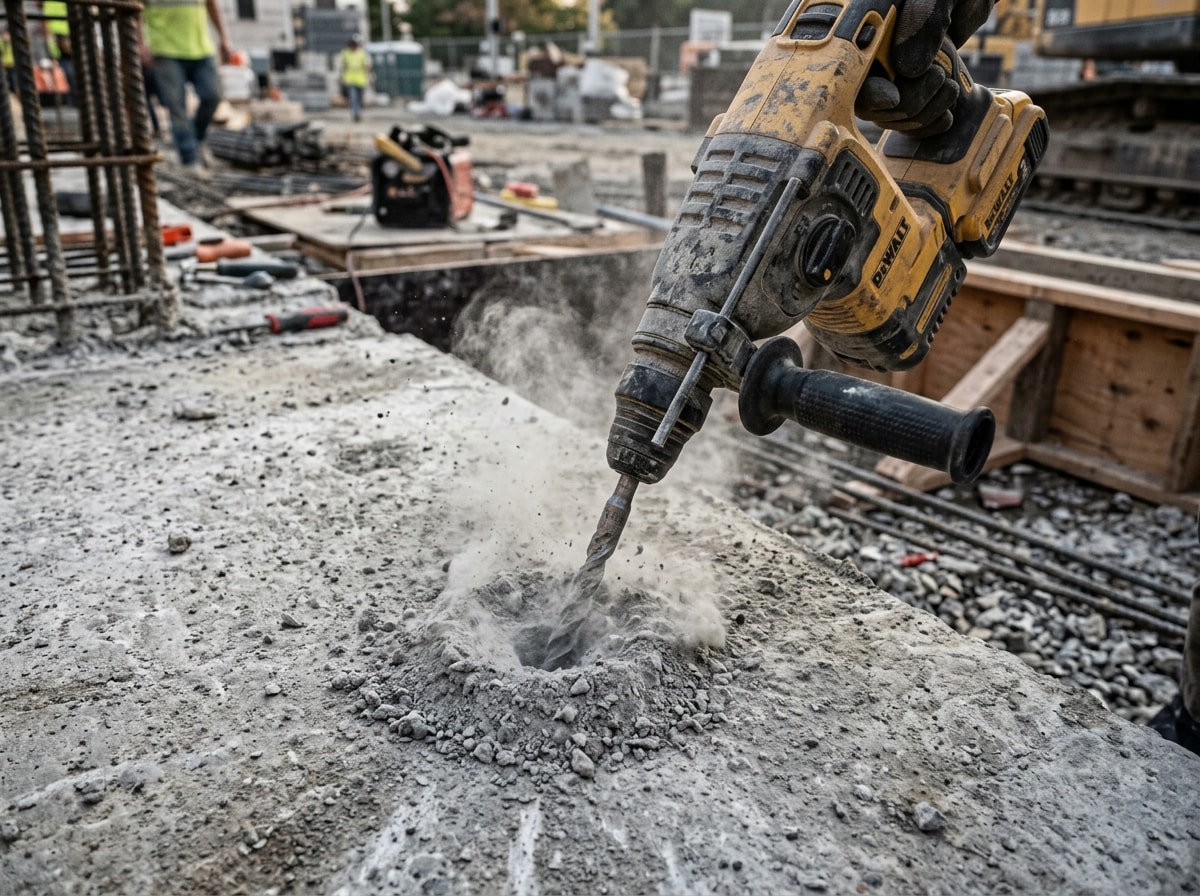
Shank design matters here too. Masonry bits are designed for standard cordless hammer drills, which use mechanical gears to create vibration, while concrete bits are explicitly designed for rotary hammers, which use a piston to create heavy pneumatic impact. The SDS-style shank that locks into a rotary hammer is a different system entirely from the round or hex shank on a basic masonry bit, and the two aren't interchangeable between tools.
Masonry, Concrete, and Diamond Bits Side by Side
| Feature | Masonry Bit | Concrete Bit (SDS) | Diamond Bit |
|---|---|---|---|
| Tip material | Carbide, 2-cutter brazed tip | Carbide, often 4-cutter solid head | Diamond-coated or segmented |
| Shank | Round or hex, fits a standard chuck | SDS-plus or SDS-max | Varies, often threaded for core drills |
| Cutting action | Chips and grinds softer material | Pulverizes dense, aggregate-heavy concrete | Grinds continuously, often wet |
| Best substrate | Brick, block, mortar joints | Poured slabs, footings, rebar-adjacent holes | Reinforced concrete, tile, natural stone |
| Typical tool | Standard or hammer drill | Rotary hammer | Core drill, often with water feed |
A worn bit gives itself away before it fails completely. If a bit that used to cut cleanly now needs heavy pressure and starts smoking or discoloring, it's done, and pushing a dull bit harder just glazes the hole and wastes time.
Which Drill Pairs With Which Bit
The bit is only half the equation. For brick, block, and mortar in a standard hammer drill, a 2-cutter masonry bit is enough; for poured concrete, structural slabs, or any chance of hitting rebar, a 4-cutter SDS bit in a true rotary hammer is the better call.
Using a standard masonry bit on dense, reinforced concrete will quickly ruin the bit and melt the carbide tip without making real progress.
A quick gut check for choosing the tool:
- Brick, block, or mortar joints → masonry bit, standard or hammer drill.
- Poured slab, footing, or foundation wall → concrete-rated bit (SDS), rotary hammer.
- Rebar nearby, structural anchor, or large-diameter hole → four-cutter SDS bit, rotary hammer, or a diamond core bit.
- Tile, natural stone, or a hole that has to stay chip-free → diamond bit, often with water.
If you're drilling more than a handful of holes, it's worth protecting your lungs along the way. Drills and similar tools used to drill holes in concrete, masonry, or other silica-containing materials can generate respirable crystalline silica dust , so a shop vac at the hole or a wet-drilling approach on bigger jobs isn't overkill, it's basic hygiene.
A Mebane-Specific Wrinkle Worth Knowing
Here's something most national buying guides skip: aggregate varies by region, and it changes how fast a bit dulls. Piedmont North Carolina ready-mix commonly uses granite or quartz-based aggregate, which is noticeably harder on carbide tips than the softer limestone aggregate common in other parts of the country. If you've drilled concrete in another state and found it easy, don't assume the same bit will hold up the same way here, budget for a tougher, concrete-rated bit rather than a bargain masonry set.
When to Call a Professional Instead
For a shelf bracket or a house number, the right bit and a trip to the hardware store solves the problem. For anchor bolts into a structural footing, coring through a load-bearing wall, or any hole near embedded rebar, the stakes (and the cost of guessing wrong) go up fast. That's the point where it makes sense to bring in a concrete contractor who already owns the rotary hammers, core bits, and dust-control gear for the job, rather than buying a one-time tool you'll use once.
If you want more detail on matching a bit to a specific concrete job, our guide to the best masonry drill bit for concrete breaks down sizing and bit selection in more depth.
Boswell Brothers of NC handles concrete and masonry work across Mebane and the surrounding Triad, from small anchor installs to full foundation and flatwork projects. If your project is bigger than a weekend DIY job, contact us for a free estimate before you buy a single bit. You can see the full range of services on our homepage.
FAQ
Is there really a difference between masonry and concrete drill bits?
Yes. The major difference between concrete and masonry drills is their drilling heads: the cutting head of a concrete drill is relatively hard and made of Widia plate, while the cutting head of a masonry drill is made with a hardened metal material. In everyday terms, concrete bits are built heavier for dense, poured material, while masonry bits handle softer brick, block, and mortar.
Can I use a masonry drill bit on poured concrete?
For a handful of small, shallow holes, usually yes. For anything deeper, denser, or near rebar, a standard masonry bit will dull fast and may not get you through at all. If you need to drill many holes in a row, a standard masonry bit will often wear out much faster than a concrete-optimized bit.
Can I use a concrete drill bit on brick or block?
A concrete bit is still a masonry bit, so it will also drill brick, block, and mortar without issue. It's not the most efficient choice for soft brick, since it's built for tougher material, but it won't damage the brick.
What's the difference between a masonry bit and an SDS bit?
A masonry bit uses a round or hex shank that fits a standard drill chuck. An SDS bit uses a slotted shank that locks into a rotary hammer without a chuck at all, letting the tool strike the bit directly for much harder impact. SDS bits are the standard choice for poured concrete and any work with a rotary hammer.
How do I know when a masonry or concrete bit is worn out?
A worn bit needs more downward pressure than it used to, cuts slower, and starts generating visible heat or discoloration at the tip. Once you see that, replace it. Continuing to push a dull bit just glazes the hole walls and wastes your time.
What are the three main types of drills used for concrete and masonry?
Standard rotary drills, hammer drills, and rotary hammers (often SDS-style). A hammer drill adds a mechanical hammering action to the spin; a rotary hammer uses a piston-driven blow that's considerably stronger, which is why it's paired with concrete-rated bits for slabs, footings, and anchor work.