The right masonry drill bit for concrete in Liberty, NC is the difference between a clean hole in five minutes and a scorched, dulled bit that never gets there. Grab the wrong one and you'll strip a carbide tip on the first anchor hole in a driveway slab or block foundation. This guide covers the bit types that actually hold up, what to check before you buy, and when a DIY hole is a sign you need a concrete contractor instead of another trip to the hardware store.
Masonry vs. Concrete Drill Bits: What's the Difference?
Concrete drill bits are often labeled "masonry bits" in professional settings, since they're built to handle the density and abrasiveness of concrete products. The practical distinction buyers care about isn't the name on the package. It's the tip hardness and geometry underneath it.
That geometry determines whether the bit survives dense, aggregate-filled concrete versus softer brick or block.
Not every masonry bit is rated for concrete work. Look for a bit that specifically states it's designed for concrete, rather than assuming a general "masonry" label covers it. A brick-rated bit wears out fast against poured concrete's harder mix.
Types of Masonry Drill Bits for Concrete
Two designs cover most jobs homeowners and contractors around Liberty, NC will run into at local retailers.
Carbide-Tipped Bits
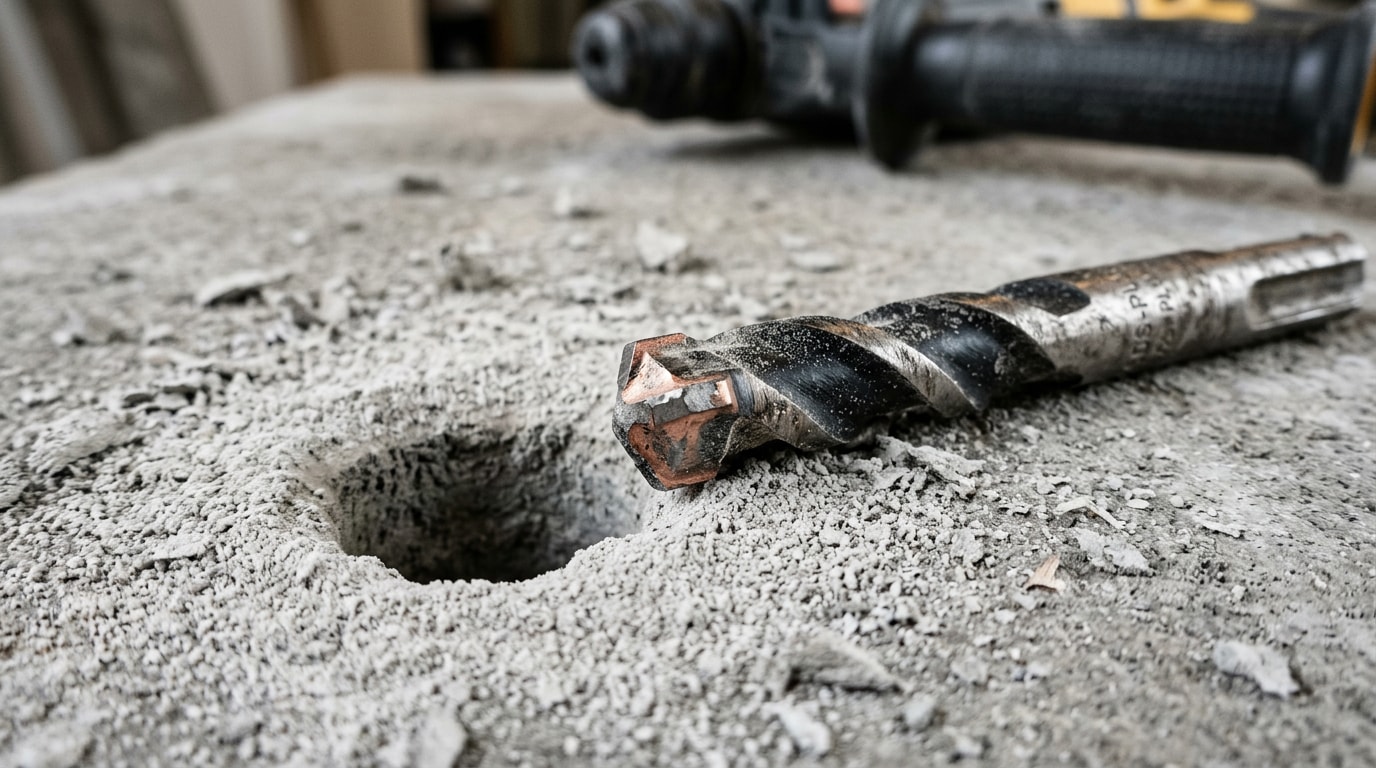
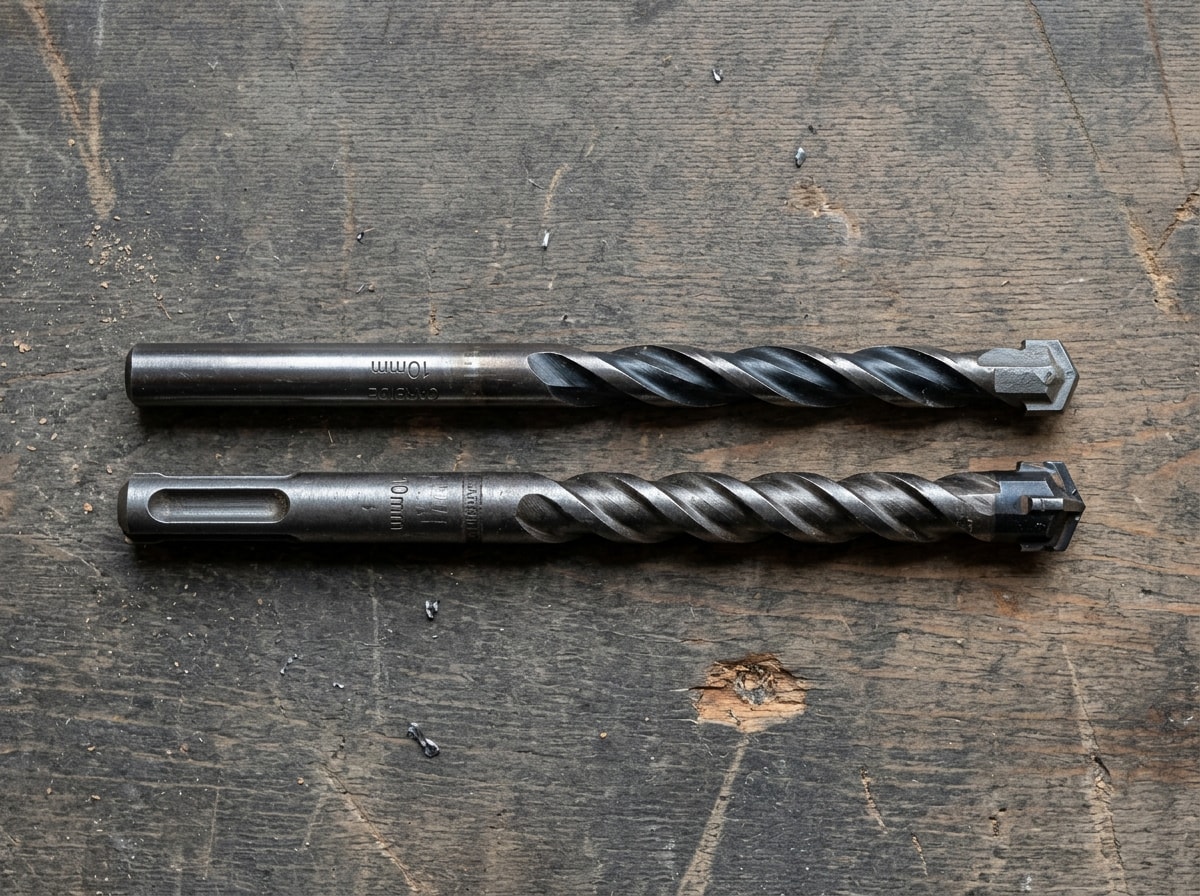
Carbide-tipped bits are the go-to choice for most masonry drilling tasks. The tip is made from tungsten carbide, a material that resists the friction of boring into dense surfaces without dulling quickly. A cheap steel tip heats up and wears down in minutes. A quality carbide tip handles repeated use across multiple jobs.
For general-purpose drilling, anchors, light fixtures, small conduit runs, a carbide-tipped bit paired with a standard hammer drill handles the job well.
One detail most buying guides skip: the number of cutting edges ground into that carbide tip matters as much as the tip material itself. A two-cutter bit works fine for most anchor holes under 1/2 inch. Once you go bigger, or you're drilling into concrete that's likely to have rebar near the surface (think driveway edges or footing perimeters), a four-cutter design keeps the hole round and resists chipping better under repeated impact. Four-cutter bits with a 180° cutting diameter and an active-centering tip are built specifically to produce a rounder hole with precise driving in reinforced concrete.
Rotary Percussion (SDS) Bits
Rotary percussion bits are built for powerful impact drilling through tougher masonry. They combine a spinning motion with a rapid hammering action, which lets them cut through dense material faster than a standard bit alone. These are typically run as an SDS bit paired with a rotary hammer, making them the better choice for reinforced concrete, foundations, or any job where speed and power matter more than finesse.
If you're drilling repeatedly into cured, reinforced concrete rather than a quick one-off hole, this is usually the better investment.
What to Consider Before You Buy
Beyond bit style, two practical factors decide whether a bit will actually work in your drill: what it's made of, and whether it physically fits your tool.
Material and Coating
Coatings change how a bit performs over time.
- Black oxide: More durable than plain high-speed steel, resists rust and corrosion, but not built for heavy concrete work.
- Standard carbide-tipped: Handles general concrete and brick drilling without breaking down quickly.
- Full carbide-head: Adds real strength for boring through stone and dense concrete repeatedly.
| Tip Type | Durability | Price Tier | Best Use |
|---|---|---|---|
| Black oxide | Moderate | Budget | Wood, light masonry, occasional use |
| Standard carbide-tipped | High | Mid-range | General concrete and brick drilling |
| Full carbide-head | Very high | Premium | Frequent or professional-grade concrete work |
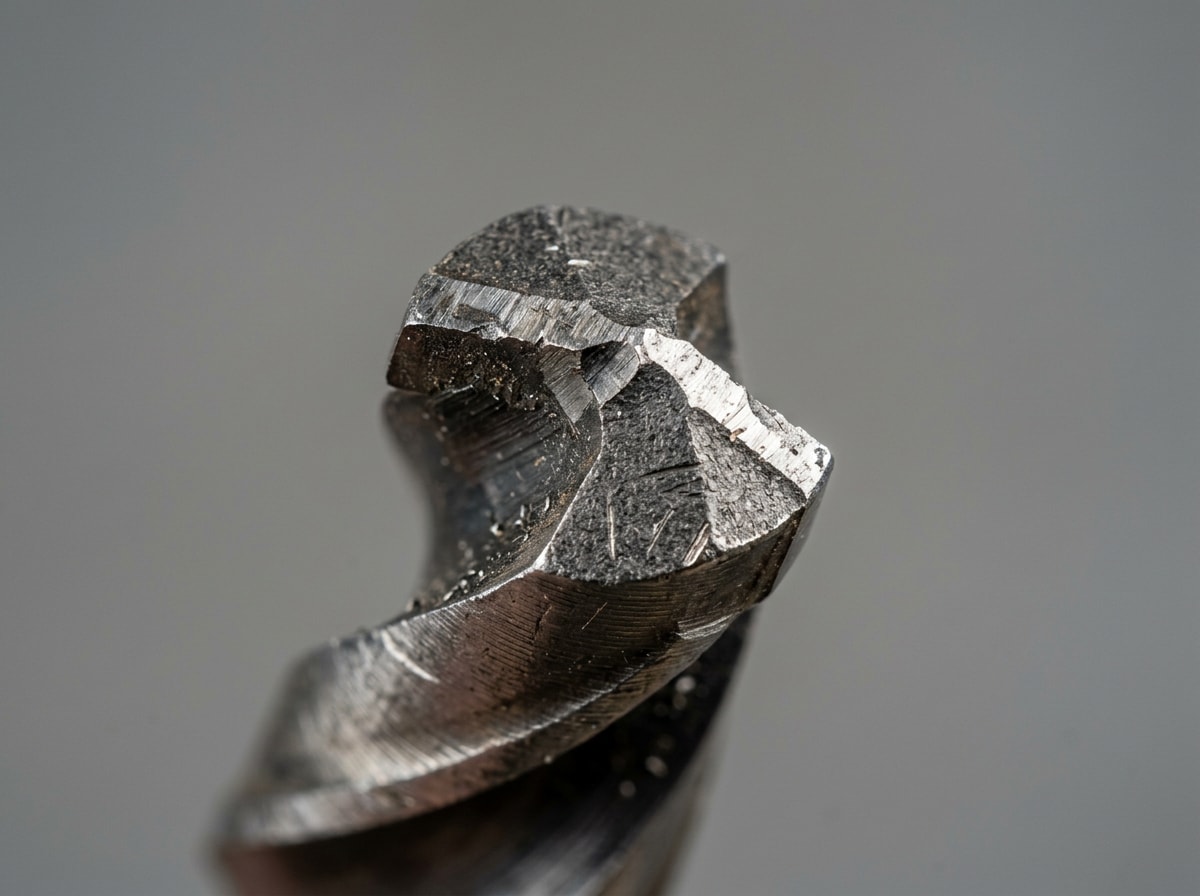
Bosch's own line of masonry and concrete drill bits is built with carbide tips for extra durability, aimed at tackling tough concrete and stone with reliable results. That's a useful benchmark if you want to compare tip construction before buying a set locally.
Drill Compatibility
Not every bit fits every drill. Check your chuck size before you buy:
- A 1/2-inch drill accepts shanks up to 1/2 inch in diameter.
- A 3/8-inch drill only takes bits with shanks up to 3/8 inch.
Many concrete bits have a slotted drive system (SDS), with slots cut into the ends of the shanks for use in rotary hammer drills.
Smooth-shank bits fit standard drills, and hex-shank bits fit standard drills and impact drivers.
Confirm which shank your drill takes before you leave the store. SDS bits won't seat in a standard chuck, and vice versa.
Do You Need a Hammer Drill?
Most guides assume hammer drilling is mandatory for concrete, but there are real trade-offs worth weighing, especially on delicate surfaces, thinner slabs, or finished walls where quiet drilling matters more than raw speed.
Hammer-mode drilling produces more vibration than no-hammer drilling, and that distinction is more than a comfort issue. Vibrating hand tools can cause vibration syndrome, a condition also known as vibration white finger or Raynaud's phenomenon of occupational origin , and evidence shows advanced stages of the condition can appear after exposures as short as one year . Choosing a no-hammer approach when the material allows it is a simple way to cut that cumulative exposure.
For a quick anchor hole in soft block, a standard drill and a sharp carbide bit is often enough. Save the hammer setting for cured, aggregate-heavy concrete.
How to Drill Into Concrete
- Mark your spot with a center punch or pencil so the bit doesn't wander on contact.
- Start at a slow speed to let the tip cut a stable starting groove.
- Increase to the recommended speed for your bit size and depth.
- Pull the bit out periodically to clear dust. A clogged hole makes the bit work harder and heat up faster.
- Switch to hammer or rotary mode for dense or reinforced sections, based on your bit and drill type.
- Stop if you hit resistance that feels different from steady concrete. You may have hit rebar, and forcing through it can snap the bit or damage the drill.
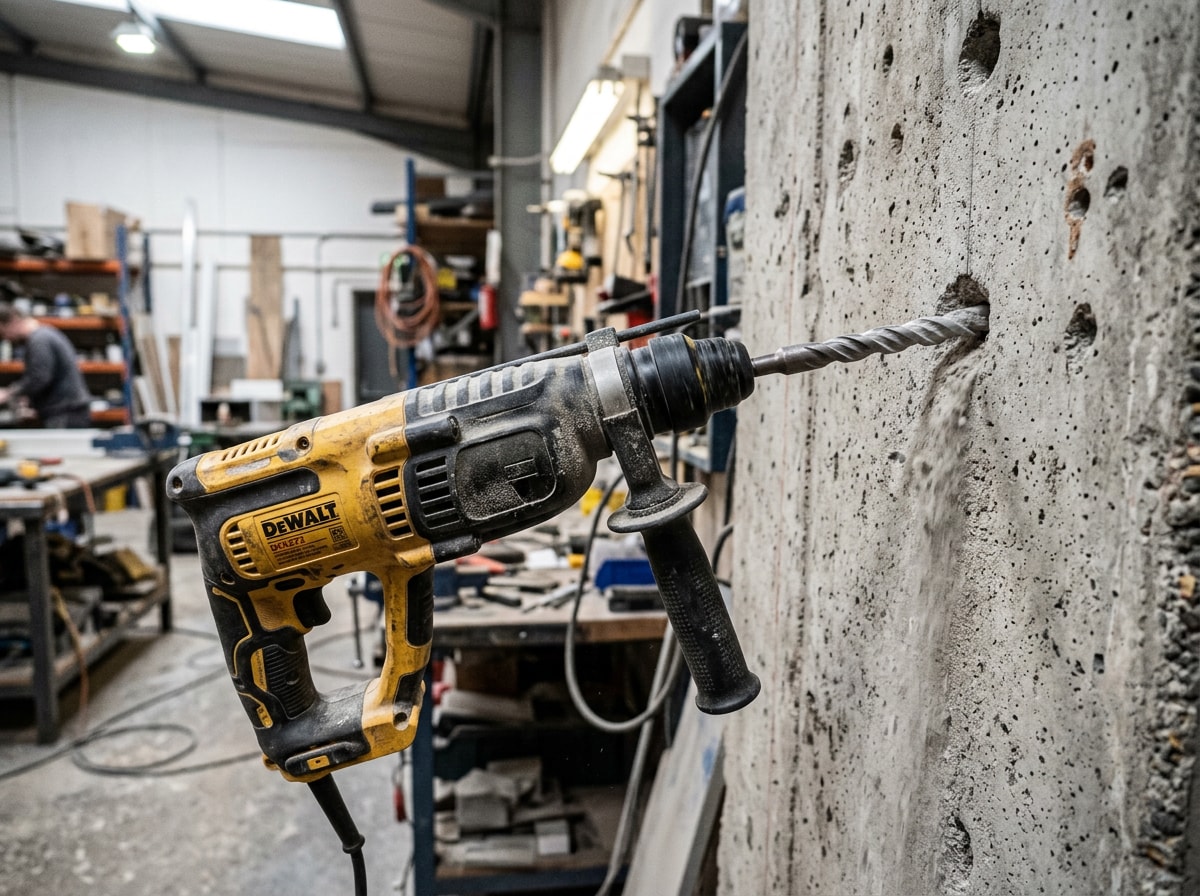
Concrete dust contains respirable crystalline silica, and crystalline silica is a common mineral found in construction materials such as sand, stone, concrete, brick, and mortar . OSHA's Respirable Crystalline Silica standard for construction requires employers to limit worker exposures to respirable crystalline silica and to take other steps to protect workers , and for homeowners doing the same work, the same logic applies: use dust collection or wet-cutting methods, and wear a respirator on any job with extensive drilling.
When Hitting Rebar Means It's Time to Call a Pro
In our own concrete work across Randolph County, we see the same pattern over and over: a homeowner drills a few holes for a deck ledger or a railing anchor, hits rebar six inches in, and starts wondering whether the whole footing is even sound. One stubborn hole is normal. Repeated resistance across multiple holes in the same slab or footing usually means you're dealing with reinforcement placed closer to the surface than expected, which is worth a second look before you keep drilling.
If you're planning something bigger than a fixture anchor, like a structural post base or a ledger that carries real load, that's no longer a drill-bit decision. It's a foundation decision. Our concrete footings and monolithic slabs teams handle exactly this kind of reinforced work daily, and we'd rather tell you that up front than have you crack a slab chasing a DIY shortcut.
If that sounds like your project, get a free estimate before you buy another bit set. It's a five-minute call that can save you a cracked slab.
Where to Buy a Masonry Drill Bit in Liberty, NC
Liberty, NC shoppers generally have two solid options: independent local hardware stores and national big-box retailers.
A local hardware store in the Liberty or greater Randolph County area often means faster in-person advice, someone who can match shank size and bit type to your specific drill on the spot. The selection may be smaller, though, especially for less common SDS sizes.
Big-box retailers usually carry a broader in-stock selection, which helps if a local shop doesn't have the exact size you need. The trade-off is less personalized guidance, so it helps to know your drill's chuck type before you go.
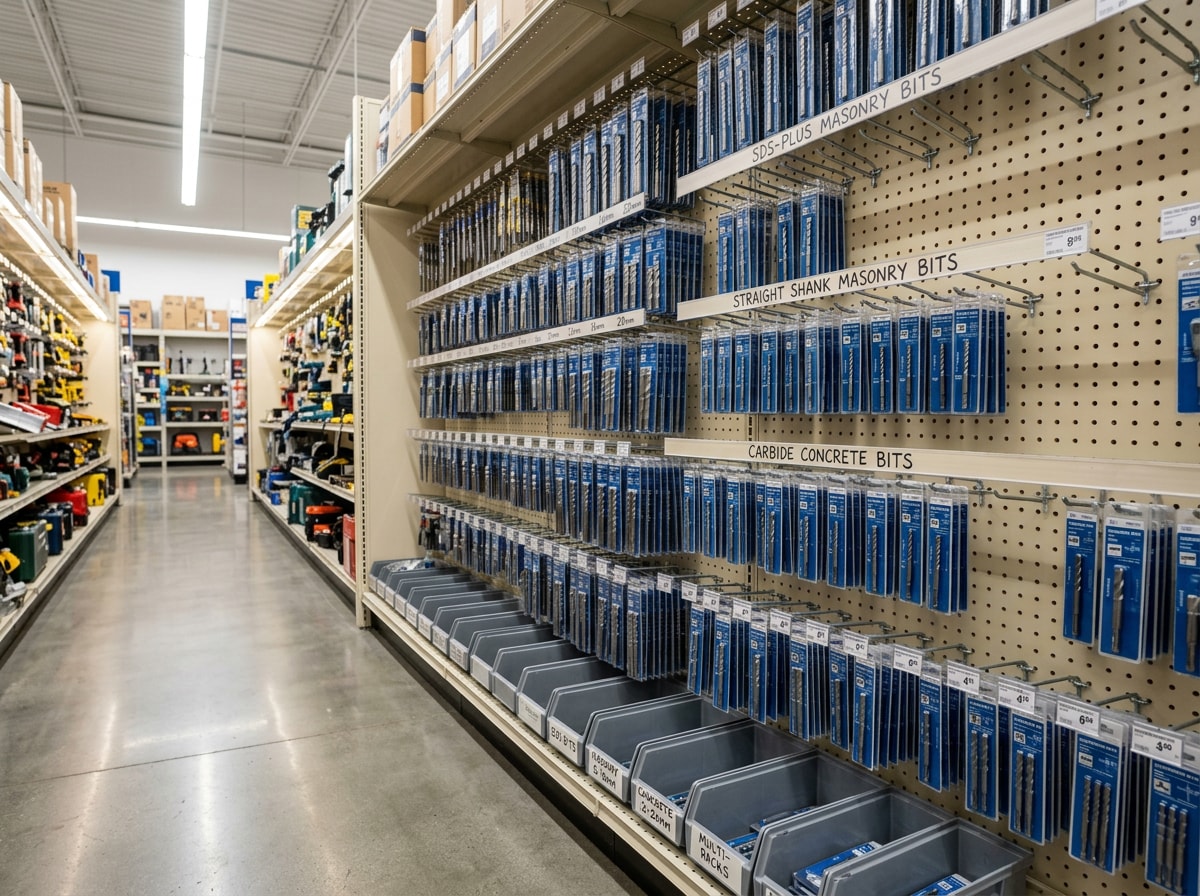
Some buyers stick with a nearby independent store for convenience and advice. Others make the drive to a big-box location specifically for selection. Neither is wrong. It depends on how specific your project's requirements are.
If your project has grown past a DIY anchor hole into an actual concrete or foundation job, our concrete contractor team serves Liberty and the surrounding Piedmont Triad. You can see our full service area on the Liberty, NC page, or head to the homepage to browse everything we handle, from driveways to structural footings. For more on where masonry work ends and concrete work begins, our guide on does masonry include concrete breaks down the overlap in plain language.
This guide draws on our team's day-to-day concrete and foundation work in Liberty and Randolph County. When a bit-and-hardware-store fix isn't enough, contact us for a free estimate on the concrete or foundation work behind the wall.
FAQ
What is the best drill bit to use on concrete?
A carbide-tipped masonry bit handles most light-to-medium jobs, including anchors and small fixtures. For dense or reinforced concrete, step up to an SDS bit paired with a rotary hammer for faster, cleaner penetration without excessive wear on the tip.
Do you need a special drill bit for concrete?
Yes. Concrete's density and aggregate content require a bit with a hardened carbide tip. A standard bit isn't built to withstand that friction and heat over repeated use.
Can you use a regular drill bit on concrete?
Technically, it's possible in very soft or thin material, but it's not recommended. Concrete bits have a different tip design than a standard drill bit, and a standard bit will dull, overheat, or break quickly against dense concrete.
What is the difference between a masonry drill bit and a concrete drill bit?
The terms overlap heavily, but the real difference lies in tip hardness and rating. A bit specifically labeled for concrete is built to handle denser, more abrasive material than a general masonry bit meant for brick or block.
Can you drill into concrete without a hammer drill?
Yes, for smaller holes in softer concrete or block, a standard drill with a sharp carbide bit and steady pressure can get the job done. It just takes longer and works your bit harder than hammer mode would on the same material.
How do you drill into hard concrete?
Start with a slow speed to cut a stable starting groove, then switch to hammer or rotary mode once the bit is seated. Clear dust from the hole regularly so it doesn't bind the bit and slow you down.
Is dust collection necessary when drilling concrete?
It's strongly recommended on anything beyond a few quick holes. Concrete dust contains respirable crystalline silica, a known respiratory hazard, so wet-cutting or a vacuum attachment cuts down on exposure significantly on larger jobs.