Does masonry include concrete in Greensboro, NC? Not always, and the difference decides which contractor bids your job, what permit you pull, and how the finished structure holds up in our region's clay-heavy soil. Here's the exact line local contractors and inspectors draw, plus what it means for your next project.
The Quick Answer
Masonry is a building method: stacking individual units with mortar. Concrete is a homogeneous material that is mixed, poured, and hardened as a single unit, while masonry is an assembled structure made up of individual units joined with mortar.
Poured concrete, such as slabs and foundations, is not considered masonry because it does not involve stacking individual units with mortar.
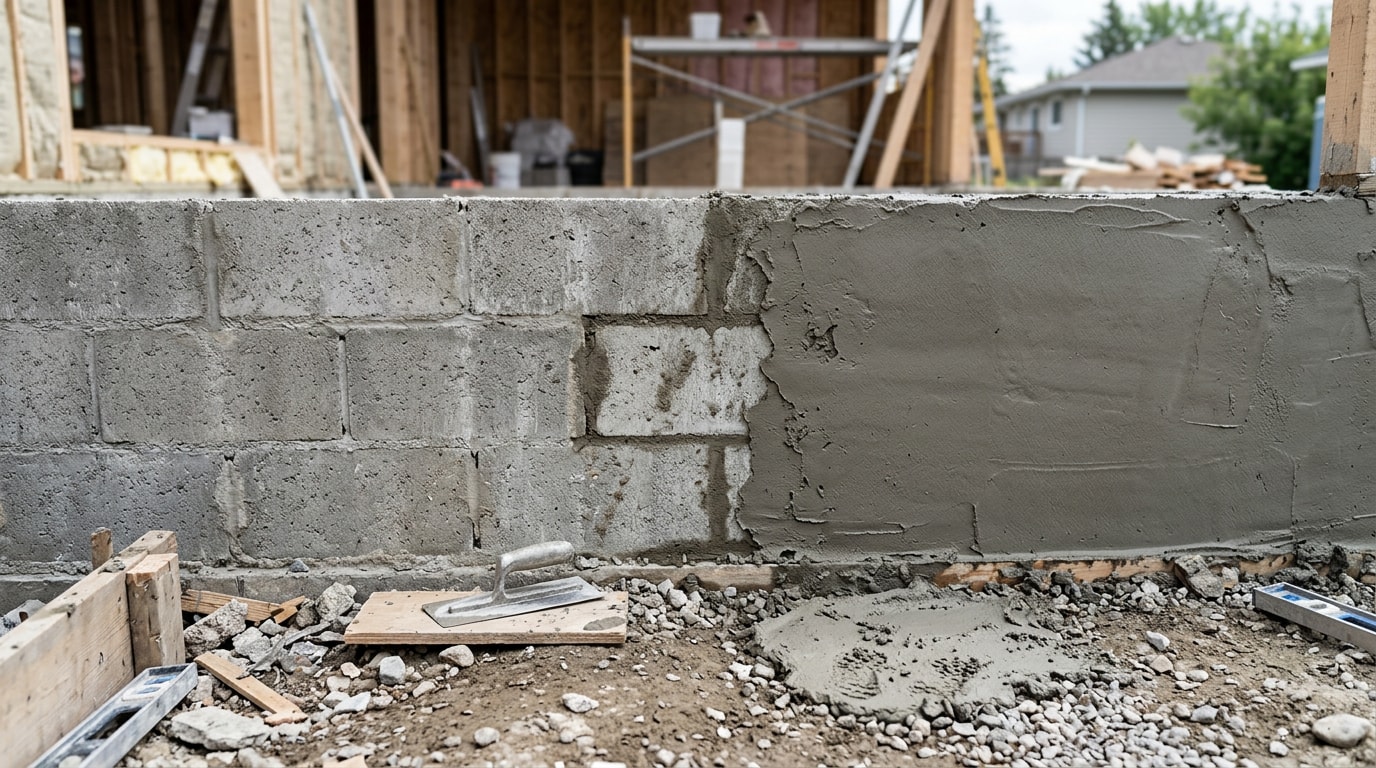
Concrete masonry units (CMUs), or concrete blocks, are considered masonry since they follow traditional masonry construction techniques, and they're prefabricated concrete blocks that are stacked and bonded with mortar to form walls and other structures. North Carolina's own labor department draws the same line: concrete is a construction material consisting of conglomerate gravel, pebbles, broken stone, or slag in a mortar or cement matrix, while masonry is building and fabricating in stone, clay, brick, or concrete block, and also refers to the building units themselves.
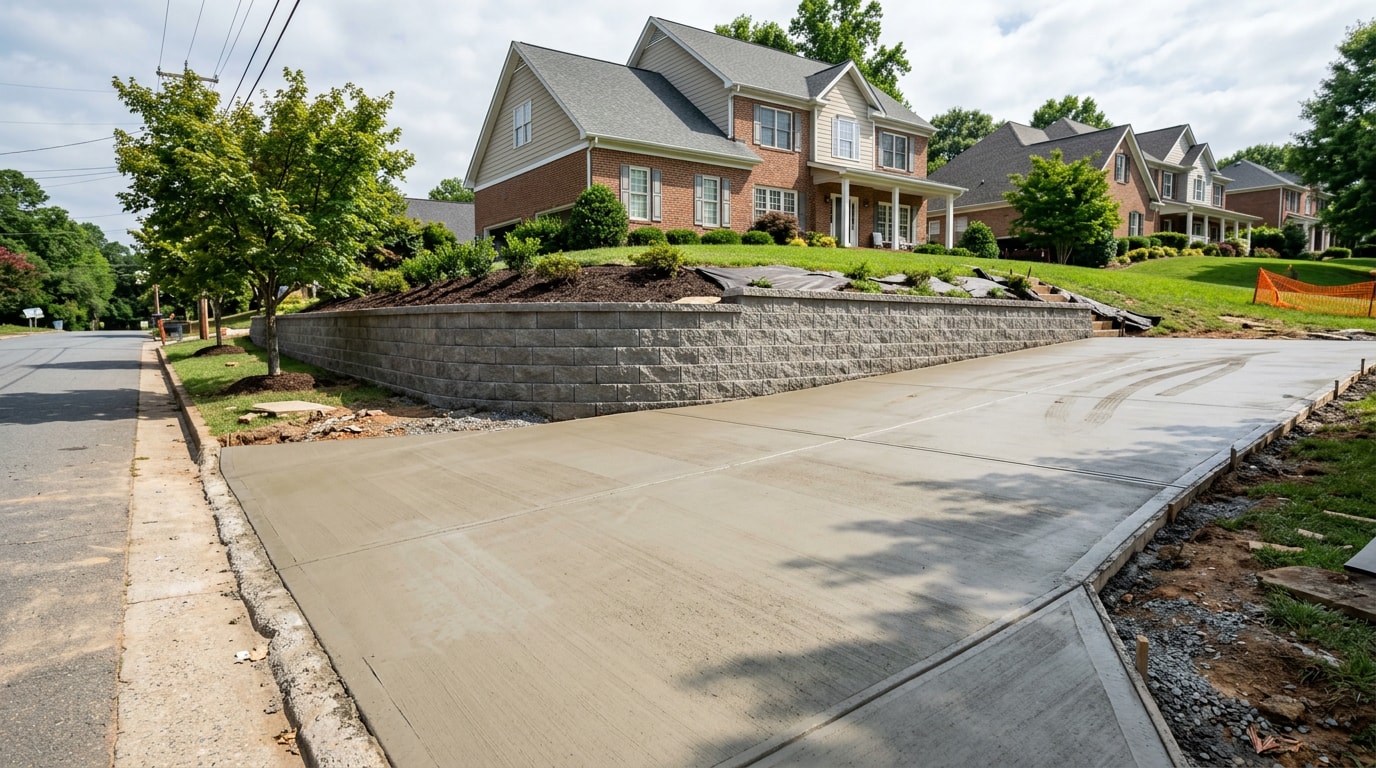
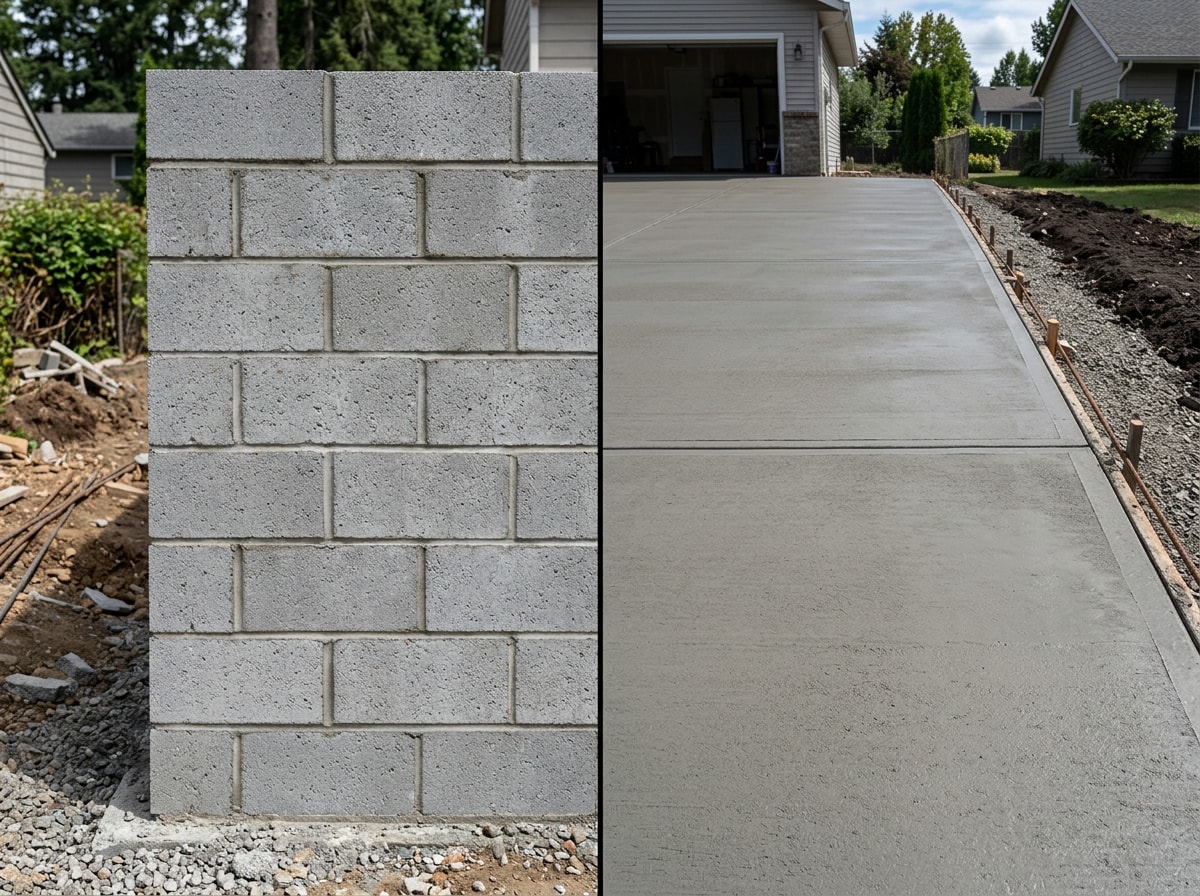
So a poured driveway is concrete work. A stacked concrete block retaining wall is masonry. A CMU foundation wall is both, depending on who's writing the bid.
What Is Masonry?
Masonry refers to the practice of connecting individual materials using mortar or grout and doesn't refer specifically to the materials themselves. In most cases, the materials include natural stone, clay bricks, concrete bricks, and ceramic tiles.
That's the technical definition. In practice, plenty of contractors blur it. Many people, including builders and contractors, use masonry as an umbrella term to refer to any work involving stone and concrete, considering concrete work a category that falls under masonry. That loose habit is exactly why homeowners keep asking the question in the first place.
What Is Concrete?
Concrete is a composite material made of three main ingredients: cement, water, and aggregates such as sand, gravel, or crushed stone. When combined, these ingredients form a malleable substance that hardens over time, creating a strong, durable material.
Compare that to masonry's definition. Concrete is a singular building material made from cement, sand, and aggregate, like rock or gravel. There's no stacking, no mortar joints, no individual units. It goes into a form as one continuous pour.
Is Concrete Considered Masonry?
It depends entirely on how the concrete is used.
- Poured concrete (driveways, patios, footings, slabs) is not masonry. It's a single monolithic pour.
- Concrete block (CMU) is masonry. It's stacked and mortared like brick or stone.
That split is why permit applications in Guilford County treat the two differently, and why a "concrete and masonry" bid can quietly cover two different trades under one line item.
Are Concrete Blocks (CMUs) Considered Masonry?
Yes. The industry standard that governs concrete block manufacturing, ASTM C90, treats CMUs as masonry units rather than poured concrete. The specification covers hollow and solid concrete masonry units made from hydraulic cement, water, and mineral aggregates, and there are three classes of concrete masonry units: normal weight, medium weight, and lightweight.
If you want the full breakdown of block types, sizes, and where CMUs make sense on a project, our concrete masonry units guide covers it in more detail.
Masonry vs. Concrete: Key Differences
| Factor | Masonry (brick, stone, CMU) | Poured Concrete |
|---|---|---|
| Method | Individual units stacked with mortar | One continuous pour into forms |
| Best for | Retaining walls, chimneys, decorative facades | Driveways, patios, slabs, footings |
| Labor | Piece-by-piece, more time per square foot | Formed, poured, finished, faster per square foot |
| Design flexibility | High — patterns, colors, textures | Moderate — stamped or colored finishes available |
| Structural role | Great for vertical walls | Stronger for flat, load-bearing foundations |
Materials
Masonry includes a variety of building materials, including natural stone, clay bricks, concrete bricks, and ceramic tiles. On the other hand, concrete work only involves using concrete, which is made from cement, sand, and large aggregate.
Cost
Masonry is more expensive than concrete because the labor is much more involved. Pouring concrete can also be labor-intensive, but it's a bit less involved. It requires building a mold, pouring the concrete, and letting it cure. The less intensive labor makes concrete a more affordable option in most cases.
We see that gap firsthand on Piedmont Triad job sites. A stacked CMU retaining wall on a sloped Greensboro lot takes our crew several times longer per linear foot than pouring the same footprint as a monolithic slab, and that labor difference is what actually drives the price gap homeowners notice on competing bids.
Best Uses in Greensboro's Clay Soil
The Piedmont Triad sits on expansive red clay that swells and shrinks with moisture. In our experience pouring footings and monolithic slabs across Guilford County, that soil behavior is exactly why proper site preparation and grading matter more here than in sandier soils farther east. Poured concrete footings paired with reinforced CMU foundation walls are still the most common combination we install for new construction in this area, precisely because each material is doing the job it's structurally best suited for.
Which Should You Choose for Your Greensboro Project?
- Driveway, patio, or sidewalk: poured concrete. See our concrete driveways, concrete patios, and concrete sidewalks pages for scopes and pricing factors.
- New slab foundation: poured concrete, typically a monolithic slab.
- Foundation wall or footing: often a mix — concrete footings topped with CMU block, handled under our foundation contractor services.
- Retaining wall, outdoor kitchen, or decorative facade: masonry, whether brick, stone, or CMU.
- Stamped decorative surface: poured concrete with a masonry-style finish — check our stamped concrete page.
Not sure which category your project falls into? Get a free estimate and we'll tell you straight, before you collect competing bids.
Permits & Local Rules in Guilford County
Guilford County inspectors don't lump every concrete and masonry job into one permit type. Accessory structures such as retaining walls, detached masonry chimneys, and pools/spas must comply with the provisions of the NC Residential Code. Flatwork like driveways and patios is typically reviewed under a separate concrete/flatwork scope. If you're building in Greensboro, NC, confirm which category your permit falls under before you finalize a contractor.
FAQ
Does Masonry Include Concrete?
Sometimes. Poured concrete slabs, driveways, and footings are not masonry. Concrete blocks (CMUs) are masonry, because they're stacked and bonded with mortar the same way brick and stone are.
Is Masonry More Expensive Than Concrete?
Usually, yes. Masonry labor is priced per unit laid, which takes more time than forming and pouring a slab. Expect masonry to run higher per square foot than comparable flatwork.
Are Concrete Blocks Considered Masonry?
Yes. CMUs are manufactured to ASTM C90, the same standard family that governs loadbearing block construction, and they're installed using traditional stack-and-mortar masonry methods.
Is All Masonry Made of Concrete?
No. Masonry also includes clay brick, natural stone, and glass block. Concrete block is simply one of the most common masonry materials because it's consistent, affordable, and widely available.
Do I Need a Mason or a Concrete Contractor in Greensboro?
It depends on the project. Driveways, patios, and slab foundations need a concrete contractor. Retaining walls, chimneys, and decorative block walls need a masonry-capable crew. Many general and foundation contractors handle both under one roof.
What Permit Category Does My Project Fall Under in Guilford County?
Flatwork like driveways and patios is usually reviewed as concrete/flatwork. Block or brick walls, chimneys, and similar structures are reviewed under masonry provisions of the NC Residential Code. Ask your contractor to confirm before you file.
---
Ready to move forward? Visit our homepage to see our full range of concrete, foundation, and general contracting work across the Piedmont Triad, or get a free estimate for your Greensboro project today.