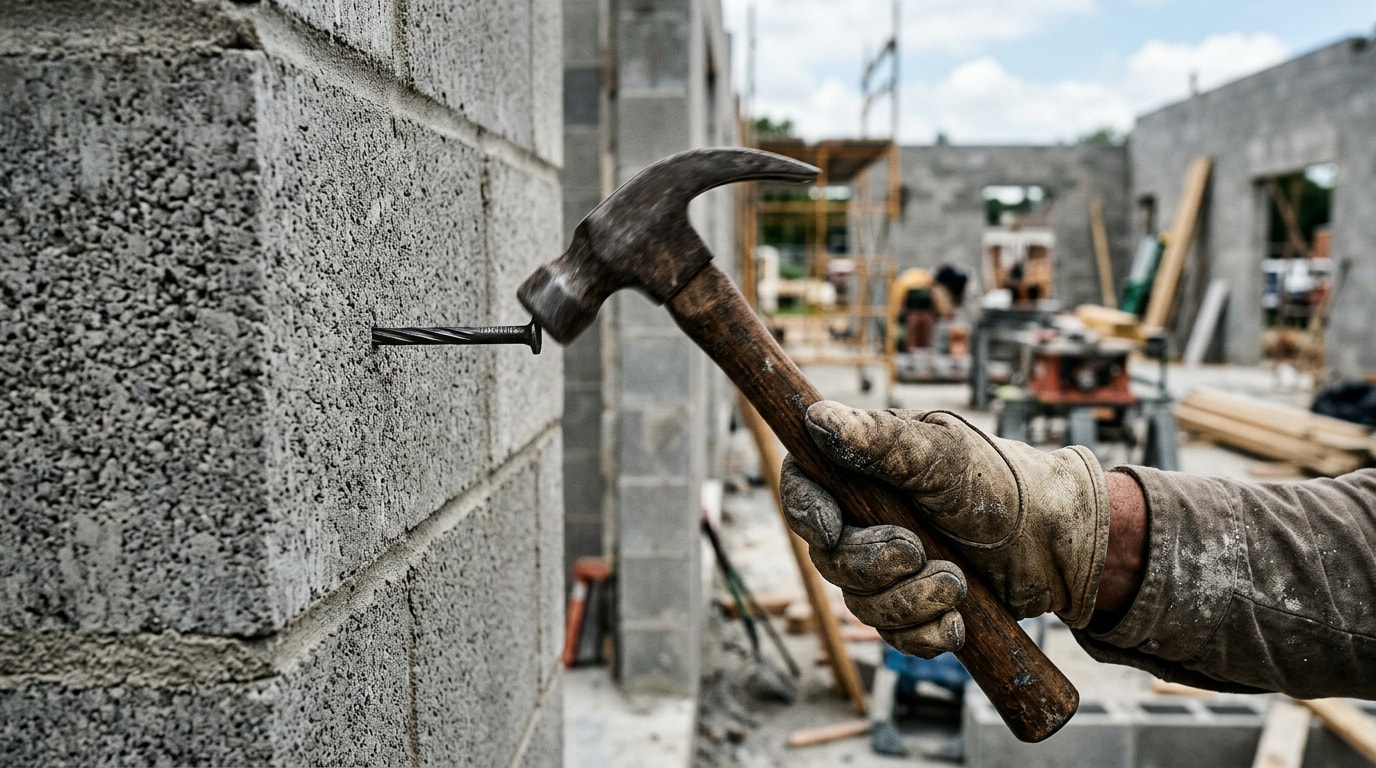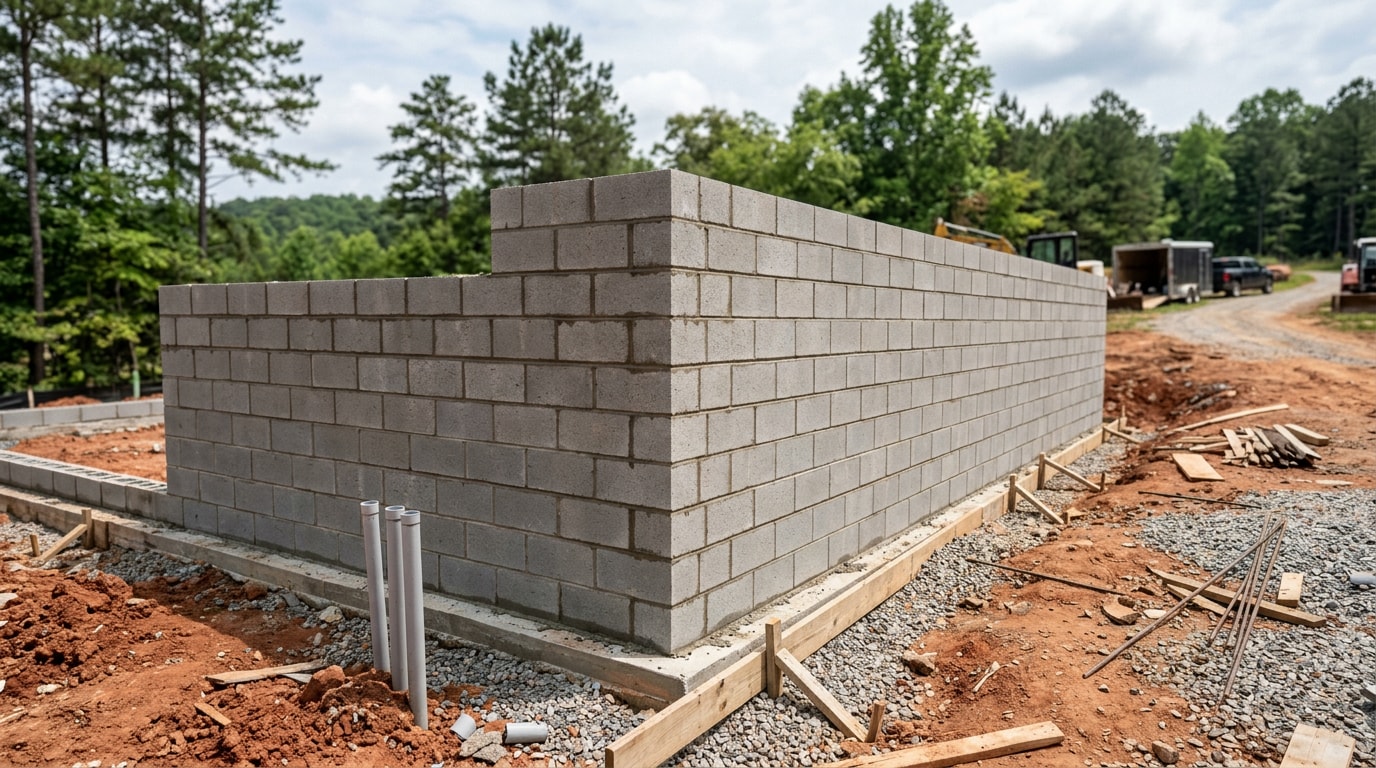
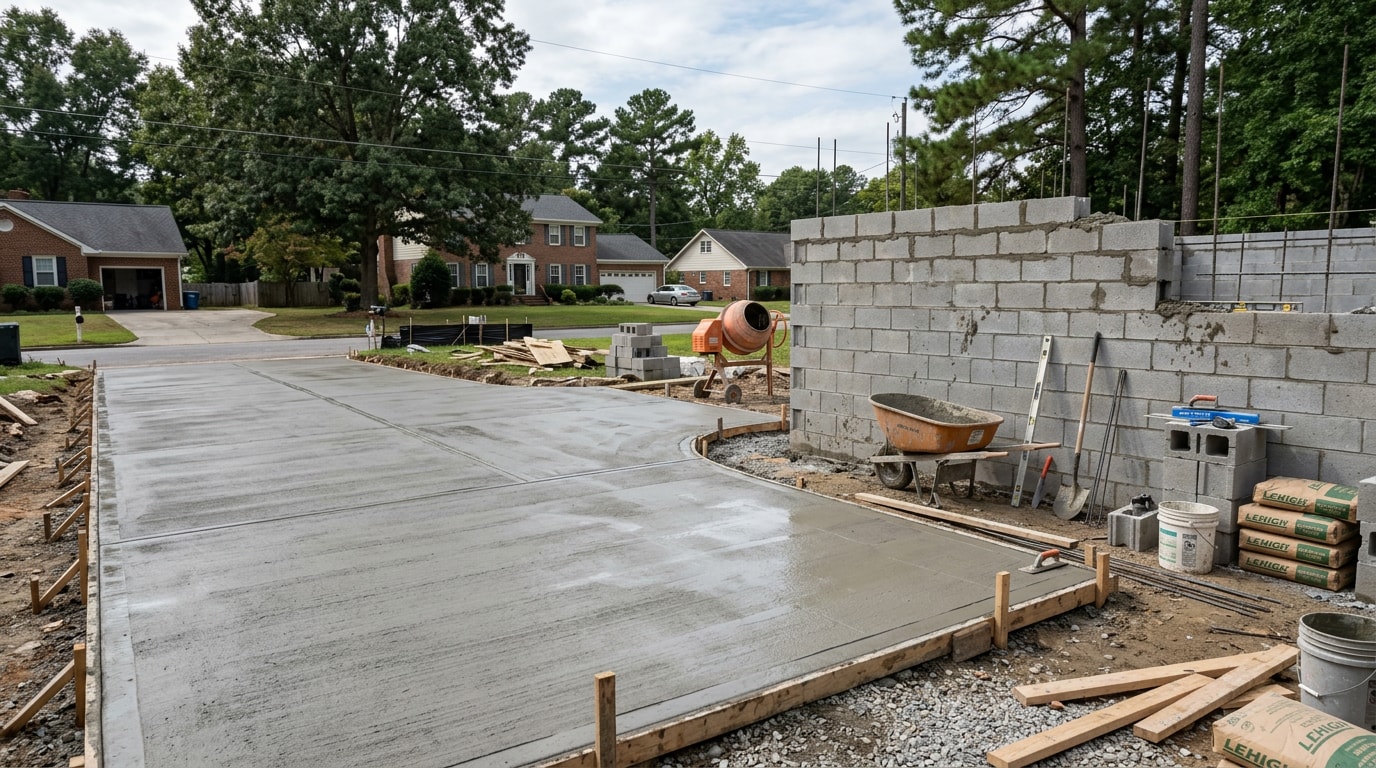
Is concrete considered masonry in Stokesdale, NC? No — concrete is a material, masonry is a building technique, and the two only overlap when concrete is cast into blocks. That one-line answer settles most arguments between homeowners and bidders, but it doesn't explain why your permit, your contractor's license, and your project timeline all hinge on it.
Quick Answer: Is Concrete Considered Masonry?
No. Concrete is a poured, mixed material made from cement, aggregate, and water. Masonry is a construction method: stacking individual units like brick, stone, or block and binding them with mortar.
The North Carolina Department of Labor draws the same line in its own trade guidance: concrete is a construction material consisting of conglomerate gravel, pebbles, broken stone or slag in a mortar or cement matrix, while masonry is building and fabricating in stone, clay, brick, or concrete block. The two terms get used interchangeably on jobsites, but they're not legally or technically the same thing.
Concrete vs. Masonry: The Core Difference
Here's the distinction in plain terms, side by side.
| Concrete | Masonry | |
|---|---|---|
| What it is | A material (cement, aggregate, water) | A construction technique |
| How it's installed | Poured as a liquid, hardens in forms | Units stacked and bonded with mortar |
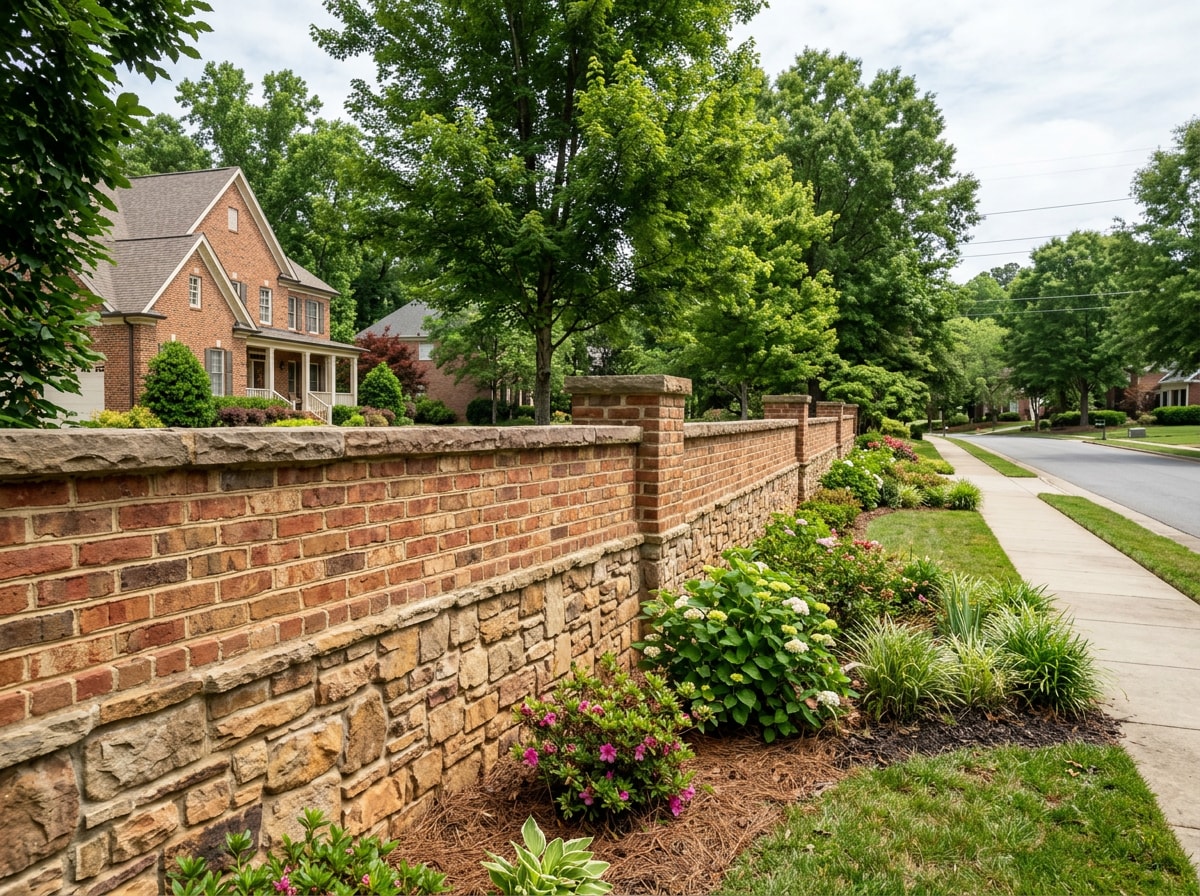
| Common projects | Driveways, patios, slabs, footings | Block walls, brick veneer, chimneys, retaining walls |
| Skilled trade | Concrete finisher | Mason |
| Overlap point | Concrete masonry units (CMU) | Concrete masonry units (CMU) |
Poured concrete is popular for driveways, patios, and foundations because it can be shaped into nearly any form before it sets. Masonry relies on skilled hand-laying instead, with each course set and leveled before the mortar cures.

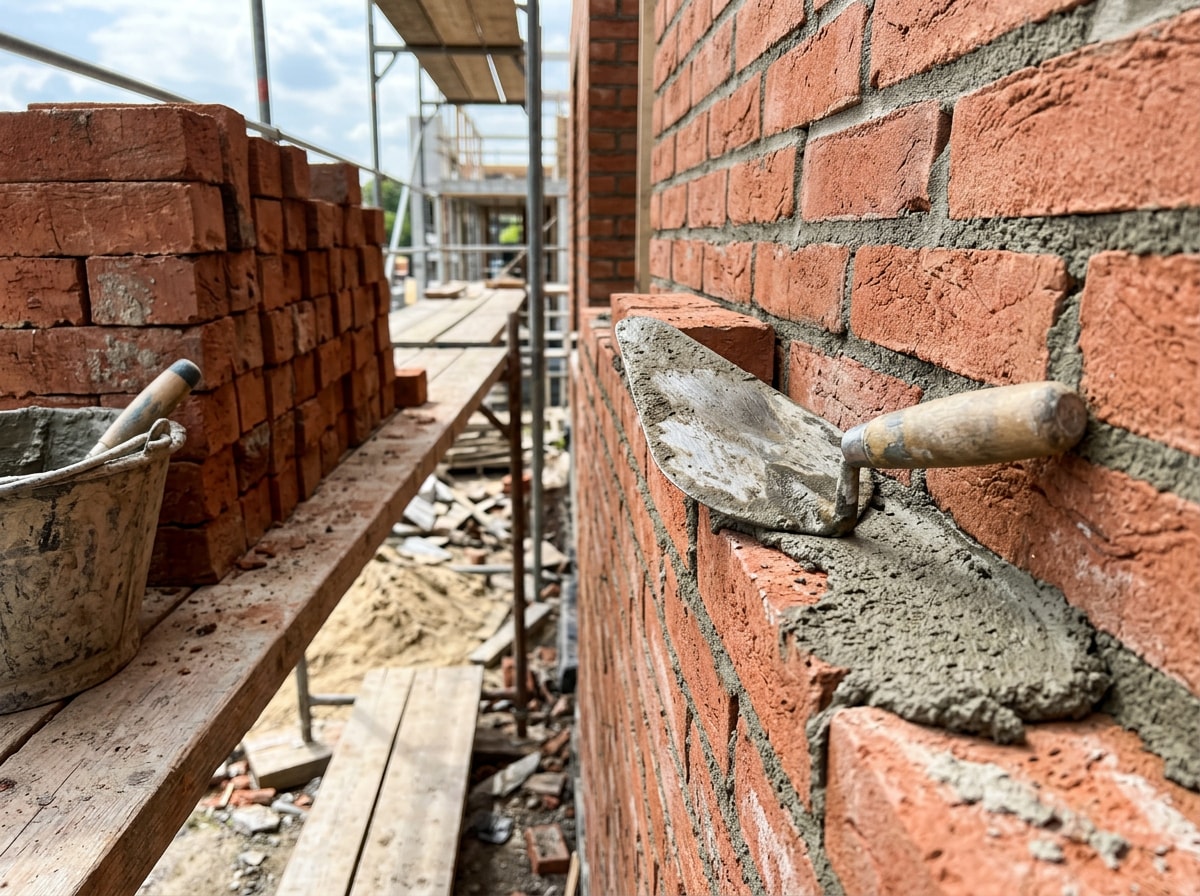
Think of it this way: concrete answers "what is it made of," while masonry answers "how was it built." A homeowner pouring a backyard patio is doing concrete work: mixing, forming, and finishing one continuous slab. That same homeowner building a block retaining wall is doing masonry work: stacking individual units and binding them with mortar, even if the blocks themselves started as concrete.
Where Concrete and Masonry Overlap: CMU Block
Concrete masonry units, or CMUs, are the clearest overlap between these two categories. A CMU, commonly called a concrete block, is manufactured by pouring a dry, low-slump concrete mixture into molds and curing it into a rigid shape. Once cured, that block becomes a masonry unit: it gets stacked, leveled, and set with mortar just like brick or stone.
Concrete masonry is a popular building material because of its strength, durability, economy, and its resistance to fire, noise, and insects. The Concrete Masonry & Hardscapes Association (the organization formerly known as NCMA) publishes detailed technical guidance on how these units are manufactured, bonded, and classified for construction.
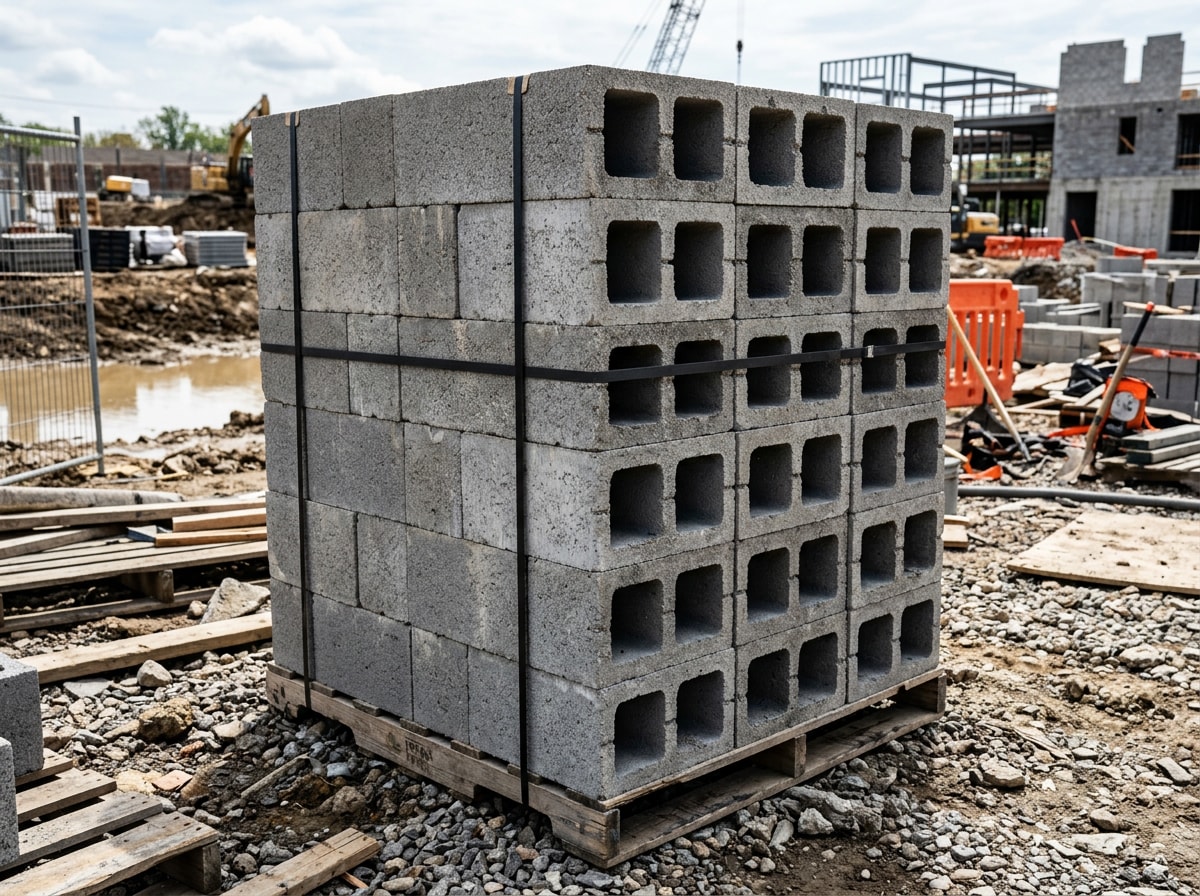
In short: a CMU starts life as concrete and ends up performing as masonry. That dual identity is exactly why the question "is concrete considered masonry" doesn't have a single universal answer — it depends on whether you're talking about the raw material or the finished wall.
Permits, Codes, and Inspections in Stokesdale, NC
This isn't just semantics. In Guilford County, which handles permitting for Stokesdale directly, Guilford County Inspections Department provides permitting, plan review, and building inspection services for all unincorporated areas of Guilford County and, through contractual agreements, to the towns of Stokesdale and several neighboring towns. That means a poured concrete slab and a block masonry wall can be reviewed under different code sections even on the same job site.
The International Building Code backs this up at the chapter level. Chapter 21 of the IBC governs masonry materials, design, and construction separately from the cast-in-place concrete provisions found elsewhere in the code. For a Stokesdale homeowner, that means your contractor needs to know which rulebook applies to your footing, your block wall, and your veneer — because they're not always the same one.
This is where having one crew handle both trades pays off. At Boswell Brothers of NC, our teams pour slabs and set CMU walls on the same residential lots every month, which is exactly why local clients ask us to sort out which part of their project is "concrete" and which part is "masonry" before the permit even gets pulled.
Concrete Projects vs. Masonry Projects: Which Do You Need?
Most Stokesdale projects fall cleanly into one category or the other. A few, like a block foundation with a poured slab floor, use both.
Typical concrete projects:
- Driveways and walkways
- Patios and pool decks
- Foundation slabs and footings
- Monolithic slab buildings
Typical masonry projects:
- CMU block walls and foundations
- Brick veneer and facades
- Stone entryways and chimneys
- Retaining walls and repointing repairs
Choosing between the two usually comes down to four factors: budget, timeline, aesthetics, and structural need. Concrete tends to be faster and more cost-effective for flat surfaces. Masonry often costs more upfront but delivers texture, color variation, and a traditional look for walls and facades.
Browse our concrete contractor services for driveways, patios, and slab work, or our foundation contractor services if your project involves concrete footings that support a masonry wall above grade. If your scope includes block construction, framing, or an addition, our general contractor team coordinates both trades under one schedule.
Safety and Code Standards: Why the Distinction Matters
Knowing whether a job is concrete or masonry determines which safety rules apply on site.
What hazards come with concrete and masonry work?
Falls from scaffolding, being struck by heavy block or forms, silica dust exposure during cutting or grinding, and unshored trench collapse are the recurring hazards on both trades. Jobsite training and the right protective equipment are what keep crews safe from these risks day to day.
Which federal standards apply?
Subpart Q sets forth requirements to protect all construction employees from the hazards associated with concrete and masonry construction operations under 29 CFR 1926 Subpart Q, OSHA's dedicated standard for this trade. It covers everything from formwork and shoring to masonry wall bracing, and it treats the two activities as related but distinct hazard categories.
All masonry walls over eight feet in height shall be adequately braced to prevent overturning and to prevent collapse unless the wall is adequately supported so that it will not overturn or collapse. That single rule has no equivalent in the cast-in-place concrete sections of the same standard, which is a good example of why the classification isn't just paperwork.
How to Choose the Right Contractor in Stokesdale, NC
Match the contractor's specialty to your project type before you compare bids. A pure concrete outfit may not carry masonry experience for a block retaining wall, and a mason may subcontract out your driveway pour. Ask directly: do you pour concrete, lay masonry, or both?
For a deeper dive into one specific overlap point, our guide on whether masonry includes concrete breaks down the trade classification question from the other direction.
If your Stokesdale project mixes both — say, a new patio plus a block-and-brick retaining wall — a single contractor who handles concrete, masonry, and general construction saves you from coordinating two separate crews and two separate inspection schedules. Get a free estimate and we'll tell you straight which parts of your project are concrete, which are masonry, and what that means for your permit.
FAQ
Does concrete count as masonry?
No. Concrete is a material; masonry is a construction method. Concrete only counts as masonry when it's cast into blocks and assembled like brick or stone.
Are concrete workers considered masons?
Not typically. Concrete workers, often called concrete finishers, specialize in pouring and finishing slabs. Masons are a separate trade classification focused on laying brick, block, and stone with mortar.
What category does concrete fall under?
Concrete falls under the building material classification, alongside items like lumber or steel. Masonry, by contrast, is classified as a construction method or technique, not a material category.
Is there a difference between concrete and masonry?
Yes. The difference comes down to material versus method: concrete is a poured mixture, while masonry is the technique of assembling individual units with mortar.
Is poured concrete considered masonry under building code?
No. The International Building Code addresses masonry construction and cast-in-place concrete in separate chapters, and a poured slab or footing doesn't trigger masonry-specific code requirements like wall bracing.
Do concrete and masonry projects need separate permits in Stokesdale, NC?
Not always separate permits, but often separate plan review. Guilford County Inspections handles permitting for Stokesdale, and a single building permit can cover both scopes if they're part of one project, though the inspector will check each against its own code section.
Final Thoughts
Concrete and masonry each call for different skills, even when the materials overlap at a CMU block. Concrete is what you pour; masonry is how you build with individual units. When you're ready to start, match the contractor's specialty to your project type and confirm which code section applies before work begins.
Visit our Stokesdale, NC service area page to see our local project history, or head to the Boswell Brothers of NC homepage to browse every service we offer across the Piedmont Triad.