Picking the right masonry bit for concrete in Kernersville, NC is the difference between a ten-minute anchor job and an afternoon spent burning through bits. Grab the wrong one and you'll chew through the tip, wander off the mark, or stall out on a slab that's harder than it looks. This guide breaks down which bit, size, and drill actually gets the hole right the first time.
Types of Concrete Drill Bits (and Which One You Need)
A masonry bit for concrete generally falls into one of five families: carbide-tipped, SDS-plus, SDS-max, diamond core, and multi-material. Each is built for a different combination of hole size, concrete hardness, and job frequency. Picking the wrong family is the most common reason a drilling job goes badly.
Carbide-Tipped Masonry Bits
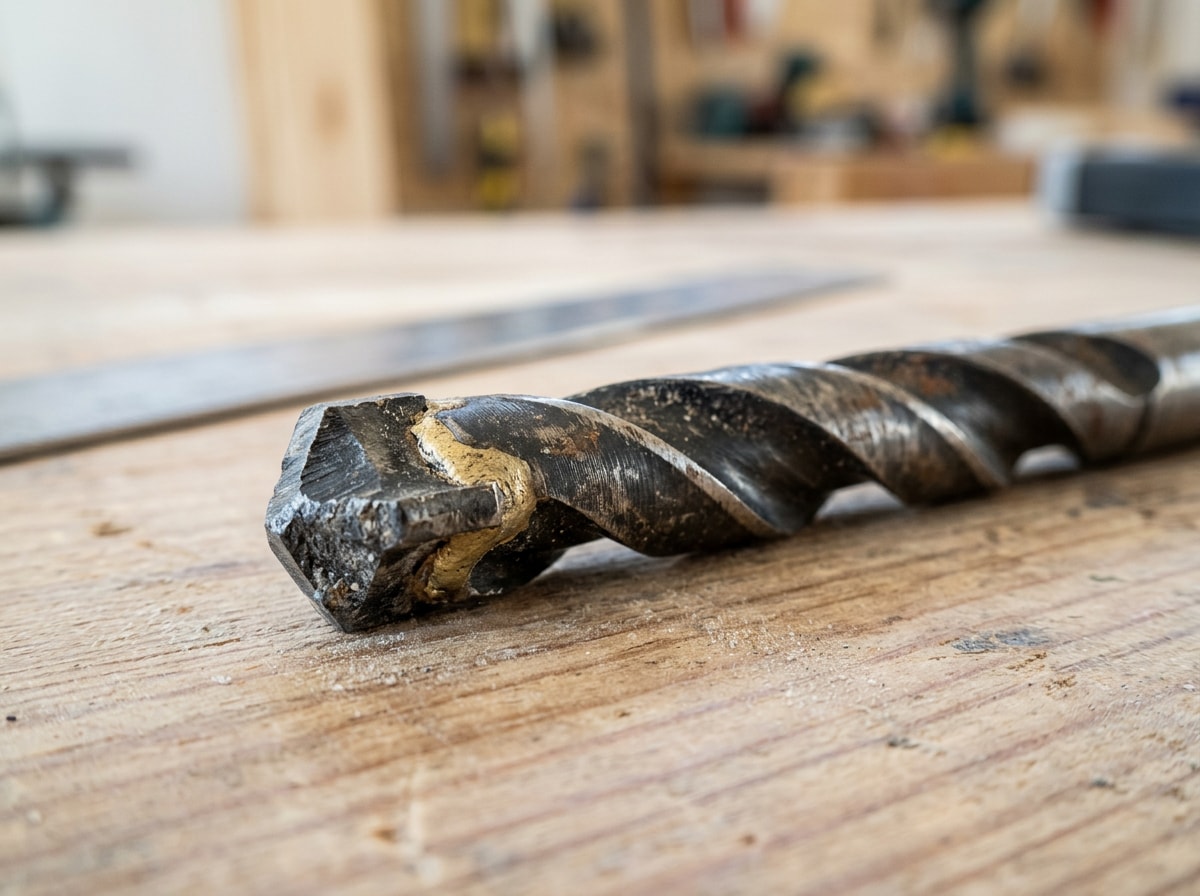
A carbide-tipped masonry bit has a tungsten carbide tip brazed onto a steel shank. That gives it enough hardness to grind through concrete, brick, and block without dulling after a few holes. These bits usually run from about 3/16 inch up to 1/2 inch in diameter, covering most everyday anchor and fastener work.
They're the right call for light-duty jobs: hanging shelves, mounting a TV bracket, or setting a handful of anchors in a garage wall. A standard bit in this style works fine in a regular hammer drill and doesn't require specialty equipment.
SDS-Plus Bits
SDS-plus bits use a slotted shank that locks into a compatible rotary hammer drill chuck without a keyed collar. The bit slides and rotates freely while the hammer mechanism drives it forward, transferring hammering force far more efficiently than a standard chuck.
These bits beat a regular carbide-tipped bit once you're drilling more than a handful of holes, working in harder concrete, or going past about 1/2 inch in diameter. If you already own a rotary hammer, SDS-plus bits are usually the better everyday choice for home improvement work.
SDS-Max Bits
SDS-max bits step up to a larger, more robust shank system built for heavy-duty and production-level drilling. They handle bigger diameters and deeper holes with less bit flex, which matters when boring through thick structural concrete.
This is professional territory. Contractors drilling dozens of large anchor holes, or working on commercial slabs, reach for SDS-max over SDS-plus. For a one-off home project, it's typically more bit and more drill than the job calls for.
Diamond Core Bits
Diamond core bits use an industrial diamond-embedded rim instead of a solid carbide tip, cutting a ring around the material rather than pulverizing it. That's why they're specified for large-diameter pass-throughs and reinforced concrete, where a standard bit would stall or wear out fast.
They're hollow-cored, so a clean plug of concrete pops out rather than dust. Many are rated for wet drilling to manage heat and dust at the same time, which matters most for thicker pours like the ones used under concrete driveways.
| Bit Type | Typical Diameter Range | Wet or Dry | Typical Cost | Best Use Case |
|---|---|---|---|---|
| Carbide-tipped | 3/16"–1/2" | Dry | Low | Light anchors, brackets, shelving |
| SDS-plus | 1/4"–3/4" | Dry | Moderate | Frequent anchor holes, remodeling |
| Diamond core | 1"–6"+ | Wet or dry | High | Pipe penetrations, reinforced concrete |
Multi-Material Bits
Multi-material bits are marketed to drill through wood, metal, tile, and masonry with one tool, which sounds appealing if you're working across several substrates in one project. The trade-off is real: they're noticeably slower in hard concrete than a dedicated carbide or SDS bit built for masonry alone.
They're a reasonable compromise for light, mixed-material jobs where convenience matters more than speed. For a dedicated concrete project, a purpose-built masonry bit still outperforms them.
How to Choose the Right Bit
Before buying a bit, walk through a short checklist: what you're drilling into, how big the hole needs to be, how deep it needs to go, and what length and coating the bit itself needs.
- Material: Residential slabs typically fall in the 2,500 to 4,000 PSI range, with
a standard residential driveway or garage floor slab often requiring 3,000 to 4,000 psi to support vehicle traffic . A standard carbide bit handles that without issue; older aggregate-heavy mixes or commercial slabs may need a rotary hammer. See the full PSI breakdown at ConcreteNetwork if you're not sure what you're dealing with.
- Hole size: Match bit diameter directly to the anchor or fastener. Undersized holes strip out or crack the surrounding concrete; oversized holes leave the anchor loose. Always check the anchor packaging.
- Hole depth: Drill past the required embedment depth, not stop right at it, so dust settles out of the way instead of packing in.
- Length: A shorter bit gives better control for shallow, precise holes. A longer bit is necessary for deep anchoring, with some trade-off in stability as length increases.
- Tip material: Tungsten carbide is the standard for general masonry work. Diamond-coated bits last longer in high-volume or harder-concrete use but cost more upfront.
On jobs across Kernersville and the wider Triad, we see more stripped anchor holes caused by an undersized bit paired with the wrong fastener than any other single mistake. If a project is moving past brackets and shelving into structural anchoring, footings, or a full slab pour, it's worth talking to a concrete contractor before you start drilling.
Match the Drill to the Job
The bit only does half the work. The drill driving it determines whether that bit performs the way it's supposed to.
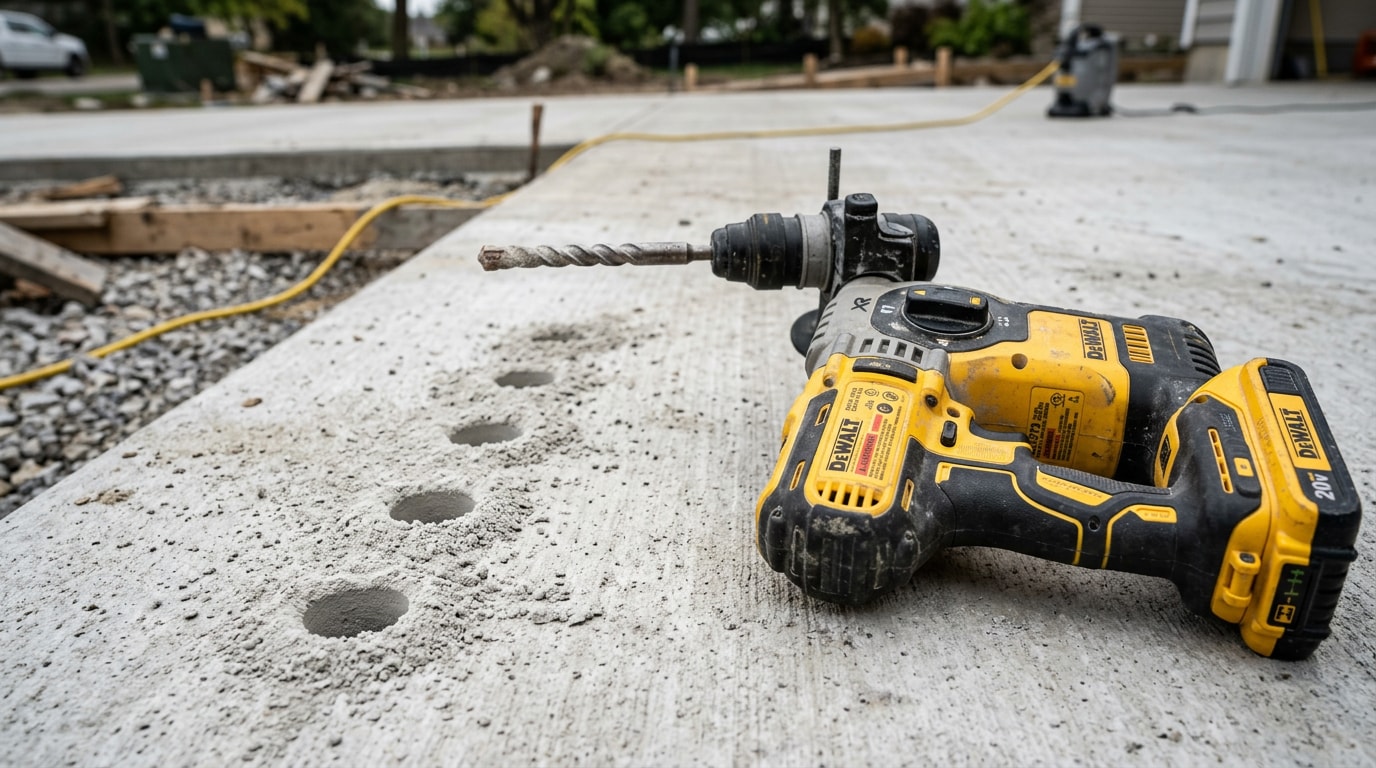
A standard drill/driver spins the bit but adds no hammering action, so it struggles in anything but the softest masonry or small pilot holes. A hammer drill adds a forward hammering motion on top of rotation, which works well for light-to-medium carbide-tipped bit work around the house. A rotary hammer uses a piston-driven mechanism that delivers significantly more impact energy, which is why it pairs with SDS-plus and SDS-max bits for anything beyond occasional drilling.
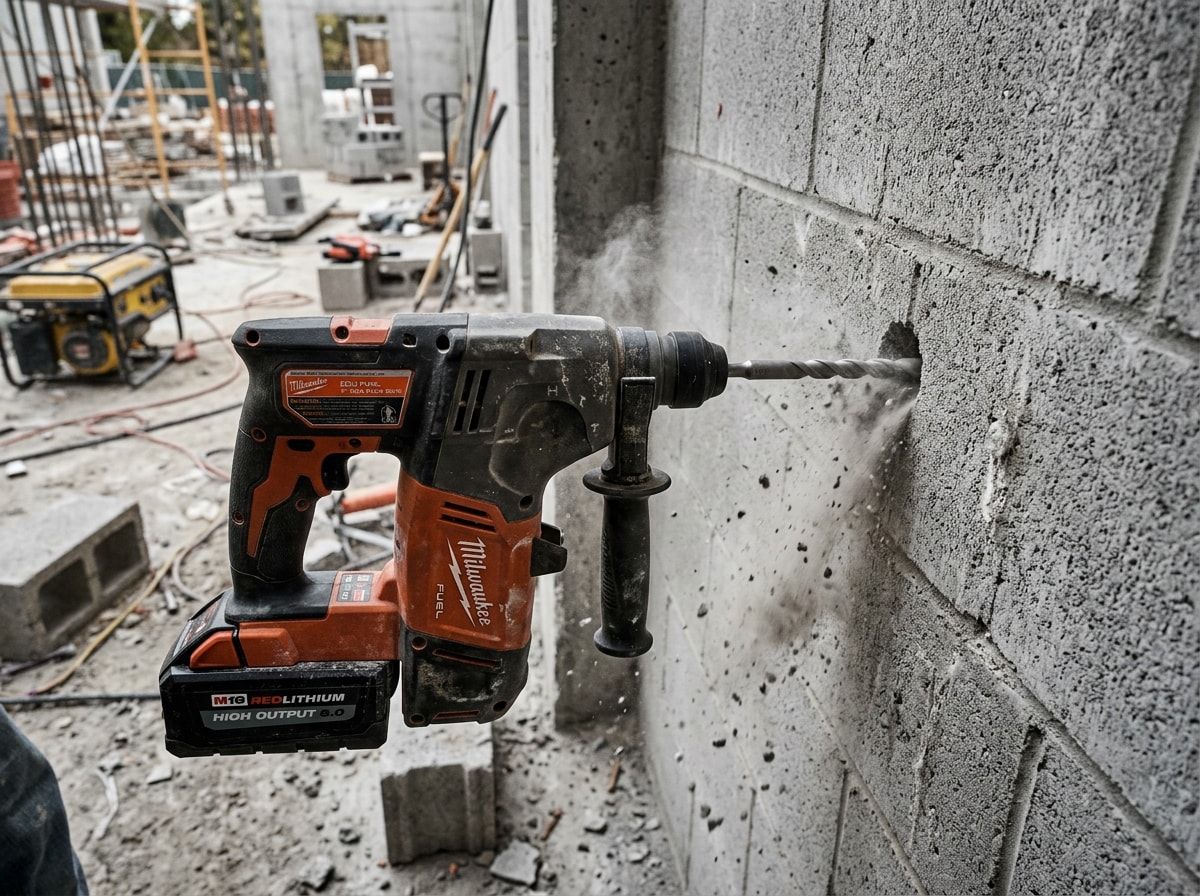
For a once-a-year bracket job, a hammer drill is plenty. For repeated anchoring or larger-diameter holes, stepping up to a rotary hammer saves both bits and time.
Concrete Drill Bit Sizes
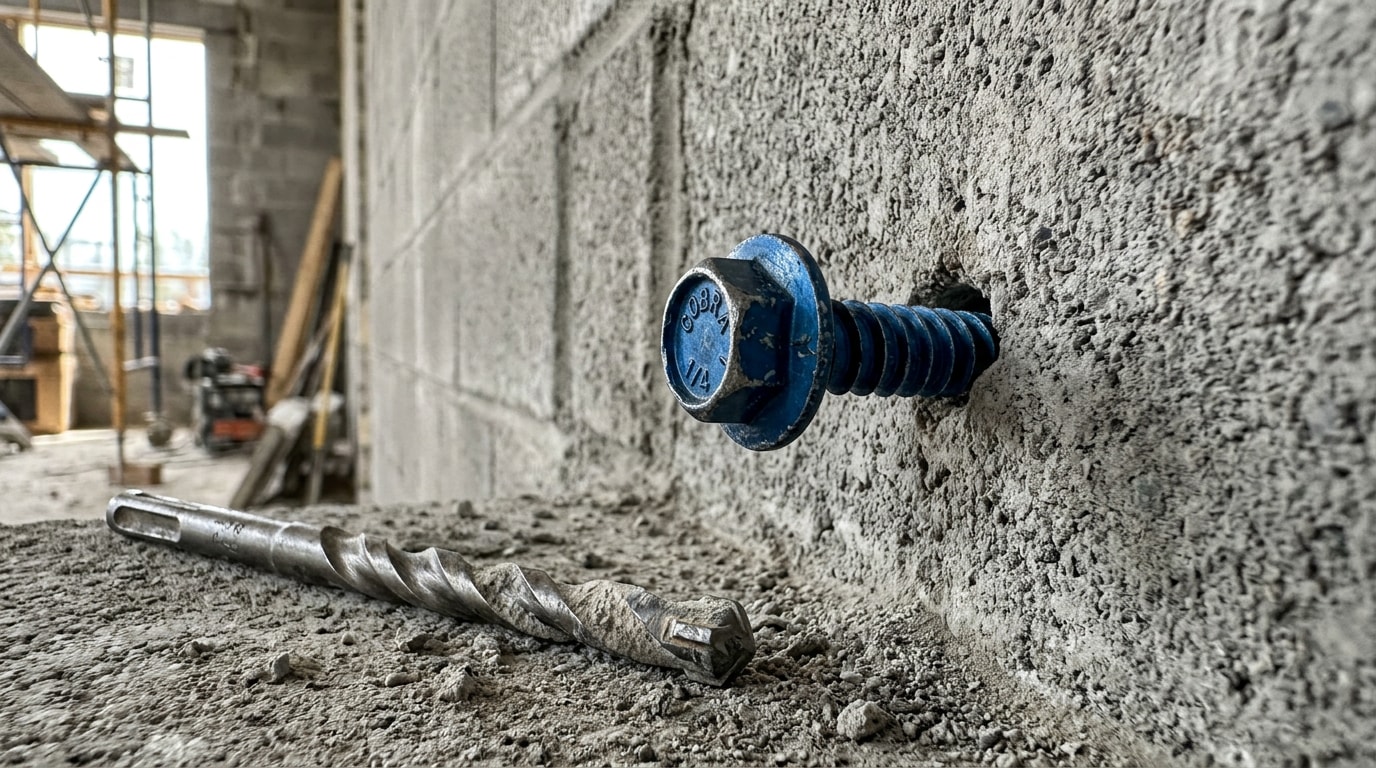
Bit diameter needs to match the fastener it's paired with, and different anchor brands don't always use identical sizing. For Tapcon-style concrete screws, the 3/16" Tapcon requires a 5/32" diameter bit, and the 1/4" Tapcon requires a 3/16" diameter bit . That's a standard, "undersized" pairing because the screw cuts its own threads as it goes in.
Not every brand follows that rule. Some heavier anchor systems use a 1:1 bit-to-anchor match instead:
| Fastener Diameter | Tapcon (Undersized) Bit | Titen HD-Style (1:1) Bit |
|---|---|---|
| 3/16" screw | 5/32" | n/a |
| 1/4" screw | 3/16" | 1/4" |
| 3/8" heavy-duty screw | 5/16" | 5/16" |
Because this varies by brand, it's worth checking the Tapcon bit-sizing reference from Concrete Fastening Systems before drilling a batch of holes. Guessing on size is one of the most common reasons anchors fail to hold.
Depth matters as much as diameter. For 3/16" and 1/4" diameter Tapcons, the hole must be drilled a minimum of 1/4" deeper than the screw will penetrate , giving dust somewhere to settle instead of packing under the tip.
Step-by-Step: How to Drill Into Concrete
Drilling a clean hole in concrete follows a predictable sequence. Skipping steps is usually what leads to a cracked edge, a hit wire, or a bit that burns out halfway through.
- Confirm it's concrete and locate hidden hazards. Tap the surface and check for the dense, solid sound of poured concrete rather than the hollow give of drywall. Before drilling anywhere near a wall with unknown wiring or plumbing, use a detector or check existing plans. For exterior or below-grade work,
call 811 before you dig, since North Carolina law requires excavators to notify utility owners at least two business days in advance . The free NC 811 locate request service handles this in minutes.
- Create a pilot dimple. Start with a small bit in drill-only mode, without hammer action engaged, to etch a shallow dimple at the marked point. This keeps the bit from wandering once you switch to full hammer mode.
- Choose a specialty bit for big holes, rebar, or dust-heavy jobs. Step up to a diamond core bit for large-diameter holes, a rebar-rated bit if reinforcement is in the way, or a hollow dust-extraction bit for indoor work.
Handheld and stand-mounted drills, impact and rotary hammer drills used to drill holes in concrete can generate respirable crystalline silica dust, which can irreversibly damage the lungs over time . The OSHA silica standard for construction sets specific exposure limits for this kind of work, so dust control isn't optional on larger jobs. A shop vac attachment or wet-drilling diamond bit handles most residential situations without specialty extraction equipment.
Concrete Drilling for Flooring Projects
Flooring work brings a narrower, more specific set of concrete-drilling needs: anchoring a subfloor, setting transition strips, or mounting a fixture directly into a slab. These holes are usually shallow and small-diameter, keeping the job within reach of a standard carbide-tipped bit and a basic hammer drill.
Transition strips between flooring types typically anchor with a 3/16-inch masonry bit, matched to the screws included with the strip. Pre-drill every hole along the strip before setting any anchors, rather than drilling and fastening one at a time, so the strip lines up evenly across its full length.
Bit Maintenance and Tips for Effective Use
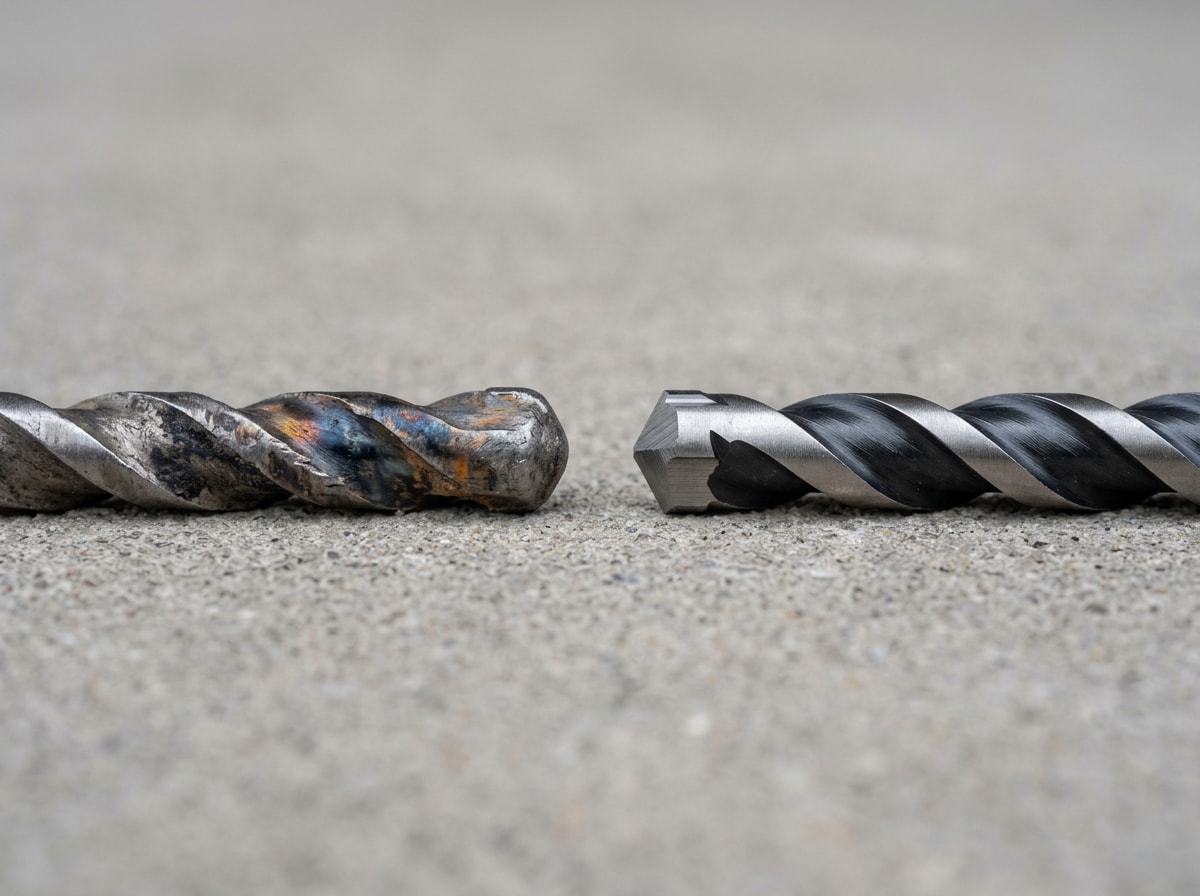
A quality carbide-tipped bit typically lasts through dozens to a few hundred holes in residential concrete before the tip dulls noticeably. Hitting rebar or aggregate repeatedly shortens that lifespan fast.
Watch for these warning signs that a bit needs replacing:
- Noticeably slower progress for the same pressure
- Excessive heat coming off the bit or hole
- A burning smell during drilling
Let the drill do the work instead of pressing hard. Excess pressure generates heat that dulls carbide faster than normal use. Pulling the bit out periodically to clear dust also keeps it running cooler and cutting more efficiently.
Check for Reinforcements (Rebar)
A sudden grinding resistance or a shower of metal shavings instead of concrete dust usually means the bit has hit rebar. Stop immediately rather than forcing a standard carbide bit through it. Switch to a rebar-rated cutting bit built to handle steel reinforcement without snapping or overheating.
If you're hitting rebar repeatedly, or you're not sure whether the slab you're drilling into is load-bearing, that's a sign the project has moved past a DIY anchor job. A foundation repair specialist can tell you what's actually inside that concrete before you drill any further.
The crew at Boswell Brothers of NC has spent years pouring, anchoring, and repairing concrete across Kernersville and the greater Triad, so we've seen firsthand which bits hold up on real job sites and which ones snap on the first hit of aggregate. If your project has grown past a bracket or a shelf, from a new monolithic slab to a footing repair, get a free estimate before you commit to equipment you may not need. For more on sizing and technique in a neighboring market, our masonry drill bit guide for Liberty, NC covers the same fundamentals with local pricing context.
FAQ
Can I use a masonry drill bit on concrete?
Yes, a masonry drill bit is specifically designed for concrete, brick, and block, with a hardened carbide or diamond tip built to grind through aggregate. A regular twist bit meant for wood or metal will dull almost immediately and won't make meaningful progress.
What kind of drill bit is best for brick?
A standard carbide-tipped masonry bit works well for brick, since brick is softer and more forgiving than reinforced concrete. Brick doesn't demand the heavier SDS-max or diamond core bits reserved for dense, reinforced slabs. A basic carbide bit in a hammer drill is usually enough.
Who makes the best masonry drill bits?
There's no single best brand. Look for carbide quality, a four-cutter tip design for cleaner holes, and a shank style matched to your drill. Reputable industrial and construction supply brands consistently perform well; the tip geometry and carbide grade matter more than the name on the bit.
Is there a drill bit that goes through metal and concrete?
Multi-material bits cut through wood, metal, and masonry with a single bit, offering convenience across mixed substrates. They run noticeably slower in hard concrete than a dedicated masonry bit, so they suit light mixed-material jobs better than a dedicated concrete project.
Do you need a hammer drill to drill into concrete?
For most residential concrete, yes. A standard drill/driver without hammer action will struggle past a shallow pilot hole in anything but the softest masonry. A hammer drill or rotary hammer paired with a carbide or SDS bit is the standard setup for anchor holes, brackets, and fasteners.
How do you drill into concrete without cracking it?
Start with a pilot dimple in drill-only mode before switching to hammer action, keep steady but light pressure, and pull the bit out periodically to clear dust. Cracking usually comes from forcing a dull bit, drilling too close to an edge, or skipping the pilot step entirely.