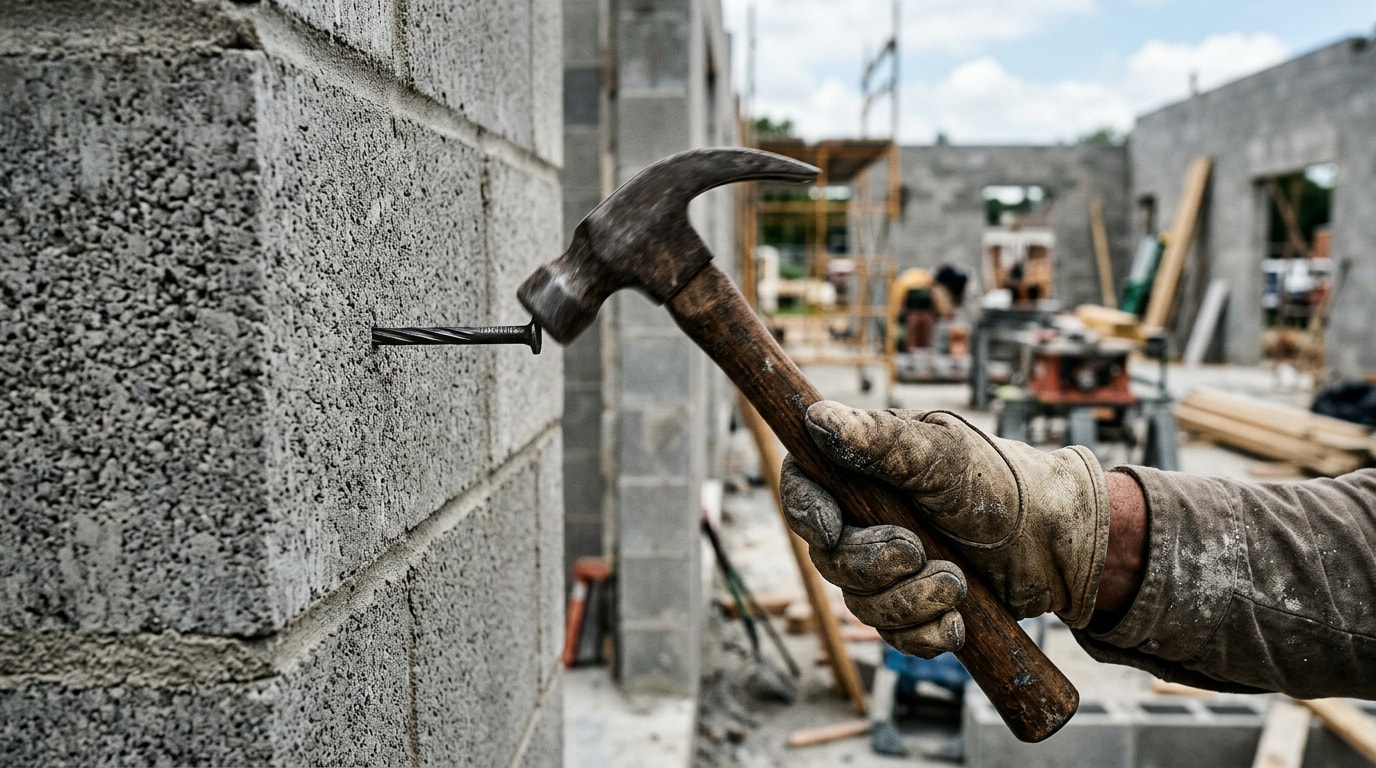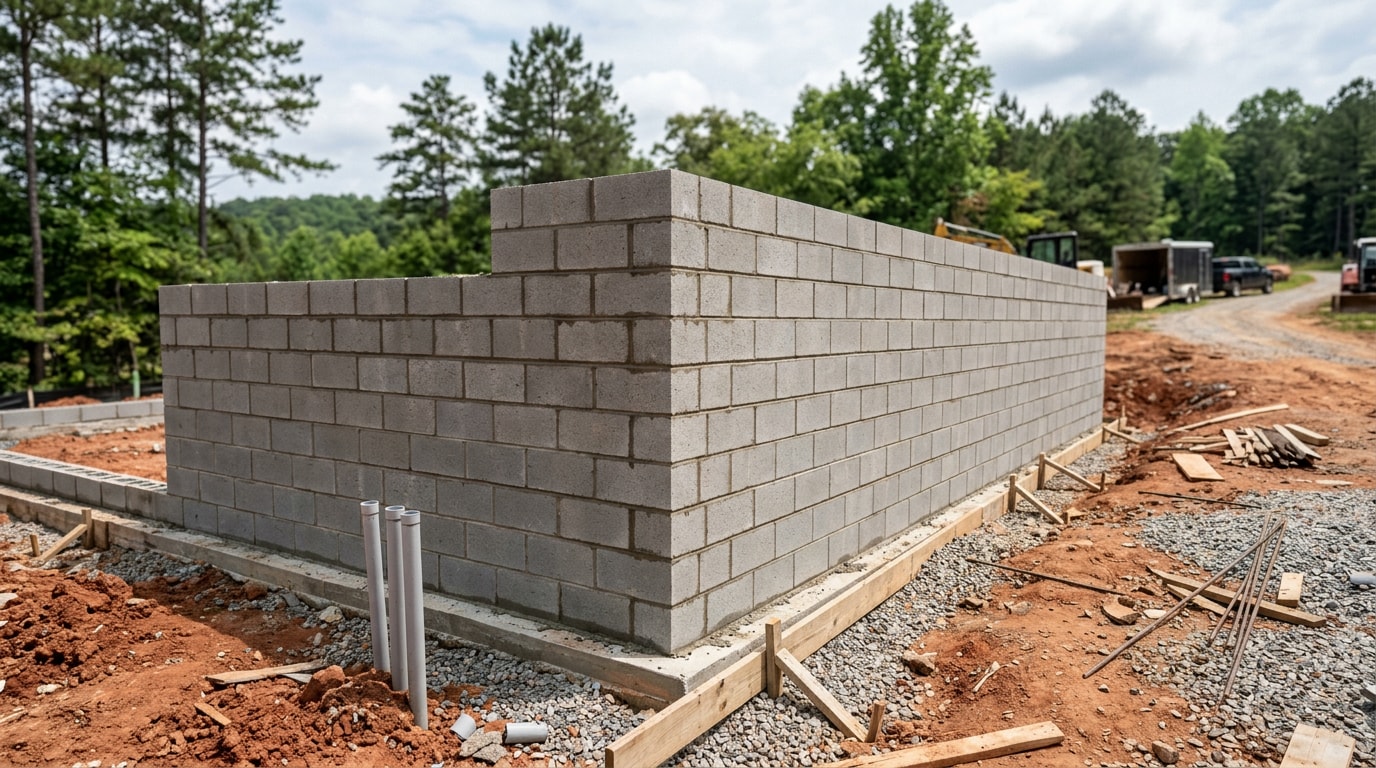
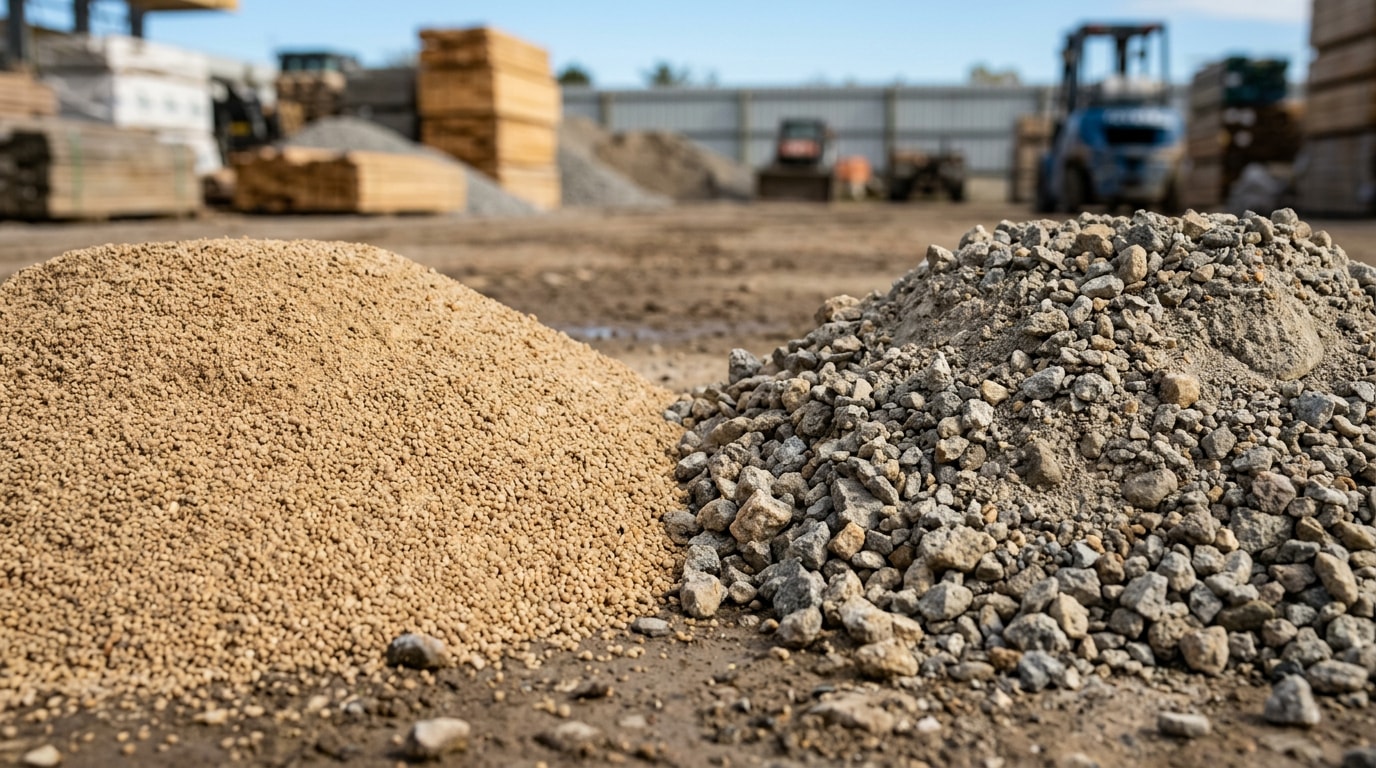
Masonry sand vs concrete sand trips up a lot of first-time buyers in Graham, NC, and the mix-up gets expensive fast. These two aggregates look nearly identical in a stockpile but behave completely differently once mixed into mortar, a slab, or a paver bed. Here's how to tell them apart before you order the wrong one.
Quick Answer: Masonry Sand vs. Concrete Sand
Masonry sand is fine, smooth, and screened for workability. It's built for mortar, plaster, and paver joints.
Concrete sand is coarser and more angular. It's designed to add strength and drainage in structural mixes.
They are not interchangeable. Swapping one for the other can weaken the bond, crack a slab, or wash out under a paver base.
What Is Masonry Sand?
Masonry sand is a fine-grained sand produced by crushing and screening rock until the particles are smooth and uniform in size. Because it lacks sharp edges, it blends into workable, spreadable mixtures instead of rigid structural ones.
You'll also hear it called mason sand or plaster sand, names used interchangeably across the trade. It's purpose-built for finish work, not for bearing structural loads.
If your project also involves sizing or pricing block, our CMU guide for Graham, NC breaks down block sizes and local costs in more detail.
What Is Concrete Sand?
Concrete sand is a coarser, more angular aggregate manufactured to meet gradation standards for structural concrete mixes. Its rougher texture and larger particle range help it interlock with gravel and cement paste, producing a stronger, more stable finished product.
This is the sand called for in slabs, footings, and compacted base layers, anywhere load-bearing performance matters. The gradation and quality requirements come from ASTM International's C33 specification, which defines the requirements for grading and quality of fine and coarse aggregate for use in concrete .
If you're planning a poured slab, see our monolithic slab installation page for how we handle base prep and mix selection on local jobs.
Masonry Sand vs. Concrete Sand: Key Differences
The core difference comes down to particle size and grain shape. Concrete sand is coarse and angular, while masonry sand is fine and rounded. That single distinction drives everything else: strength, workability, and intended use.
Each material also follows its own standard. Concrete sand must meet ASTM C33, while masonry sand follows ASTM C144, a separate specification that covers aggregate for use in masonry mortar and requires it to consist of natural sand or manufactured sand . Pricing also tends to vary, with concrete sand often running slightly higher due to processing and demand, though local supplier pricing should always be confirmed.
| Feature | Masonry Sand | Concrete Sand |
|---|---|---|
| Particle size | Fine | Coarse |
| Texture | Smooth, rounded | Angular, sharp |
| ASTM standard | C144 | C33 |
| Primary use | Mortar, plaster, joints | Structural mixes, bedding |
| Relative cost | Slightly lower | Slightly higher |
Where Masonry Sand Works Best in Graham Projects
Masonry sand uses center on projects that need smooth, workable material rather than structural strength.
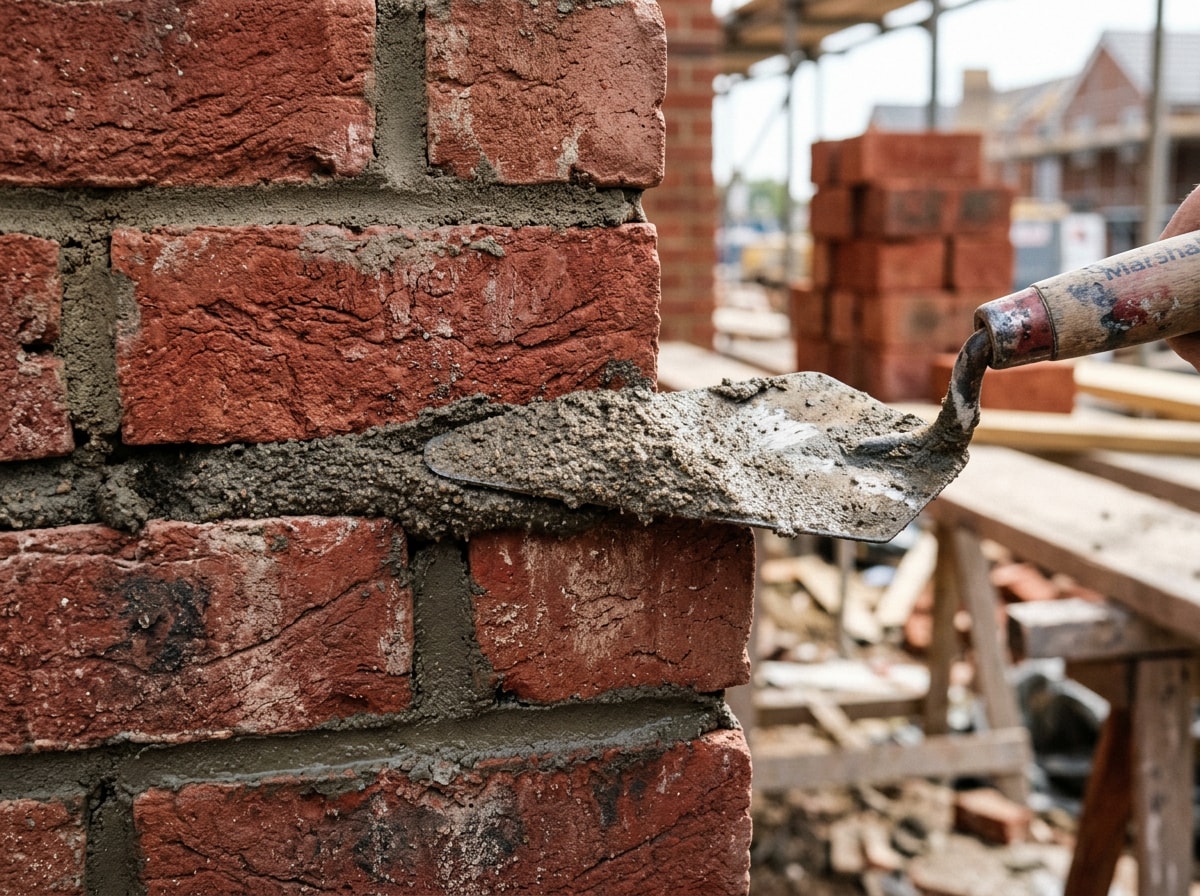
- Brick and block mortar, where fine particles create a consistent, spreadable bond between units
- Stone veneer installation, where a rough aggregate would interfere with a clean finish
- Paver joint sand, swept between units after the base is set
Where Concrete Sand Is Required
Concrete sand uses are almost always tied to load-bearing or structural work.
- Structural concrete for slabs, sidewalks, and footings
- Foundation and slab pours, where strength and crack resistance matter most
- Paver bedding layers, the compacted base directly under the pavers
This last point surprises a lot of homeowners. Many assume mason sand is fine under pavers since it's the "finish" sand, but paver bedding and paver joints are not the same layer. Guide specifications built on Interlocking Concrete Pavement Institute standards are explicit that crews should not use masonry sand or sand conforming to ASTM C144 for the bedding course itself, reserving mason sand strictly for joints.
Substituting masonry sand in a bedding or structural application isn't just a minor shortcut. It can weaken the mix and lead to settling, shifting, or cracking within a season or two. For foundation-level work, our concrete footings and site preparation teams handle base and sand selection as part of the job, not an afterthought.
A Note From Our Crews in Alamance County
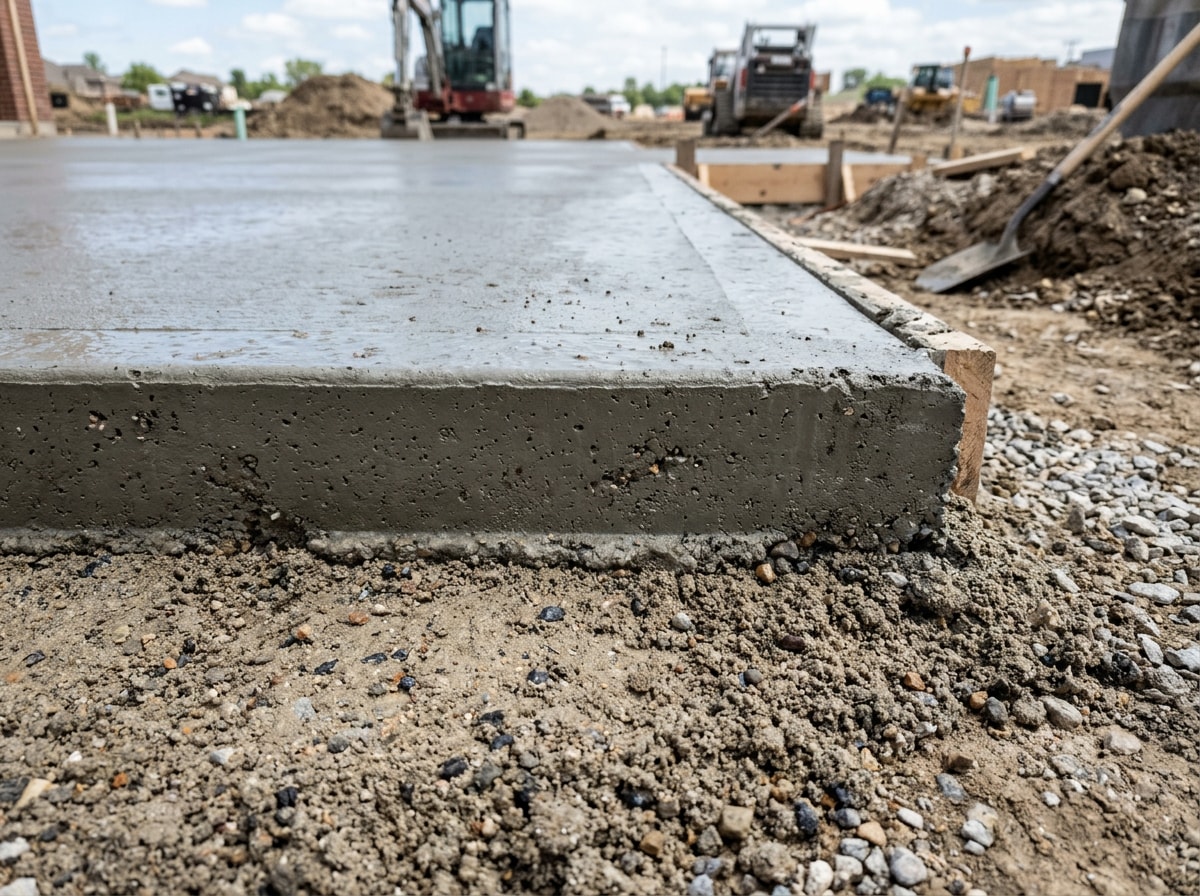
On driveway and footing jobs around Graham and the rest of Alamance County, we regularly get calls from homeowners who tried to save a trip to the supplier by using leftover mason sand under a paver patio or in a patch mix. The base settles unevenly within a season, and the fix almost always costs more than buying the correct sand up front. If you're unsure which material a spec calls for, it's worth a five-minute call before the delivery truck shows up.
Which Sand Does Your Graham Project Need?
Choosing the right sand isn't about preference. It's about matching the material to the job.
Masonry work and mortar call for masonry sand. Any project involving structural loads, slabs, footings, or paver bedding needs concrete sand instead.
If you're unsure which applies to your job in Graham, NC, get a free estimate and we'll confirm the right material before you order anything. You can also browse our full range of services on the Boswell Brothers of NC homepage.
FAQ
Can I use masonry sand in concrete or mortar?
Masonry sand works well in mortar but isn't recommended for concrete. Its smooth, fine particles don't bond with cement paste the way coarser concrete sand does, which weakens structural strength.
Can I use concrete sand for masonry work?
It's not recommended. Concrete sand is too coarse for mortar joints and tends to produce a rough, gritty finish that's hard to tool cleanly.
Can I mix concrete sand and masonry sand together?
No. Blending the two creates an inconsistent gradation that can weaken whatever mix you're using and makes quality control nearly impossible to verify.
Can I use masonry sand as bedding material for pavers?
No. Bedding sand under pavers should meet ASTM C33 concrete sand gradation. Masonry sand is fine for sweeping into paver joints, but not for the structural bedding layer underneath.
Is concrete sand more expensive than masonry sand?
Concrete sand is often slightly pricier than masonry sand, but costs vary by region and supplier. Always check current local pricing before budgeting a project.
Is mason sand finer than concrete sand?
Yes. Mason sand has a noticeably finer, smoother texture than concrete sand, which is coarser and more angular by design.
Is masonry sand good for drainage?
Not especially. Its fine, tightly packed grains don't drain as well as coarser concrete sand, which is why concrete sand is preferred under pavers and in base layers.
Is sharp sand OK for concrete?
Sharp sand, which has angular grains similar to concrete sand, can sometimes work as a substitute. It should still meet proper gradation standards before use in structural mixes.
What is the difference between concrete sand and brick sand?
"Brick sand" is typically another name for masonry sand. It shares the same fine, smooth texture suited for mortar rather than structural concrete work.
About the Author
This guide was reviewed by the project estimating team at Boswell Brothers of NC, a concrete, foundation, and masonry contractor serving Graham, Burlington, Mebane, and the greater Alamance County area. Our crews source and spec both masonry and concrete sand daily for driveways, footings, and hardscape work. Questions about your specific project? Contact us for a free estimate.