Parge concrete in Mebane, NC can mean a small crack patch, a full below-grade recoat, or prep work before waterproofing, and the price tag swings wildly depending on which one you actually need. Get the definition wrong and you either overpay for cosmetic work or cover up a structural problem with fresh mortar. This guide breaks down what parging fixes, what it costs locally, and when to call a mason instead of mixing a bag of Portland cement yourself.
What Is Parging?
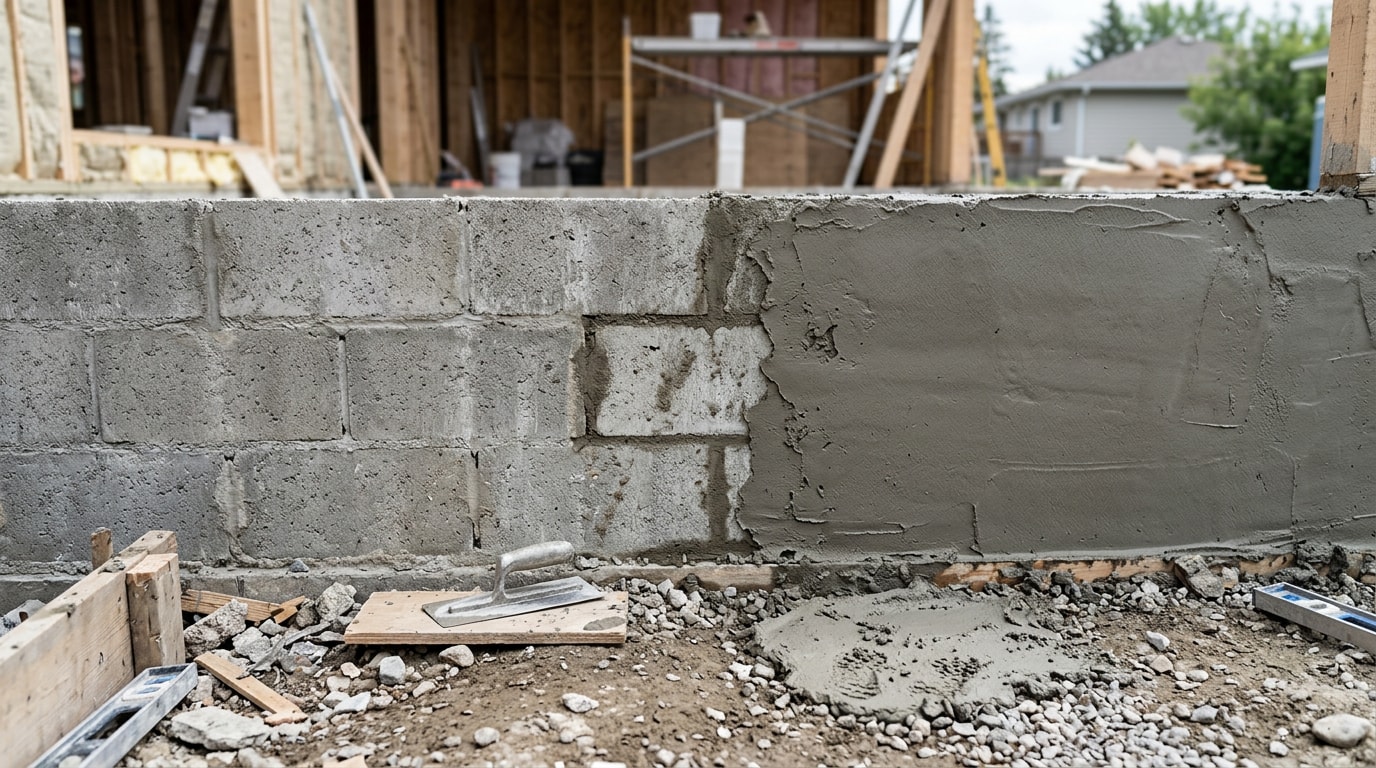
Parging is a thin layer of mortar or cement troweled over concrete, block, brick, or stone to create a smoother, more uniform surface. It's a cosmetic and protective coating, not a structural fix, applied mainly to foundation walls and exposed masonry.
If you own a home in Mebane, NC with a concrete block wall or a poured foundation showing its age, parging is probably already on your radar. Many local foundations built decades ago rely on it as their only exterior finish, and that finish doesn't last forever.
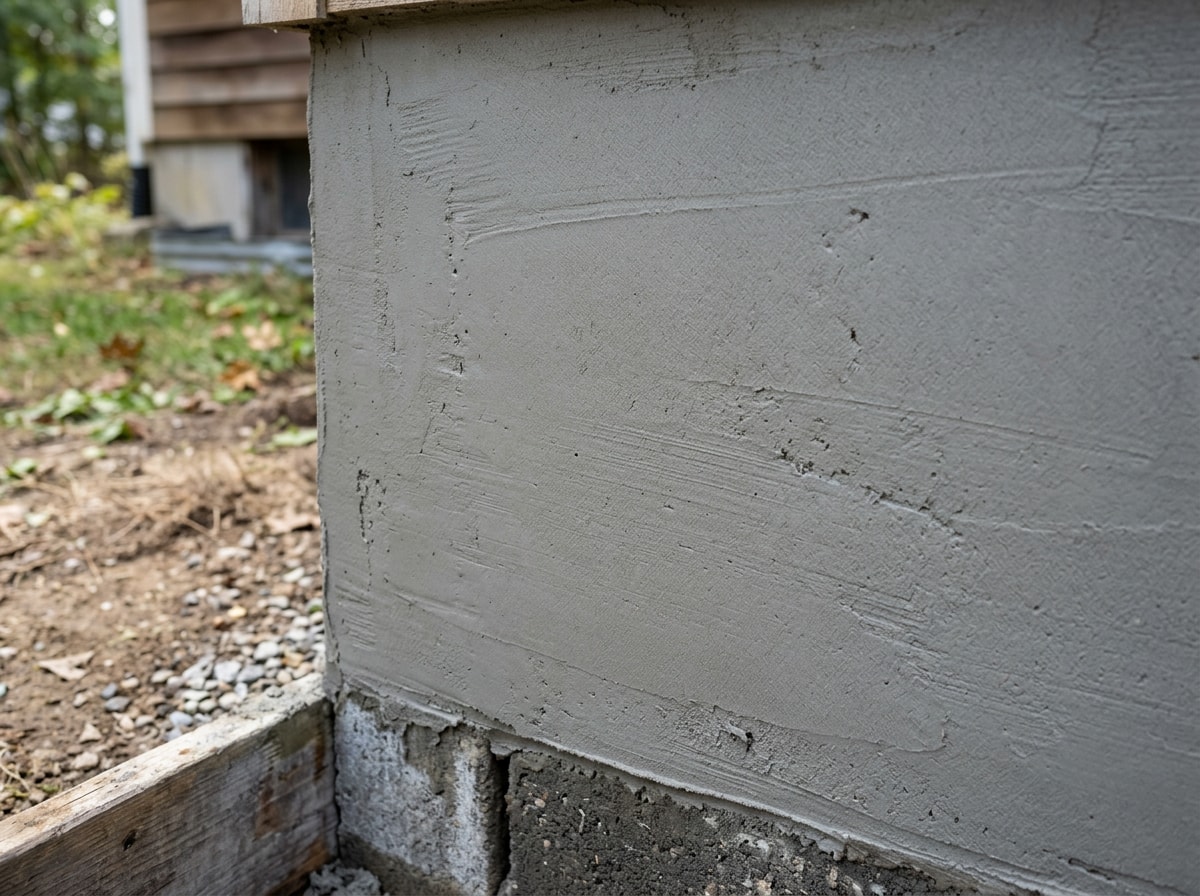
Parging hides rough block joints and gives basement walls a cleaner look, but it's one piece of a bigger foundation-care picture. Browse our concrete and masonry services to see how it fits alongside repair, drainage, and waterproofing work.
Signs Your Foundation Needs Parging
Watch for these red flags on an exterior block or poured wall:
- Gritty, flaking wall texture
- Hairline to moderate cracking
- Damp patches on basement walls
- White, powdery efflorescence deposits
- Spalling, where the surface flakes or pops off in chunks
Any combination usually means the existing parge coat has failed, or the wall was never coated at all.
Efflorescence deserves a closer look. That chalky white residue forms when water moves through masonry and deposits dissolved minerals on the surface as it evaporates. It's not damage by itself, but it signals moisture finding its way through the wall, worth investigating before you cover it up with new mortar.
Spalling often shows up alongside cracking. Together, these symptoms mean the wall's outer layer is breaking down faster than it should, and a fresh parge coat is likely part of the fix.
Benefits of Parging (and What It Can't Fix)
Parging smooths rough or pitted concrete block, adds a mild layer of moisture resistance, and creates a cleaner substrate for paint or waterproofing membranes. It also improves curb appeal on visible foundation walls near grade. None of that makes it a cure for underlying structural problems.
That distinction matters. Parging is not a substitute for structural repair, repointing failed mortar joints, fixing poor exterior drainage, or a real foundation waterproofing system. It sits on the surface and doesn't address what's happening behind the wall.
Some red flags mean you need more than a fresh coat of mortar:
- Active water leaking through the wall, not just dampness
- Bowing, leaning, or bulging sections of the foundation
- Cracks that are widening, stair-stepping, or reappearing after repair
If any of these apply, contact us for a structural evaluation before scheduling parging work. Covering a moving or leaking wall just delays the real fix. The EPA's moisture control guidance for building design and construction gives building professionals practical guidance for managing moisture in foundations, walls, and other assemblies , and that guidance consistently treats moisture control as a job for the design and drainage of the wall, not the finish coat on top of it.
Parging vs. Stucco: What's the Difference?
Parging and stucco both coat masonry, but they're built differently. Parging is typically a single thin coat, roughly 1/4 to 3/8 inch, meant for below-grade or utilitarian walls. Stucco is a multi-coat system, often three coats totaling 3/4 inch or more, designed for exposed, above-grade exterior finishes.
That thickness difference shows up in cost and lifespan. Parging generally runs lower per square foot and can last 10 to 25 years depending on mix and exposure. Stucco costs more to install and repair but holds up longer on above-grade walls exposed to weather.
If your goal is simply a finish for a basement or crawlspace foundation, parging is usually the more practical, budget-friendly choice.
Parging Materials and Mixes
Choosing the right mix determines how well a parge coat performs over time, especially through the Piedmont's seasonal freeze-thaw swings.
Cement-Based vs. Acrylic/Polymer-Modified Mixes
Traditional cement parging mix uses Portland cement, sand, and lime. It's breathable, economical, and well suited to most residential foundation walls. Acrylic and polymer-modified mortar mixes trade some of that breathability for flexibility and better freeze-thaw resistance, at a higher material cost.
For a typical Mebane home with a stable concrete block wall, a standard cementitious mix usually performs fine. Polymer-modified options make more sense on walls with a history of cracking, moisture cycling, or previous parging failures.
Standard Mortar Mix Ratios (Type N / Type S)
A common Type N mortar ratio referenced across masonry sources is 1 part Portland cement, 1 part lime, and 6 parts sand, sometimes adjusted with a bonding agent for better adhesion to old, worn concrete. Type S mixes use more cement for higher strength, typically reserved for below-grade or load-bearing applications.
Getting this ratio right affects both durability and crack resistance. The Concrete Masonry & Hardscapes Association notes that Portland cement is a hydraulic cement, one of the main constituents of mortar, and that Types I, II, and III are permitted under ASTM C 270 . Their technical note on mortars for concrete masonry breaks down each mortar type and its intended use in more detail.
How to Parge a Foundation Wall (Step-by-Step)
This walkthrough is meant as general education. Full-wall parging on a foundation with any structural concerns should go to a professional mason, not a weekend project.
Surface Preparation
Surface prep starts with wire-brushing loose material off the wall, then power-washing to remove dirt and residue. Patch any voids or gaps first, and lightly dampen the masonry before applying mortar. This controls suction so the block doesn't pull moisture out of the fresh coat too fast, which causes cracking.
Skipping this step is the single biggest reason DIY parge jobs fail early. A wall that's still dusty, wet from recent rain, or full of unpatched holes won't hold a new coat properly, no matter how good the mix is.
Applying and Curing the Parge Coat
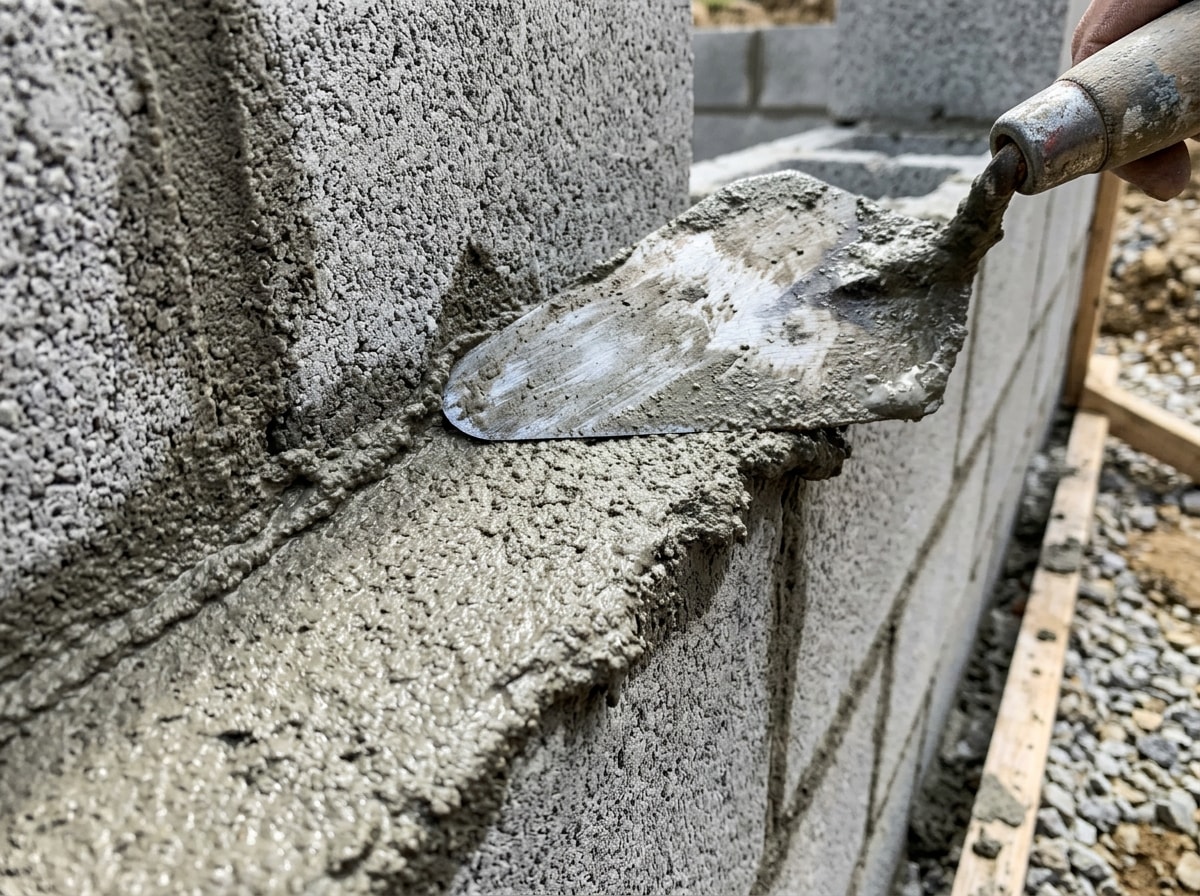
Mix the mortar to a trowelable, peanut-butter-like consistency, not too wet, not stiff enough to resist spreading. Apply a scratch coat first, scoring it lightly to give the finish coat something to grip. Once that sets, apply the finish coat and smooth it with a steel or wood float, depending on the texture you want.
Curing matters as much as the trowel application itself. Keep the surface damp for several days after application, misting it lightly if it's hot or windy, to slow drying and prevent shrinkage cracks. Rushed curing is a common cause of hairline cracking that shows up within the first year.
DIY vs. Professional Parging
Small patch repairs on an otherwise sound wall are reasonable DIY territory if you're comfortable mixing mortar and working with a trowel. A few square feet of touch-up work carries low risk if something goes wrong.
Full-wall applications are a different story. Height, scaffolding, or excavation around the foundation adds real risk, and getting even coverage across a large wall takes practiced technique. Our crews have re-parged Alamance County block foundations that failed within a year because the original coat went on over dusty, unprimed block. Surface prep matters more than which mix you buy.
Mebane's Piedmont climate brings seasonal freeze-thaw swings too, and uneven or poorly cured mortar won't hold up long under that kind of stress.
Any sign of structural movement, cracking that keeps growing, bowing, or active leaks, means it's time to call a mason or foundation specialist rather than attempt DIY parging. For more on when a job needs a licensed crew, see our guide on commercial masonry companies in Liberty, NC, which covers the same hire-or-DIY question from a contractor-vetting angle.
How Much Does Parging Cost?
Parging cost varies widely because "parging" covers everything from a small crack patch to a full below-grade wall system. National figures you'll see online range from roughly $3 to $15 per square foot, which isn't very useful without context.
Here's a clearer breakdown:
| Scope | Typical Cost per Sq Ft |
|---|---|
| Small patch repair (cracks, spot spalling) | $3 - $6 |
| Full-wall, standard cementitious mix | $6 - $10 |
| Full-wall, polymer-modified/acrylic mix | $10 - $15 |
Wall condition, access difficulty, and how much surface prep is needed all push a quote toward the high end of these ranges. A wall buried behind landscaping or requiring extensive patching before parging even begins will cost more than a clean, accessible surface.
Southern and Mid-Atlantic labor markets, including North Carolina, generally land toward the lower-to-mid end of these national ranges compared with coastal or major urban markets. That said, actual quotes still depend on your specific contractor and site conditions. Get a written estimate rather than relying on averages.
Every quote should start with a look at your specific wall, not a generic square-foot number. Get a free estimate and we'll tell you plainly whether a patch, a full recoat, or something else is the right call for your home.
Parging Maintenance and Repair
Inspect parged walls annually for new cracking, chipping, or hollow-sounding spots. Tap the surface lightly with a trowel handle to check for detachment. Clean the surface periodically with a stiff brush or gentle pressure washing, and patch small failures as soon as you spot them rather than waiting.
Parging repair gets more involved once failure has already set in. Common failure modes include poor adhesion to a dirty or dry substrate, rapid drying that causes shrinkage cracks, and freeze-thaw delamination where trapped moisture expands and pushes the coat off the wall. Proper surface prep and damp-curing prevent most of these problems from the start.
Here's a detail most parging articles skip: the model residential code requires masonry walls to have not less than 3/8-inch Portland cement parging applied to the exterior of the wall before dampproofing goes on, and that parging must be dampproofed according to one of several approved methods . That 3/8-inch figure is the minimum baseline many local building departments reference when they review foundation work, so a coat noticeably thinner than that isn't just cosmetic risk, it may not meet code. You can read the full provision in Section R406.1 of the International Residential Code.
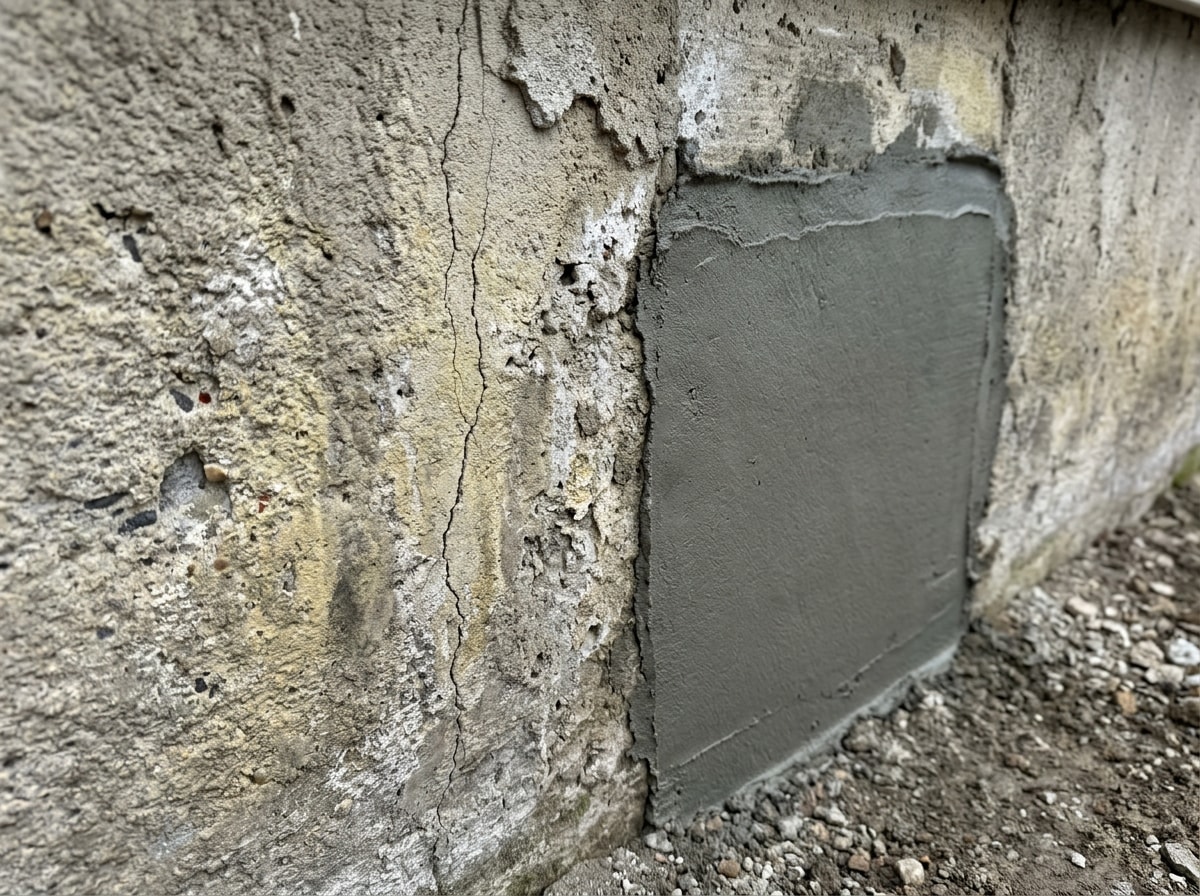
Cracked parging that's caught early is a simple patch job. Left alone, it lets water behind the coating, which accelerates the very moisture problems parging was meant to help control. For hands-on repair work, our foundation repair services can assess whether patching or a full re-coat makes more sense for your wall.
Boswell Brothers of NC has handled foundation and masonry work throughout Mebane and the surrounding Piedmont for homeowners who'd rather get a straight answer than a sales pitch. If you're in Mebane or nearby towns like Burlington or Graham, our full concrete and masonry services guide for Mebane, NC covers how parging fits alongside driveways, patios, and structural repair.
FAQ
What Is Parging Used For?
Parging smooths rough concrete or block surfaces, adds mild moisture resistance, and creates a clean substrate for paint or waterproofing membranes. It's mostly used on foundation and basement walls rather than above-grade siding.
How Long Does Parging Last?
Parging typically lasts 10 to 25 years, though the exact lifespan depends heavily on mix type, surface prep quality, and climate exposure. Cementitious mixes in freeze-thaw regions tend toward the shorter end unless properly cured and maintained.
Can You Parge Over Old Parging?
Old, sound parging can sometimes be re-coated after thorough cleaning and applying a bonding agent. Loose, hollow-sounding, or badly cracked parging needs to be removed first, since new mortar won't bond well over failing material.
Does Parging Stop Water Leaks?
Parging is a surface treatment, not a waterproofing membrane, so it won't stop active water leaks on its own. Leaks need proper exterior drainage or a dedicated waterproofing system addressed before or instead of a cosmetic parge coat.
Is Parging Necessary for a Concrete Block Foundation?
For exposed masonry walls, yes, in many cases it's more than optional. Model residential code requires a minimum 3/8-inch parge coat on masonry foundation walls before dampproofing is applied. Poured concrete walls don't carry the same parging requirement since concrete is less permeable than block.
How Much Does Parging Cost in Mebane, NC?
Most Mebane homeowners pay between $3 and $15 per square foot depending on scope. Small patch repairs sit at the low end, full-wall standard mixes run in the middle, and polymer-modified full-wall coatings sit at the top of that range. Request a free estimate for pricing specific to your wall's condition.