Is masonry the same as concrete in Stokesdale, NC? No — concrete is a poured material, while masonry is a building method that stacks individual units like brick, stone, or block together with mortar. The two terms get used interchangeably on job estimates and permit forms all the time, and mixing them up can throw off your budget before you've broken ground.
This guide breaks down both terms in plain language, compares them side by side, and covers what Stokesdale-area homeowners need to know about permits, 2026 pricing, and hiring the right contractor.
The Short Answer
Concrete and masonry overlap but are not interchangeable. Masonry and concrete both create solid structures, but the definition of masonry involves adhering individual materials with mortar while concrete is poured. Concrete masonry units, or CMUs, sit at the intersection of the two since they're made of concrete but installed using masonry technique. We'll untangle exactly where that line falls below.
What Is Concrete?
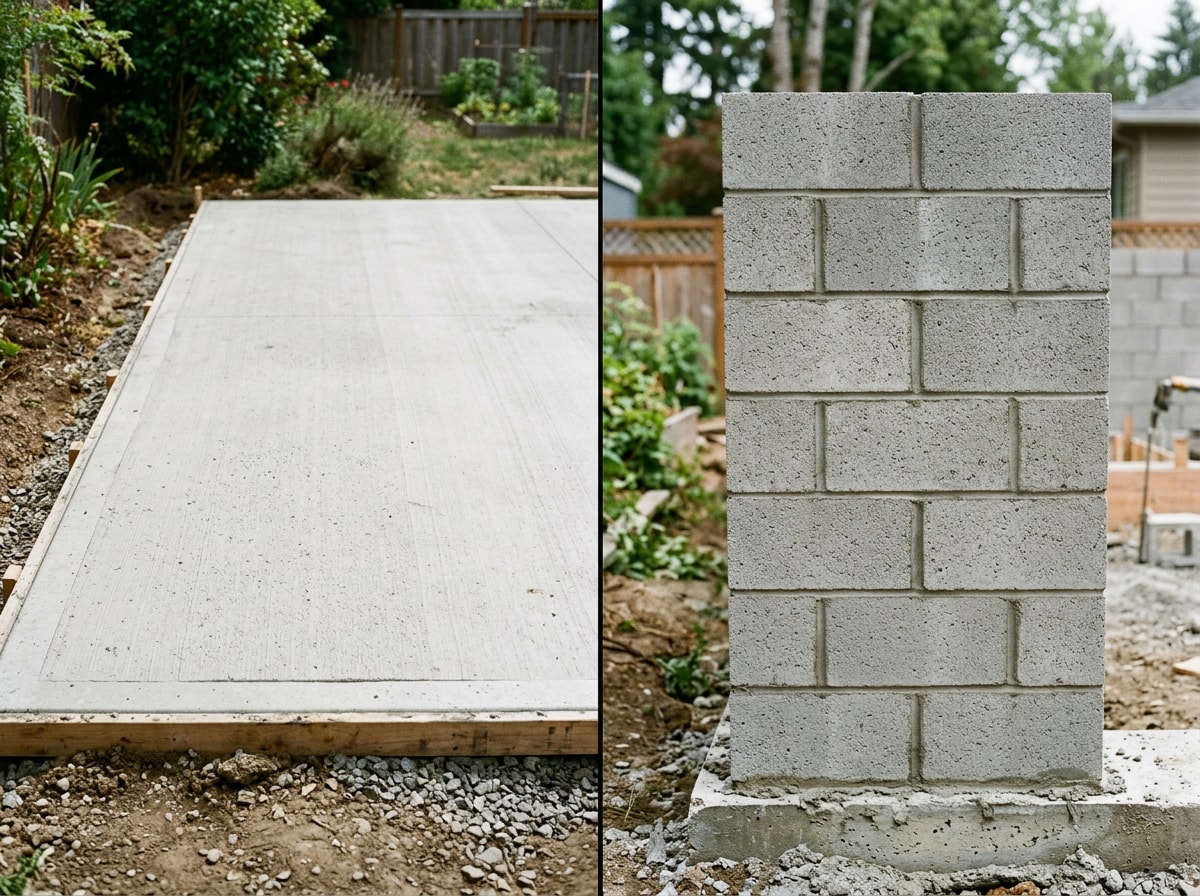
Concrete is a singular building material made from cement, sand, and aggregate, like rock or gravel. It starts as a wet mix and hardens into one continuous, uniform mass. Because it's poured, it takes the shape of whatever form it's placed into, whether that's a footing, slab, or wall.
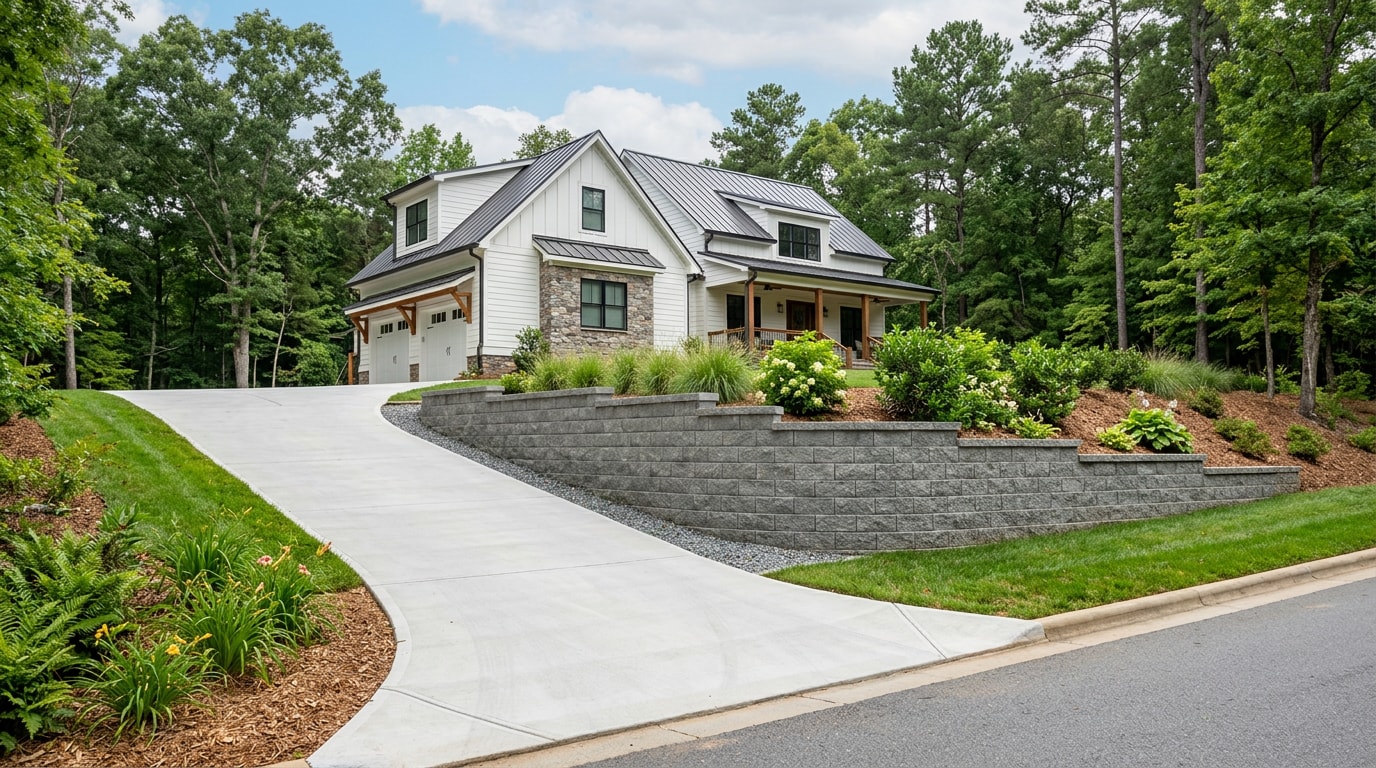
In Stokesdale, concrete shows up most often in driveways, patios, and home foundations. It's strong in compression but relies on reinforcement, like rebar or wire mesh, to resist cracking once it cures. Our crews handle this daily through concrete driveways, concrete patios, and general concrete contractor work across the Piedmont Triad.
What Is Masonry?
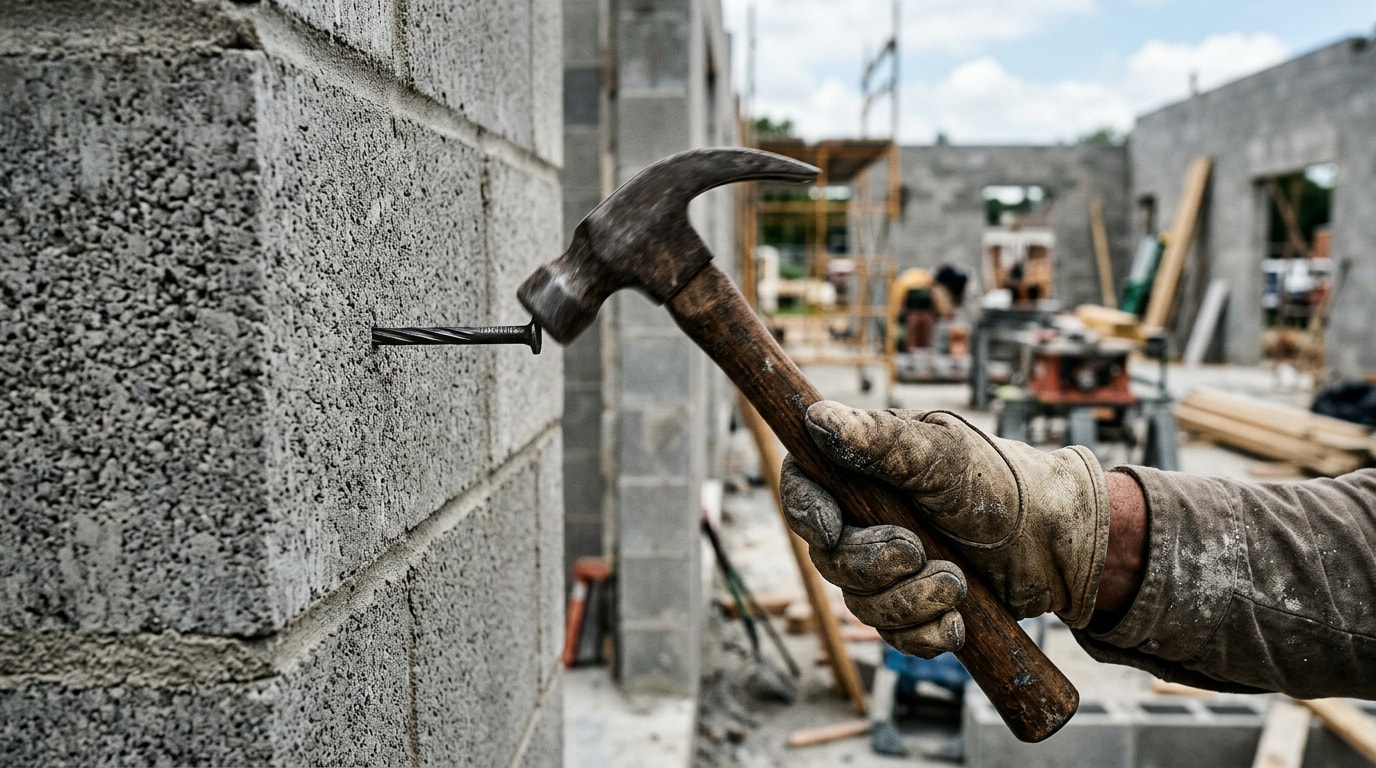
Masonry refers to the practice of connecting individual materials using mortar or grout and doesn't refer specifically to the materials themselves. Unlike concrete's single continuous pour, masonry goes up piece by piece, which allows for more flexibility in shape and easier spot repairs.
The word "masonry" also describes the trade itself. Bricklaying, stone-setting, and block work all fall under this skilled craft, which is why masonry projects typically call for trained labor rather than a simple pour-and-finish process.
Common Types of Masonry Materials
Masonry generally falls into three categories: brick, natural stone, and concrete masonry units. Each offers a different balance of appearance, strength, and cost.
- Brick — prized for its classic look and long lifespan; common on facades and garden walls.
- Natural stone — brings a rugged, high-end appearance but costs more due to material weight and install time.
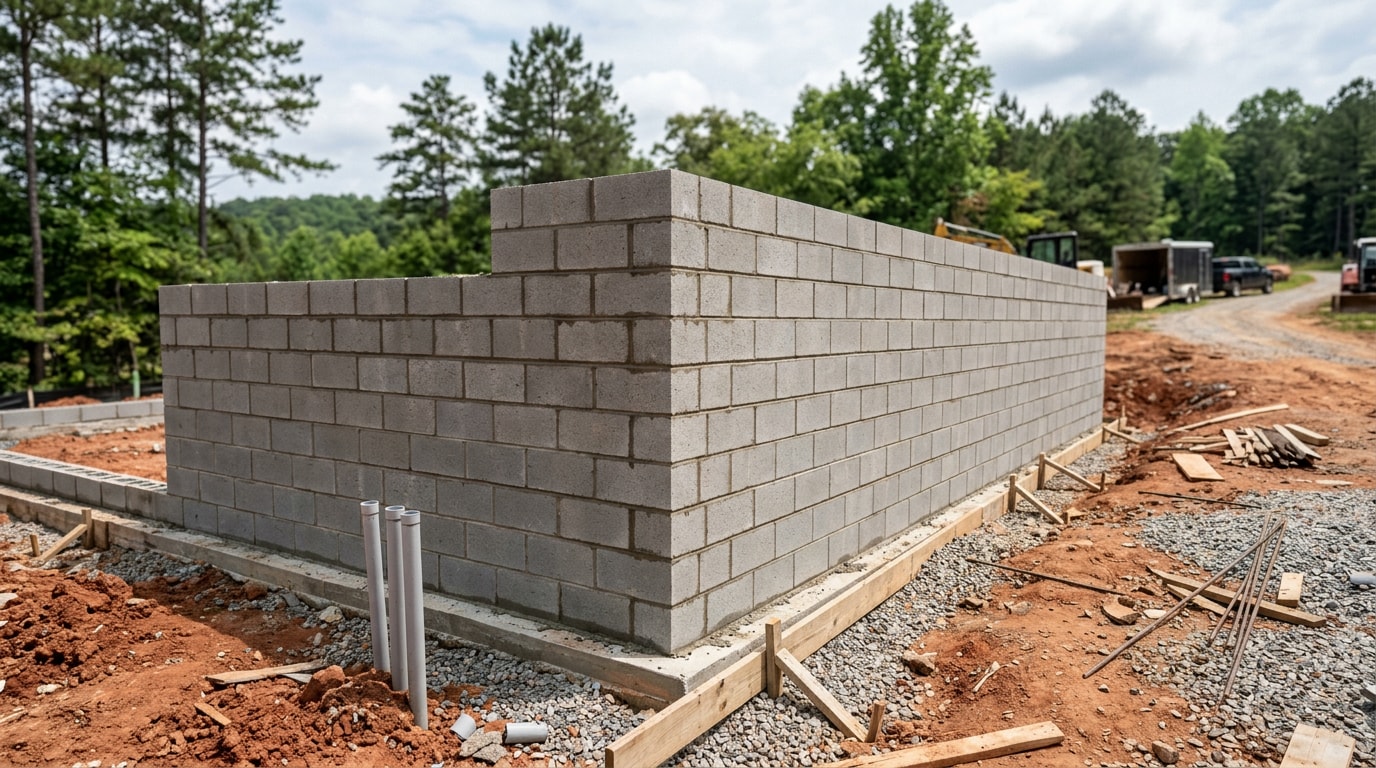
- CMUs (concrete block) — the most common choice for structural and retaining walls because they combine strength with faster installation.
For technical sizing and strength specifications, the Concrete Masonry & Hardscapes Association (CMHA), the national trade group formed from the merger of ICPI and NCMA, publishes industry-wide concrete masonry standards. If you want a deeper dive on sizing specifically, see our concrete masonry unit dimensions guide for Mebane, NC.
Is Concrete Considered Masonry?
This is where most of the confusion starts, and it's worth getting a clear, official answer instead of guessing. North Carolina's own labor code draws a hard line between the two: Concrete is a construction material consisting of conglomerate gravel, pebbles, broken stone or slag in a mortar or cement matrix, while masonry is building and fabricating in stone, clay, brick, or concrete block. That definition, published by the NC Department of Labor, is the same framework building officials and insurers use statewide.
So: poured concrete is generally not classified as masonry because it's placed as one continuous mass rather than assembled from individual units. CMUs, the gray concrete blocks used in stacked walls, are classified as masonry because they're laid and bonded with mortar just like brick or stone.
| Category | Concrete (Poured) | Masonry (CMU/Brick/Stone) |
|---|---|---|
| Material type | Single poured cement mixture | Individual units bonded with mortar |
| Installation method | Formed and poured as one mass | Stacked and mortared unit by unit |
| Typical Stokesdale use | Driveways, patios, footings | Retaining walls, garden walls, facades |
| Approximate 2026 cost range | $6–$12 per sq. ft. | $10–$25 per sq. ft. |
We cover this distinction in even more depth, including code language and local examples, in our companion guide, Is Concrete Considered Masonry in Stokesdale, NC?
Key Differences Between Masonry and Concrete
Beyond materials, the real distinction comes down to construction method, appearance, and how each handles structural load over time.
Construction Method
Concrete is poured into forms, vibrated to remove air pockets, and often reinforced before it cures into one solid piece. Masonry goes up unit by unit, with each course set in mortar joints and leveled by hand. This poured-versus-stacked distinction is also why masonry demands skilled labor — setting units straight, maintaining even joints, and tying courses together correctly takes training that differs significantly from concrete finishing work.
Strength and Appearance
Concrete relies on a single mass plus reinforcement to achieve compressive strength. Masonry depends on how well individual units bond together, which is why concrete provides greater strength than masonry and supports your home foundation better, while masonry offers more varied styles for walls and fireplaces. Concrete typically needs finishing or staining for visual appeal, while brick and stone bring texture and color built in.
Permits and Engineering Requirements in Stokesdale, NC
Whether a project uses poured concrete or masonry block, North Carolina permitting rules can apply once a wall crosses certain height or load thresholds. Properties in Stokesdale fall under the Guilford County Inspections Department, which provides permitting, plan review, and building inspection services for all unincorporated areas of Guilford County and, through contractual agreements, to the towns of Jamestown, Oak Ridge, Pleasant Garden, Sedalia, Stokesdale, Summerfield, and Whitsett . That means a building permit is typically required for retaining walls above a certain height, structural walls, and any foundation work tied to a habitable structure — regardless of whether you're pouring concrete or stacking block.
When Professional Engineering Is Required
Retaining walls taller than about four feet typically need a stamped engineered design, regardless of material, because taller walls face greater soil pressure and failure risk. Homeowners shouldn't assume masonry construction skips engineering review just because it's modular — the opposite is often true. This height-driven caution isn't just a local building-department habit, either. Federal construction safety rules reflect the same concern from a different angle: under Section 1926.706(b), masonry walls over eight feet shall be adequately braced to prevent overturning and to prevent collapse unless the wall is adequately supported , a rule most homeowner guides on this topic never mention because it governs the jobsite, not the finished structure. It's a good reminder that height thresholds for masonry aren't arbitrary on either side of the fence — during construction or after.
Always confirm current thresholds with the local permitting office before digging begins. For foundation-tied work specifically, our foundation contractor team and concrete footings crews handle the engineering coordination as part of the project.
Block Wall and Concrete Costs in Stokesdale, NC (2026)
Once you understand that concrete and masonry differ in material and labor, cost is usually the next question. In our own project history across the Piedmont Triad, pricing varies based on wall type and site access, but these 2026 ranges give a realistic starting point for budgeting.
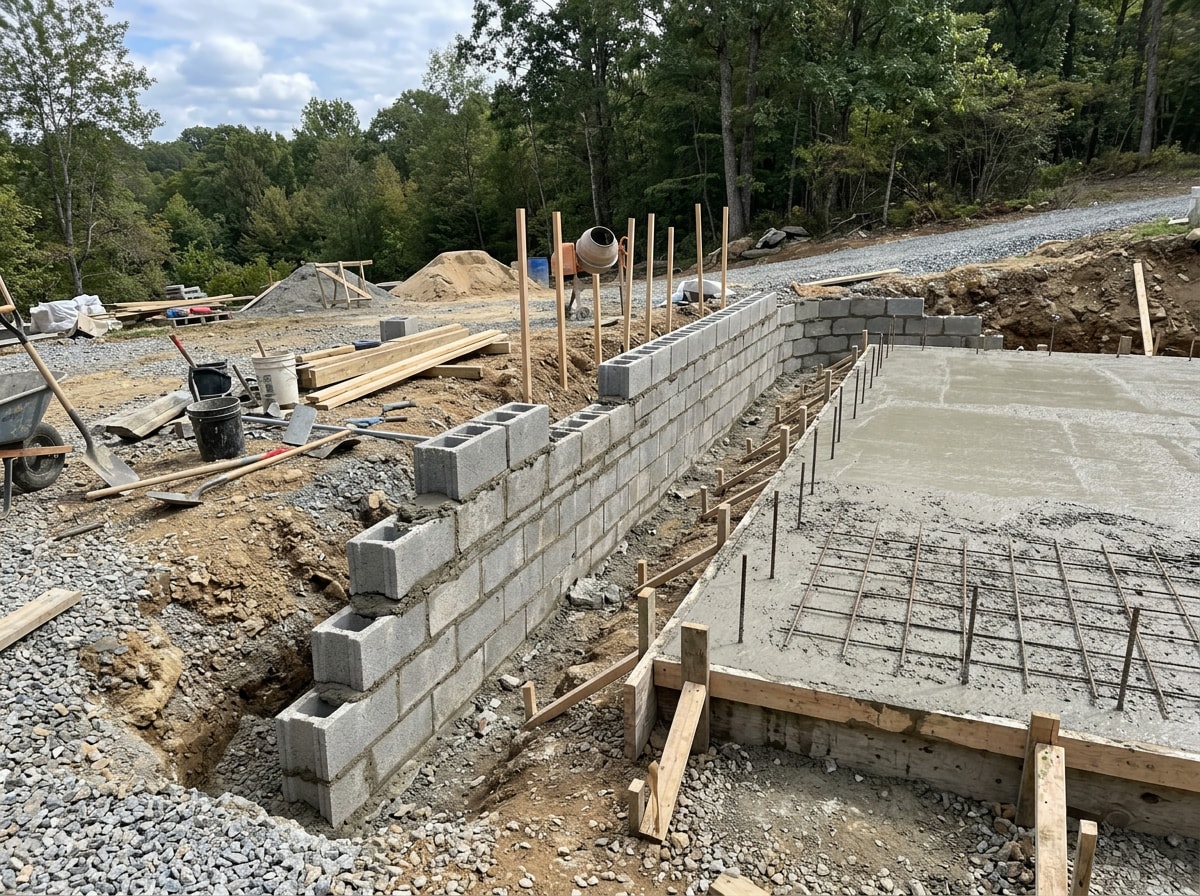
For a typical 40-foot retaining wall in the Stokesdale area, poured concrete generally runs $6–$12 per square foot installed, while CMU block masonry pricing lands closer to $12–$22 per square foot once veneer and finishing are included. A homeowner building a 4-foot-tall, 40-foot-long block wall might expect a total project cost somewhere between $9,600 and $17,600, depending on site conditions. These figures track with what we typically quote on comparable local jobs, but every site is different — get a firm number before you budget around it.
Factors That Move the Price
Wall height and length are the biggest drivers, since taller walls require more material and potentially engineering fees. Site access matters too.
- A backyard that requires hand-carrying block or concrete costs more than a driveway-accessible site.
- Excavation needs and soil conditions add or subtract labor hours.
- Material choice between CMU and poured concrete shifts the baseline cost.
- Finish or veneer options and current local labor availability round out the final number.
If your project is closer to flatwork than a wall, our monolithic slabs and concrete sidewalks pages break down those cost drivers separately.
How to Find a Quality Concrete and Masonry Contractor in Stokesdale, NC
Once you understand the cost and material differences, the next step is finding someone qualified to do the work. A contractor's familiarity with both concrete and masonry techniques matters, since many projects blend footings, block, and finish work together.
Essential Qualifications to Verify
Before hiring, confirm the contractor holds a valid North Carolina license appropriate for the project size, carries liability insurance, and can provide local references.
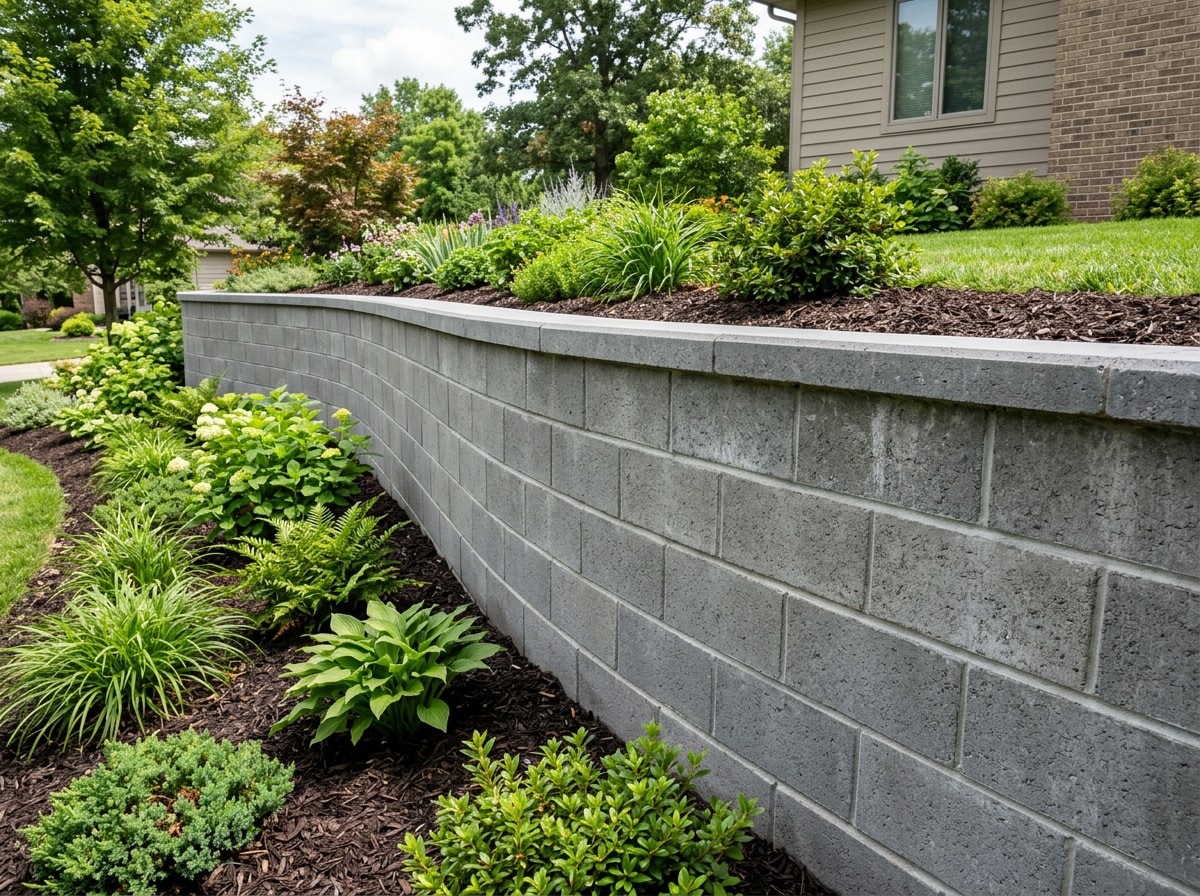
- Ask to see photos of completed walls similar in scope to your project.
- Check that past customers were satisfied with both workmanship and communication.
- Confirm they pull permits themselves rather than asking you to.
Red Flags to Avoid
Be cautious of any contractor who won't provide a written estimate, avoids discussing permits on projects that clearly need one, or pressures for full payment upfront before work begins. A lack of a local, verifiable address is another warning sign. A legitimate local contractor should be transparent about scope, timeline, and cost from the first conversation.
Ready to get a real number for your project instead of a rough guess? Contact Boswell Brothers of NC for a free estimate, or visit our homepage to see the full range of concrete, masonry, and foundation services we handle across Stokesdale and the surrounding Triad.
FAQ
Is concrete block considered masonry?
Yes. Concrete block, or CMU, is classified as masonry because it's stacked and bonded with mortar rather than poured as a single mass. See the comparison table above for how this differs from poured concrete.
Does masonry always include concrete?
No. Masonry can be built from brick, natural stone, or clay with no concrete involved at all. Concrete block is simply one of several masonry material options available.
Is concrete stronger than masonry?
Generally, yes, for load-bearing applications. Concrete provides greater strength than masonry and supports your home foundation better, while masonry offers more varied styles for walls and fireplaces. That's why most home foundations are poured concrete rather than stacked block.
What's the difference between cinder block and concrete block?
Cinder block is an older product made with coal-cinder aggregate and is largely phased out today. Modern concrete block, or CMU, uses stone or sand aggregate and is the current industry standard for strength and durability.
What are the disadvantages of masonry?
Masonry generally costs more in labor and installation time than poured concrete. It's also more prone to mortar-joint issues and weather-related wear over time if joints aren't maintained, which is why routine inspection matters more with masonry than with a solid concrete pour.
Can a handyman do concrete work?
Small patching or cosmetic repairs may be fine for a handyman, but structural concrete work, footings, and anything requiring a building permit should go to a licensed concrete or masonry contractor. This protects both safety and code compliance.